RIT
The Precipians
Conceptual Toy / World Building
2026 · Case Study
- Year
- 2026
- Type
- Conceptual Toy / World Building
- Context
- Academic Exchange — Rochester Institute of Technology
- Proposal
- Conceptual toy proposal developed in an academic setting, presented as a proposal for Mattel
- Team
- Pair project
- Role
- Shared responsibilities across concept development, world building, character development, visualization, and prototyping.
The toy was only the beginning.
The brief was bigger than designing a toy.
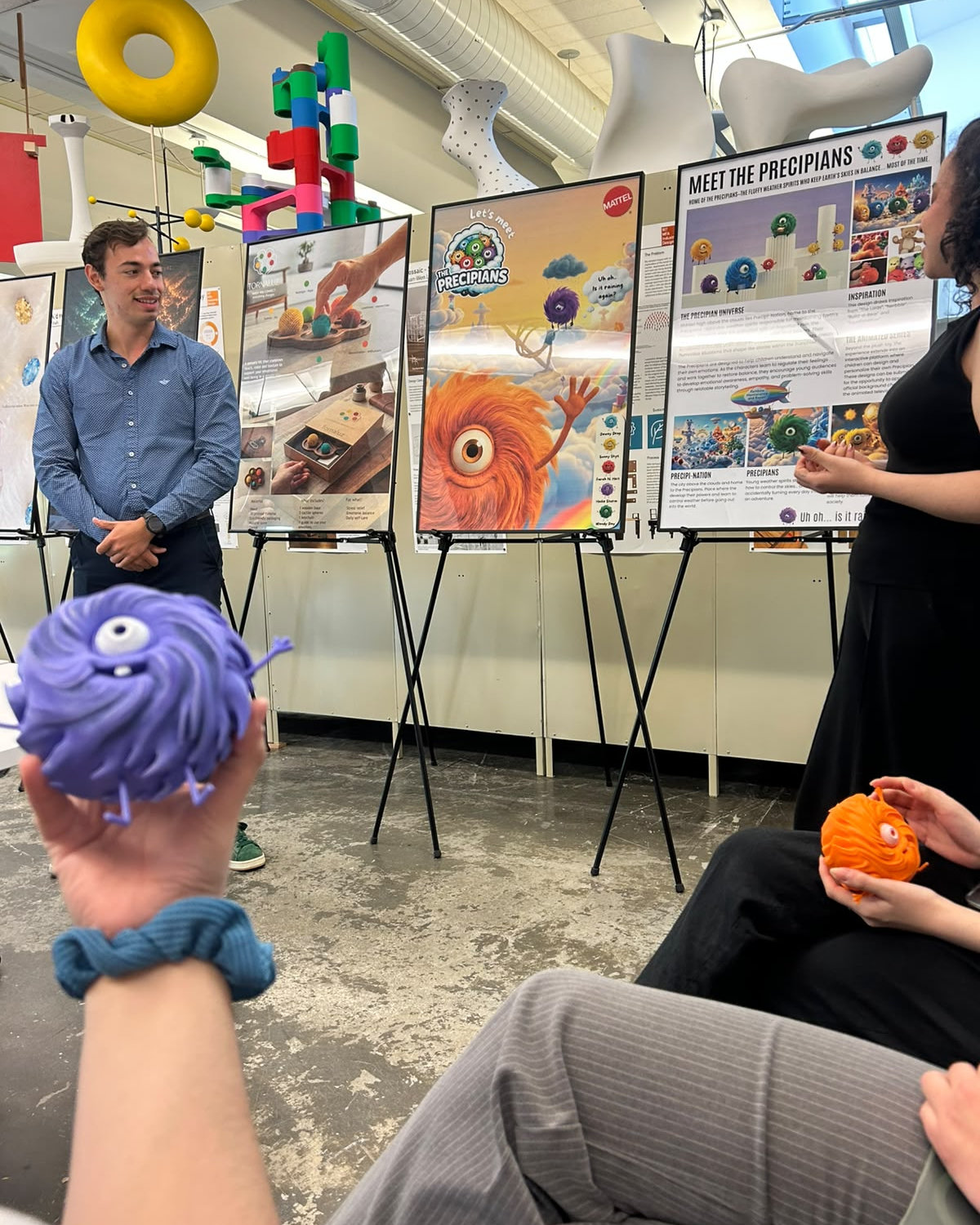
We had to create a new world, develop its flagship character, build a physical prototype, and present the idea as part of a simulated toy fair.
The starting point was the kind of worlds where one recognizable character becomes the entry point to an entire universe — from The Lorax to Minions and Build-A-Bear.
We wanted to create something that could be fun for children, but meaningful enough for parents to see value in bringing it home.
Welcome to Precipi-Nation.
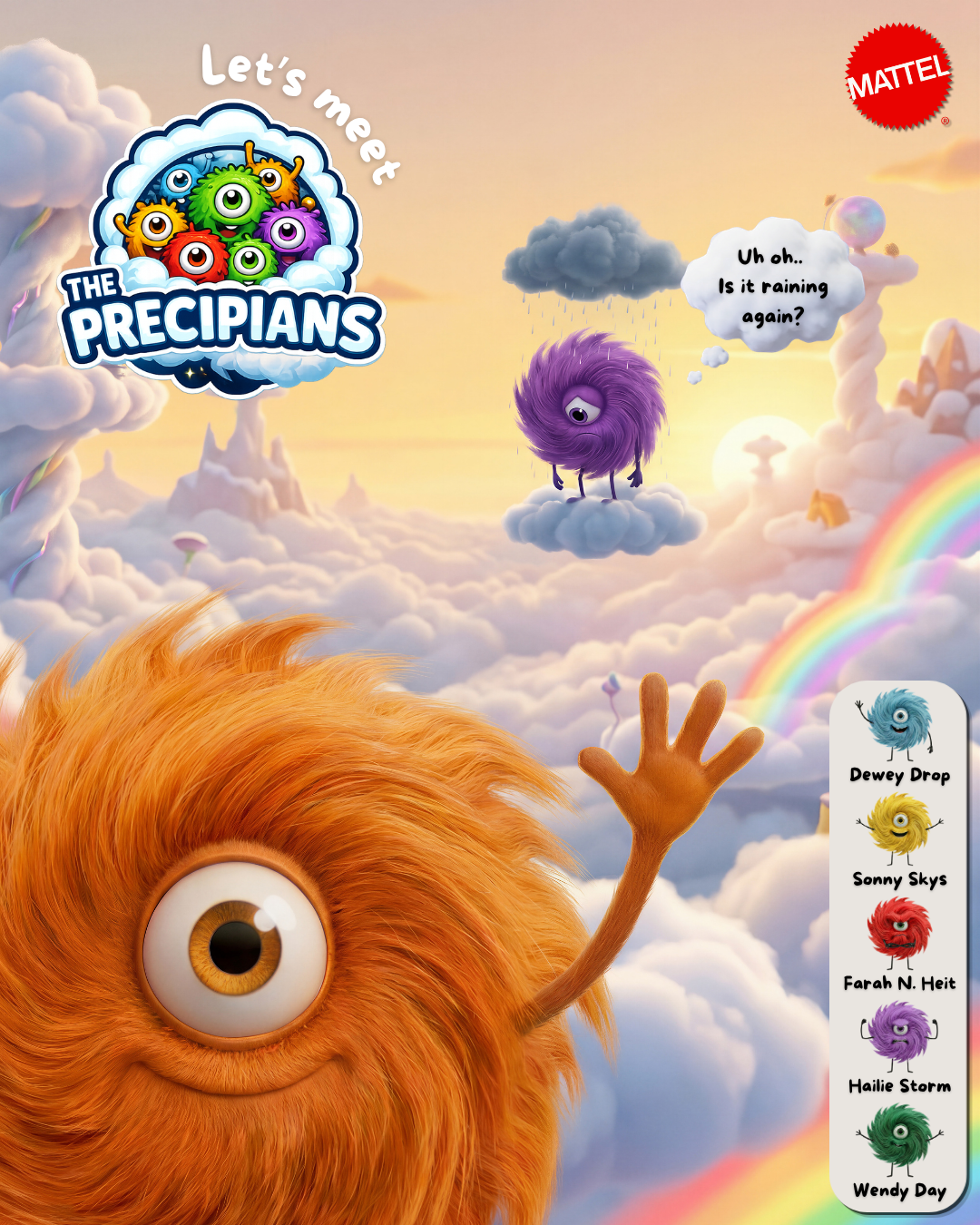
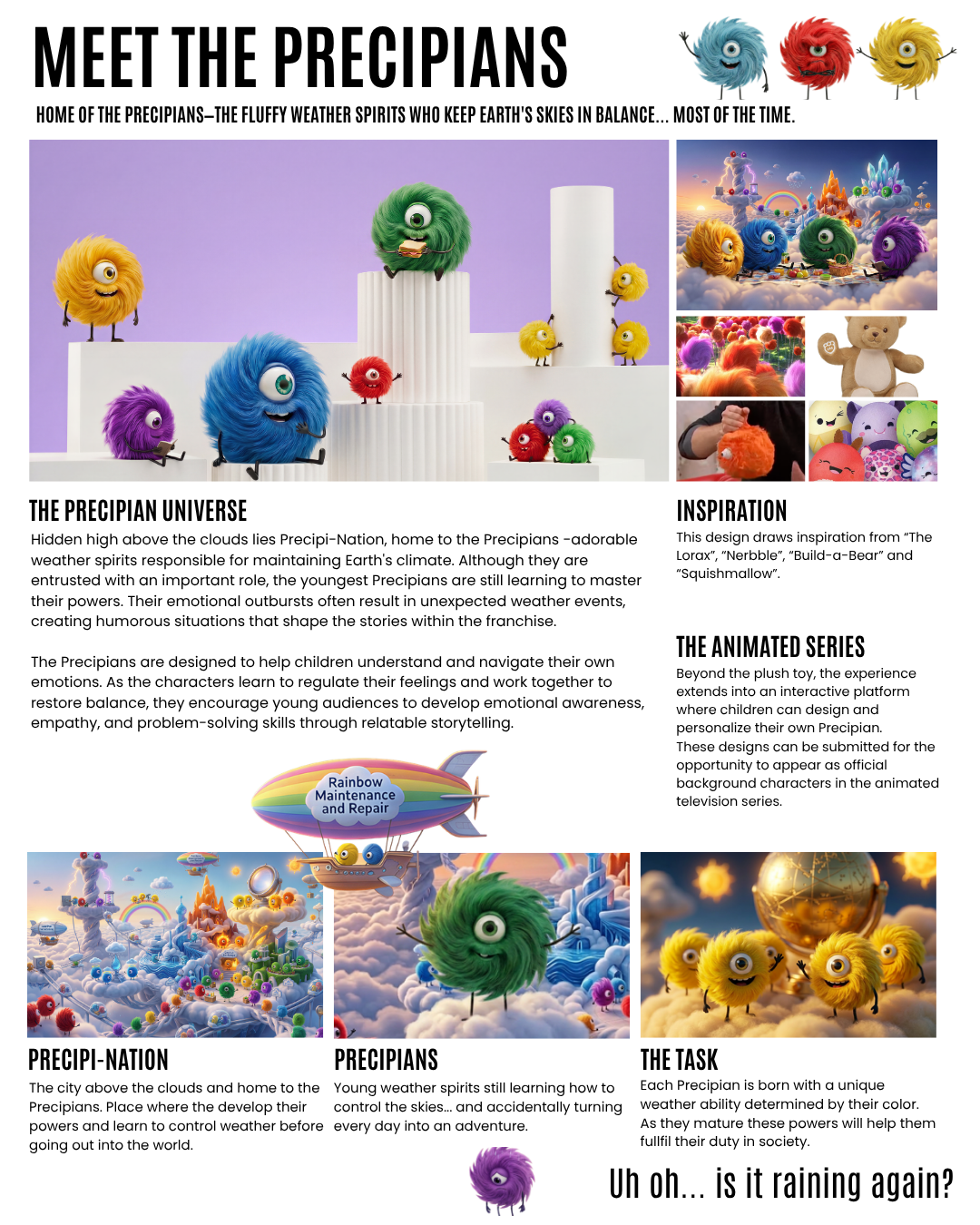
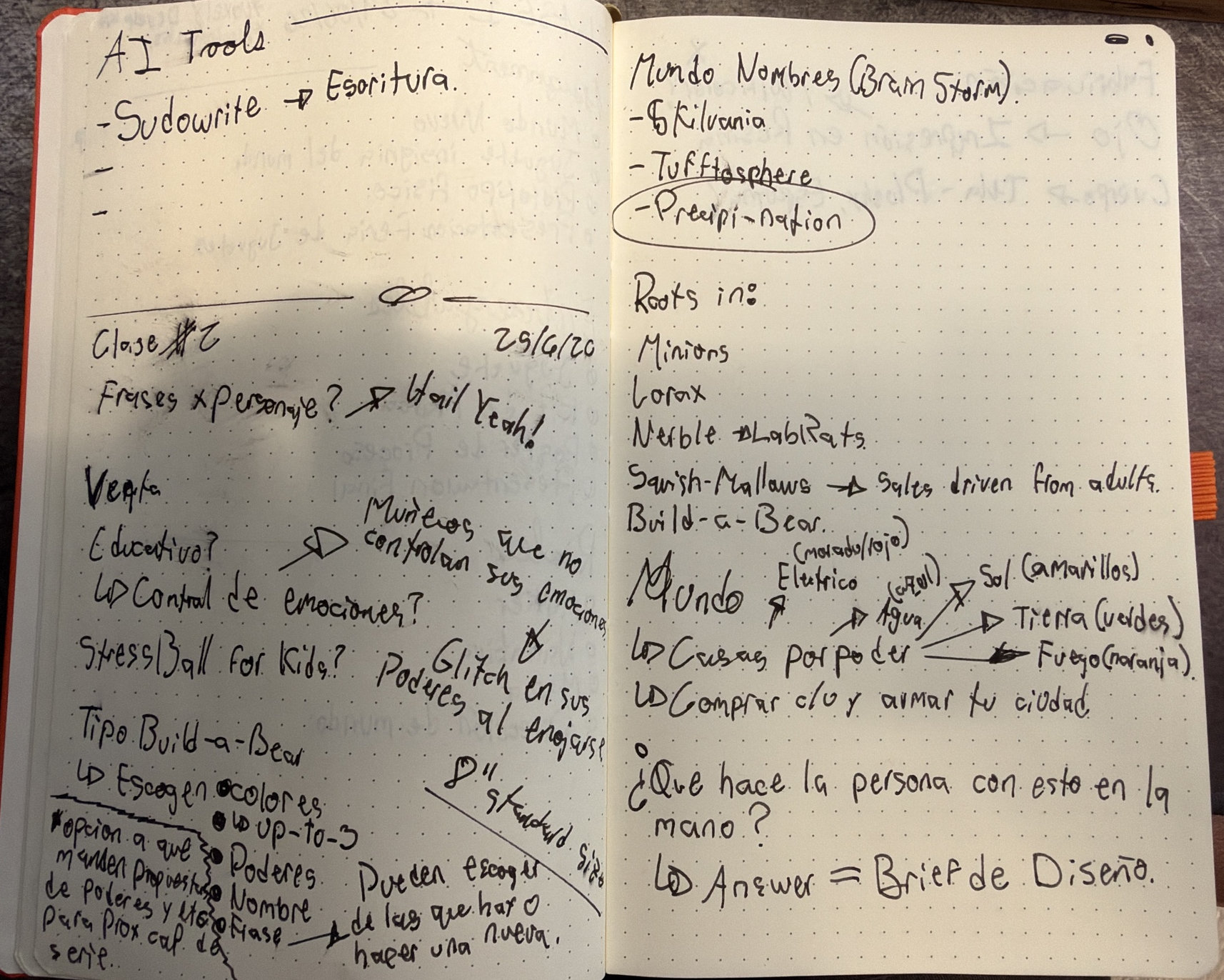
The Precipians live above the clouds, where they control the weather through their emotions.
The problem? They are not very good at controlling either.
A sudden storm, an unexpected downpour, or a flash of lightning can all start with something as simple as how a Precipian feels.
The world is built around five elemental groups.
- Electric
- Purple + red
- Water
- Blue
- Sun
- Yellow
- Earth
- Green
- Fire
- Orange
Their powers, personalities, names, and language all follow the same playful weather-based logic.
What if your toy was actually yours?
The idea was to make the child part of creating the character.
At the store, they could choose the colors, powers, name, and phrase of their own Precipian. The character would become something personal rather than simply something selected from a shelf.
And the experience could continue beyond the toy itself.
We imagined a series where the Precipians slowly learn to understand and control their emotions — while children could submit their own characters for the possibility of appearing in a future episode.
The toy becomes an entry point into the world, not the end of it.
The second user.
One of the most important shifts happened early in the process.
At first, we were designing almost exclusively for the child.
Then we asked a more practical question: who actually buys the toy?
The answer changed the project.
The child still had to love it. But the parent also needed a reason to see value in it.
That pushed us toward a product that could have a purpose beyond entertainment: helping children engage with their emotions through a character they could squeeze, carry, customize, and make their own.
The experience had to work for two users at the same time.
Good names can build worlds.
We spent a lot of time finding the language of the universe.
World names evolved from options like Skilvania and Tufftosphere before landing on:
Precipi-Nation
Then the characters followed the same playful logic.
- Dewey DropWater
- Sonny SkysSun
- Farah N. HeitElectric
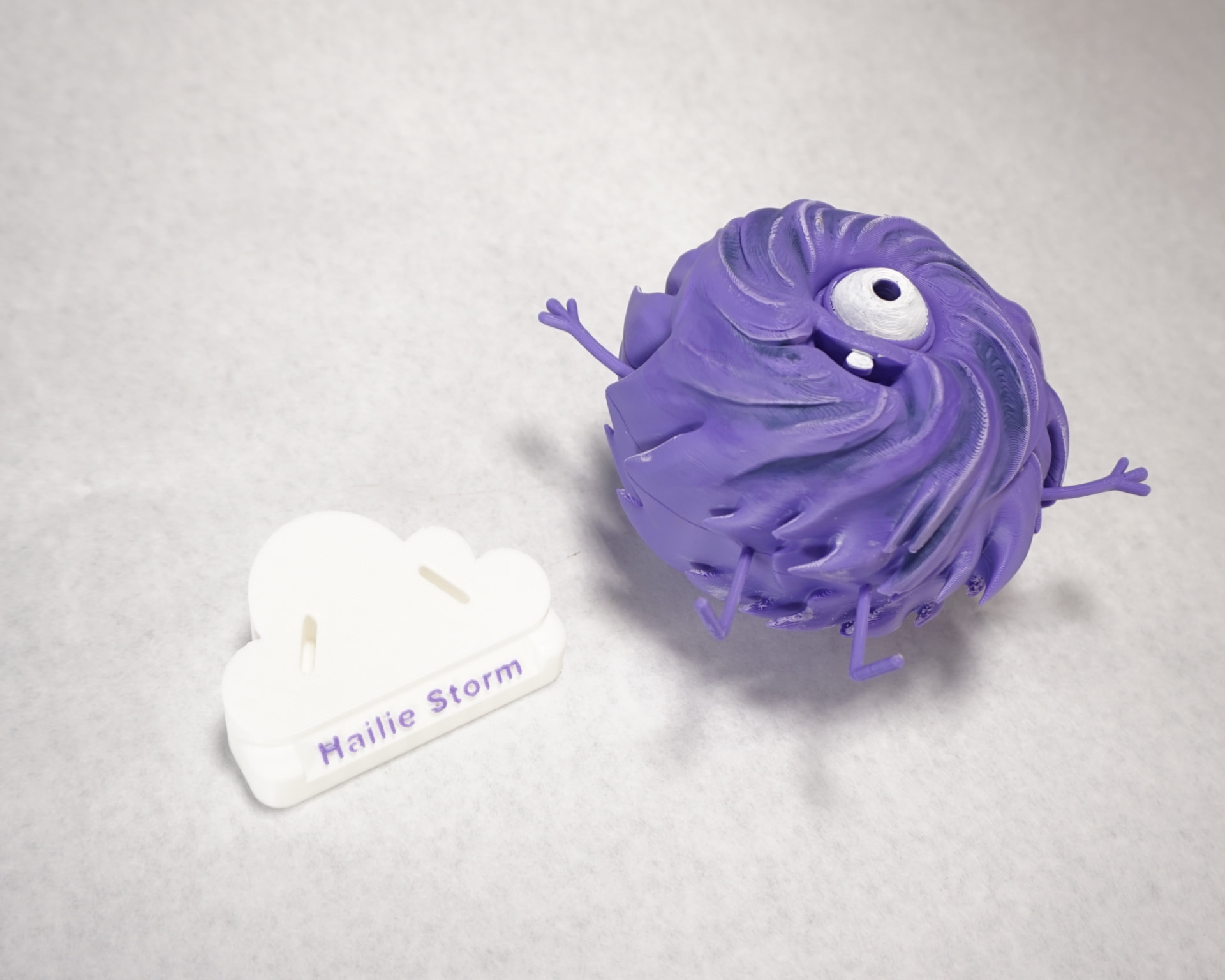
- Hailie StormElectric / storm
- Wendy DayEarth
The wordplay was not just decoration. It helped make the world feel coherent, recognizable, and playful.
From idea to character.
The process started with a broad brainstorming session.
We explored educational concepts, emotional development, character systems, world-building, customization, and the relationship between children and parents.
Once the direction became clearer, we moved into naming, character development, powers, phrases, and the visual language of the world.
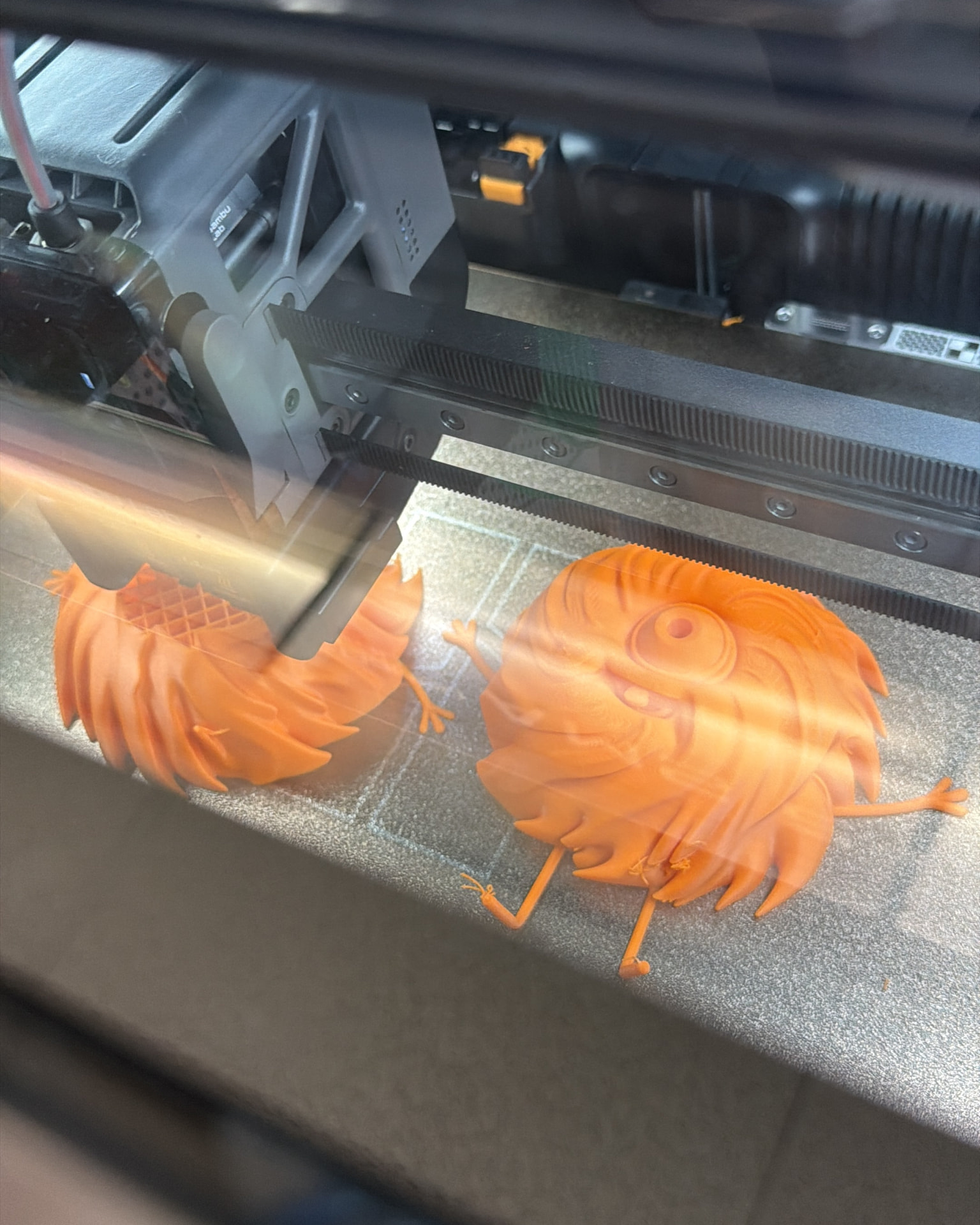
Because the project only lasted one week, speed mattered.
We used AI heavily during the visualization stage to quickly explore digital representations of the ideas we were developing, allowing us to iterate much faster before moving into physical prototyping.
You have one week.
The project had to move quickly from concept to something tangible.
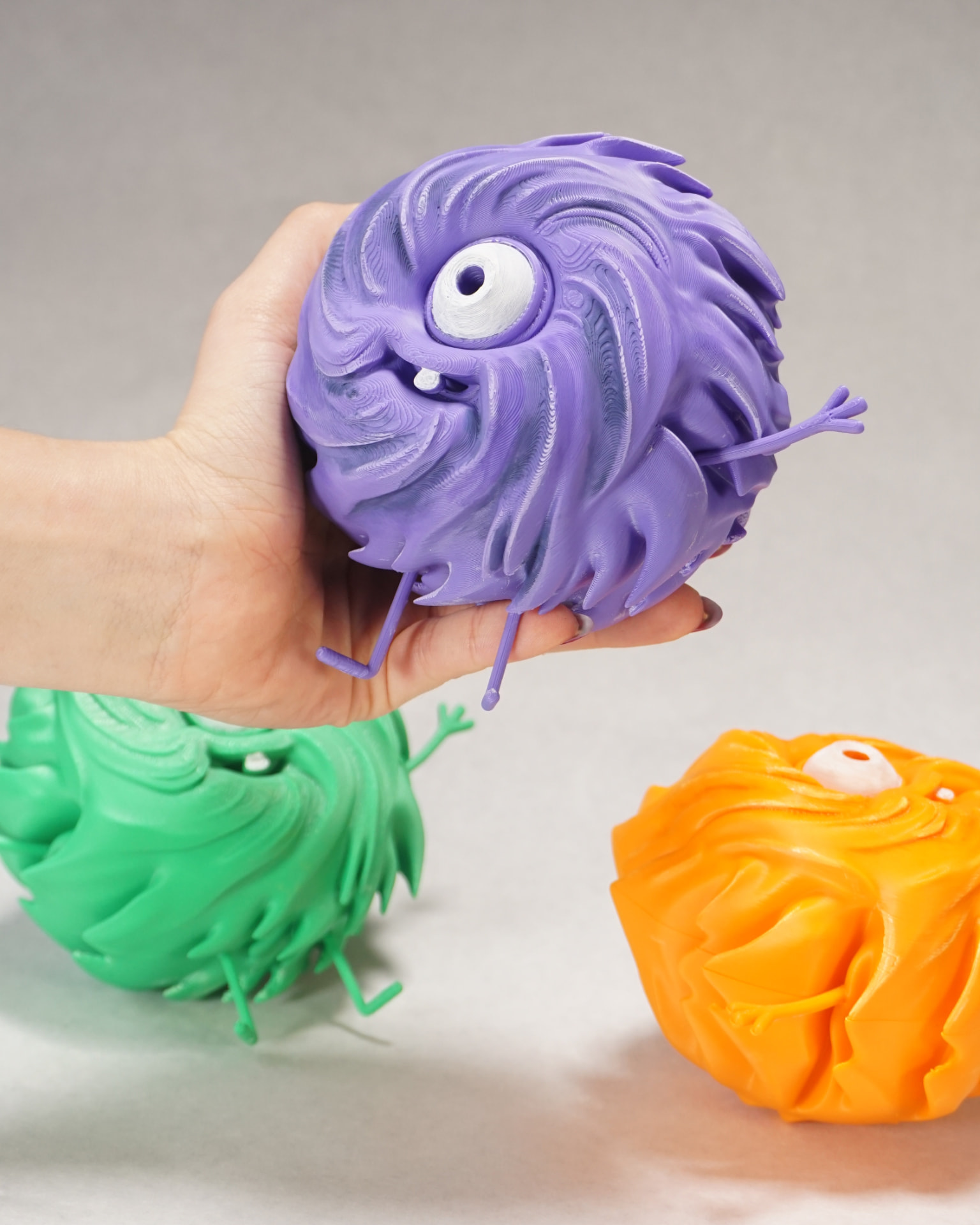
The final toy was imagined as a soft, furry plush that could be squeezed, carried, and interacted with safely.
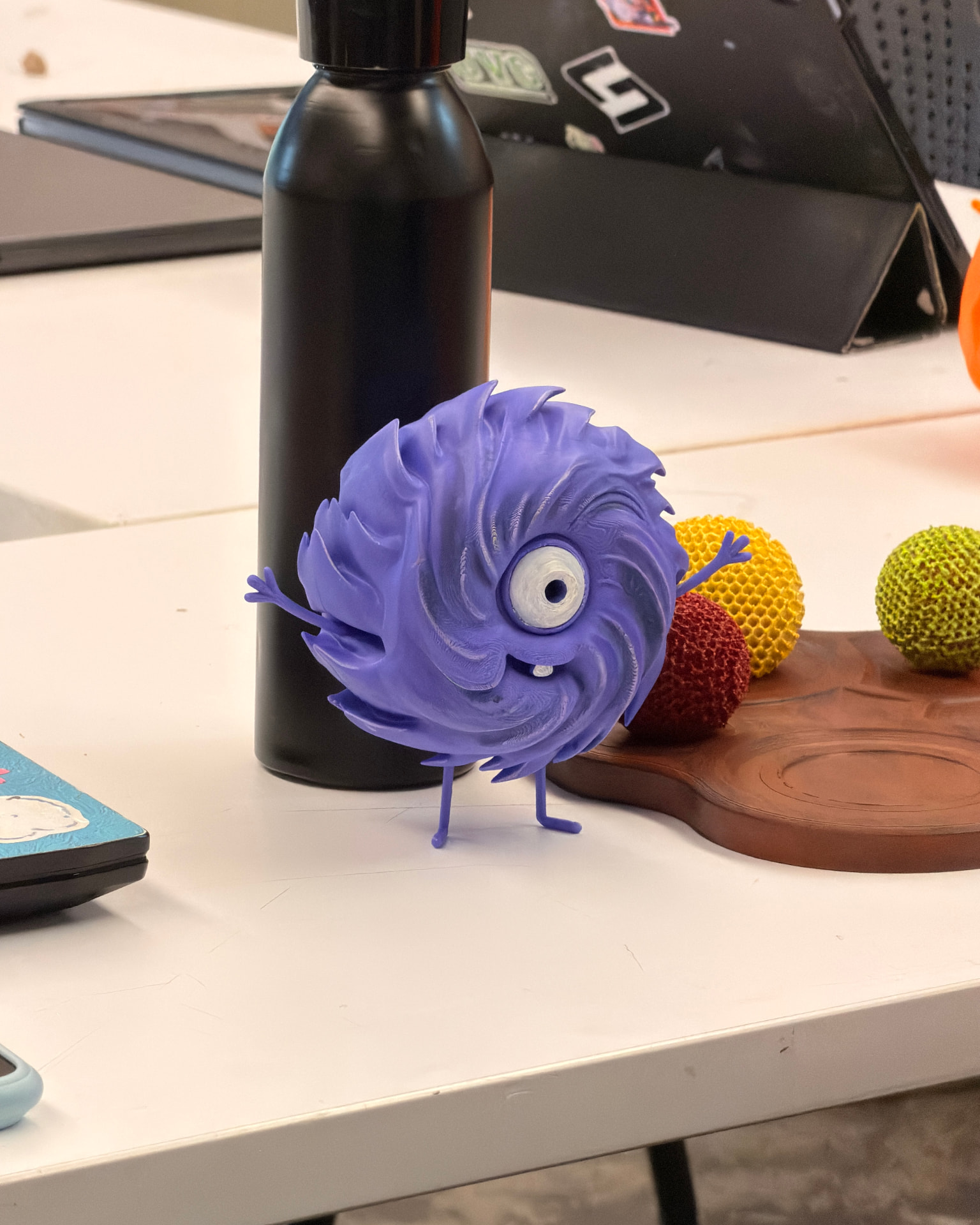
For the academic presentation, however, we created 3D-printed prototypes to visualize the character physically.
We also developed two posters to communicate the universe and its product experience as part of the simulated toy fair.
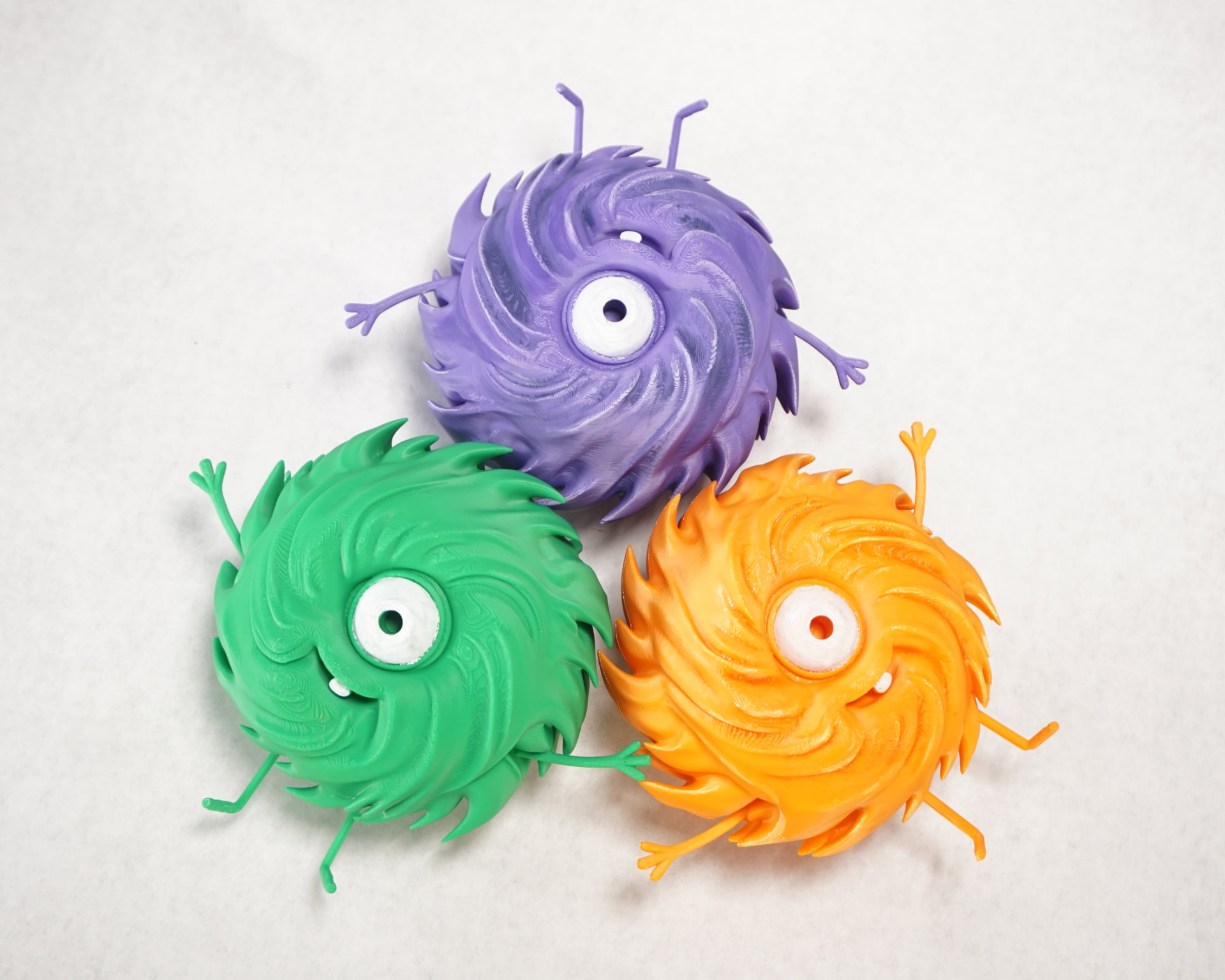
A world is more than a character.
The project expanded beyond one plush.
We imagined Precipi-Nation as a broader system where characters, powers, customization, collectible components, and an animated series could all connect.
The idea was that children could continue building their own version of the world over time.
That ecosystem thinking became just as important as the character itself.
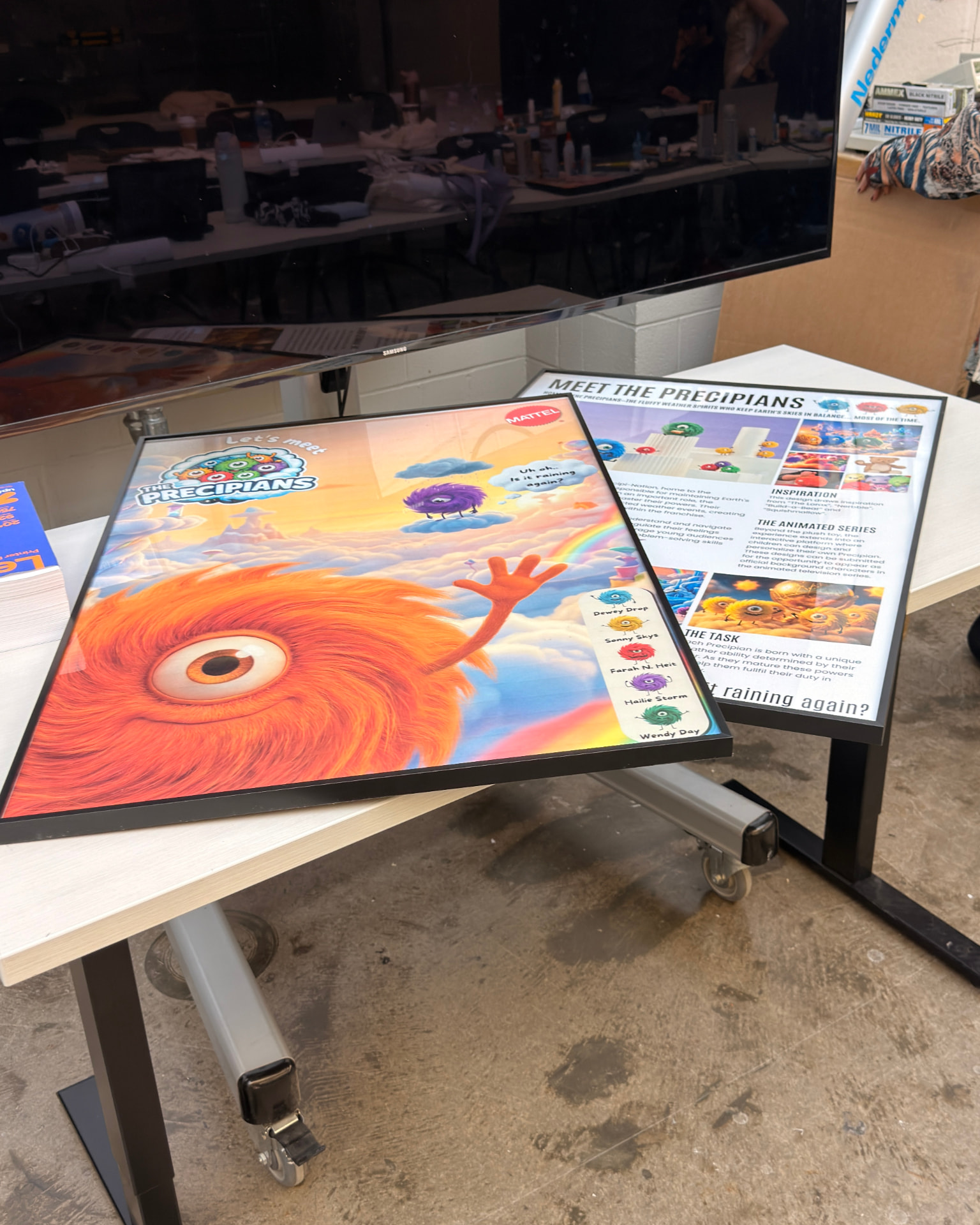
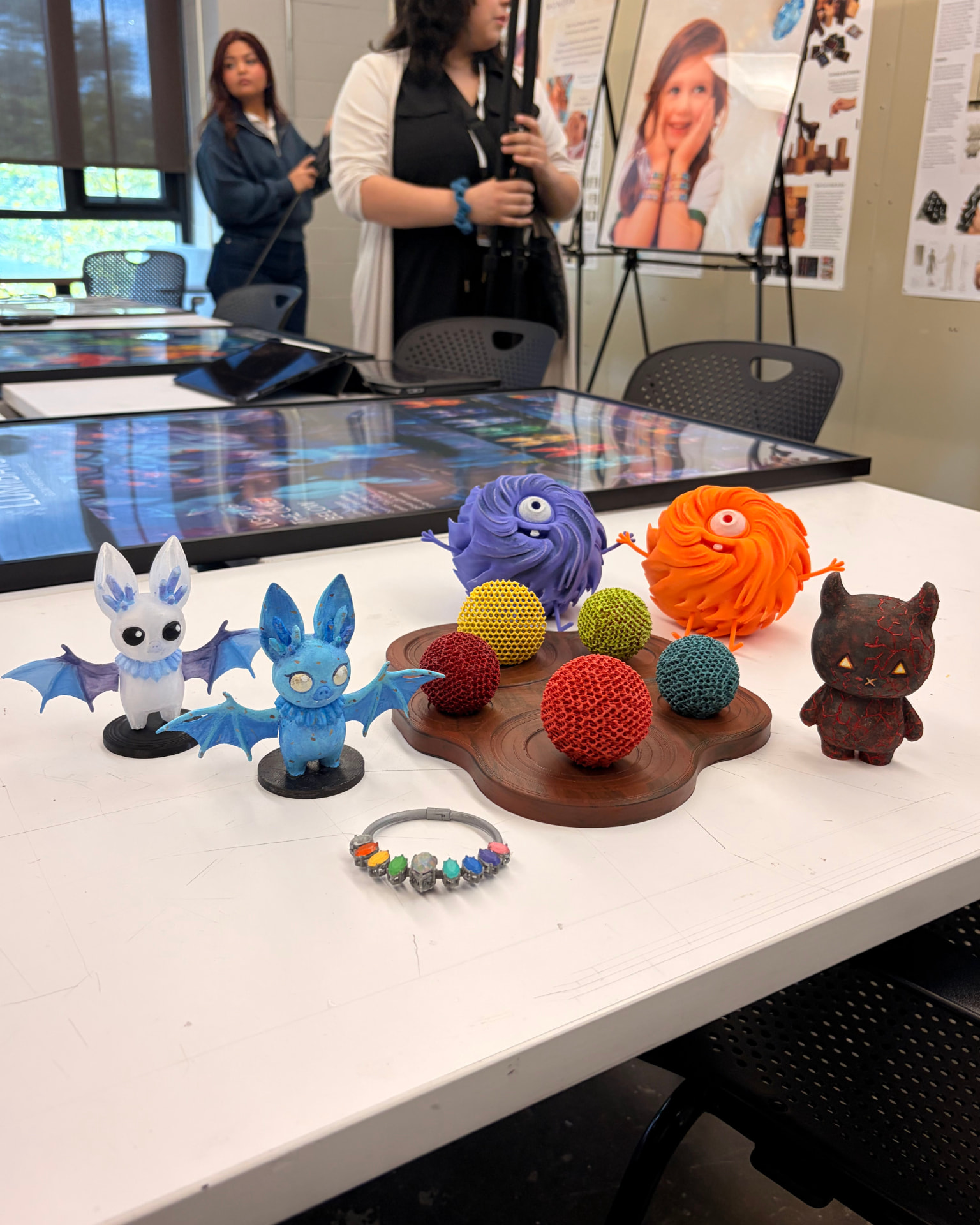
Designing inside an exchange.
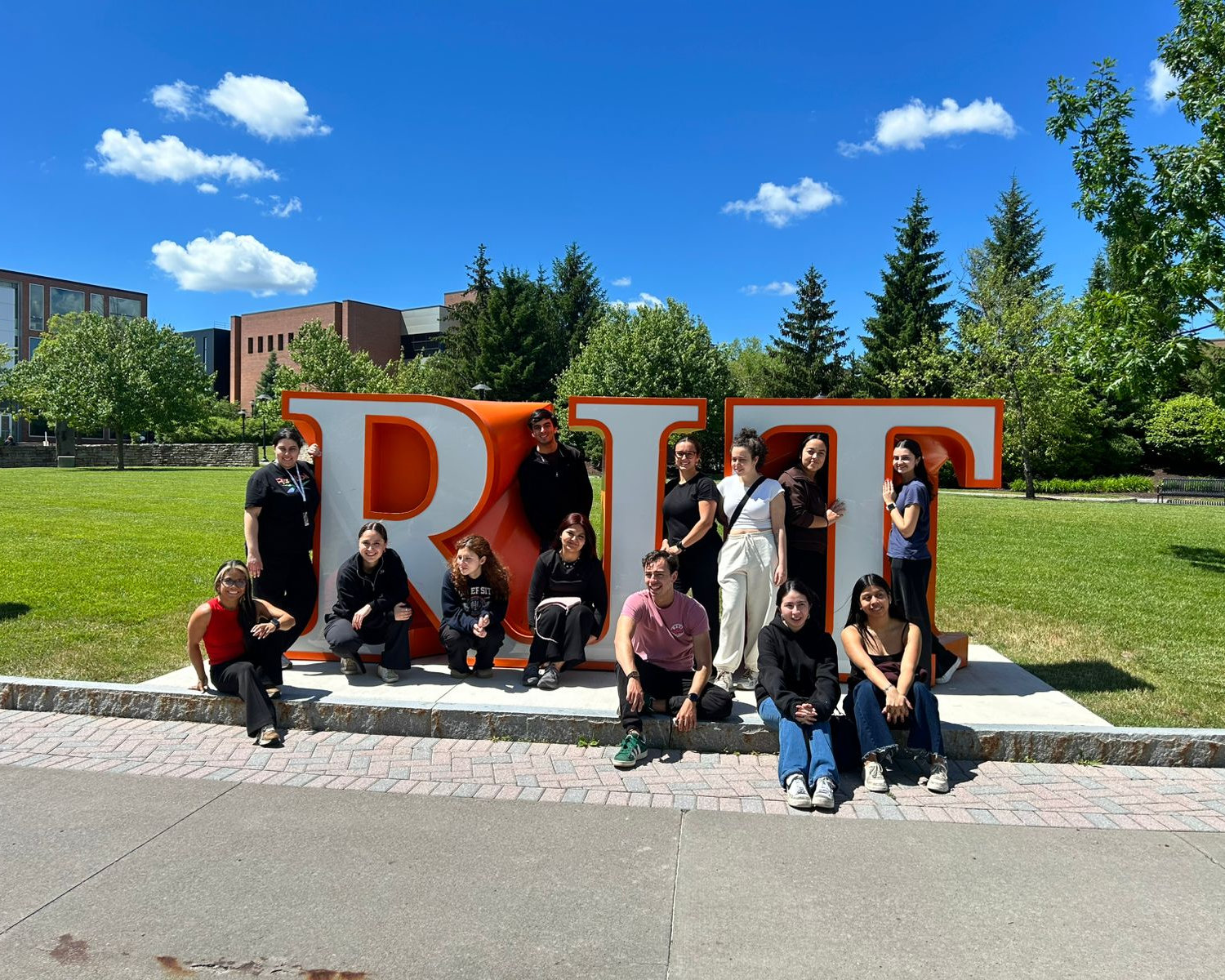
The project was developed during an academic exchange at the Rochester Institute of Technology.
For one week, we were not just visiting the university. We were living there as students — staying in the dorms, eating in the cafeteria, working in the studios, and experiencing a completely different design environment.
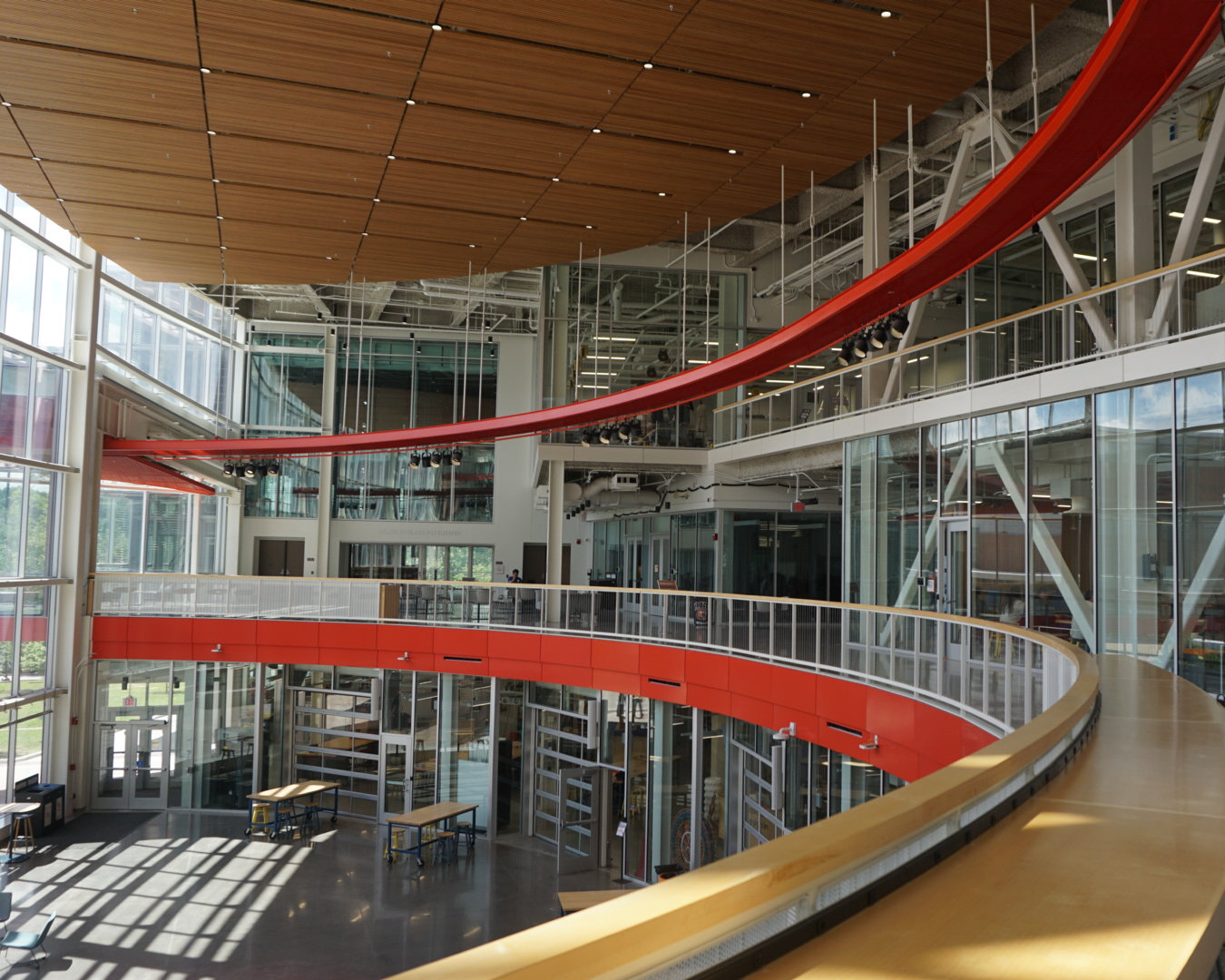
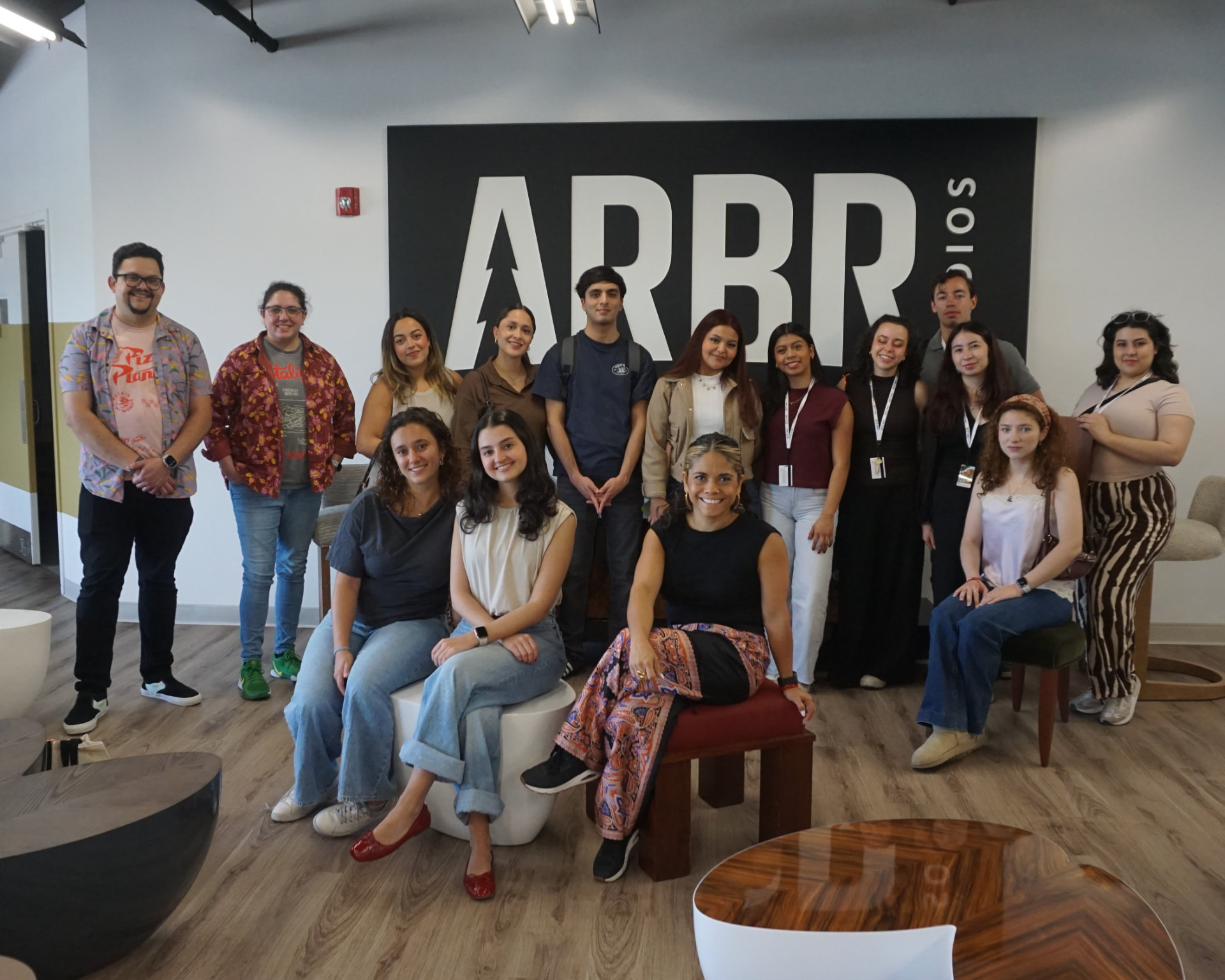
We also visited RIT's creation and manufacturing spaces and ARBR Studios, where we saw how large-scale projects move from design into production and installation.
Seeing that level of execution changed the scale at which I thought about design.
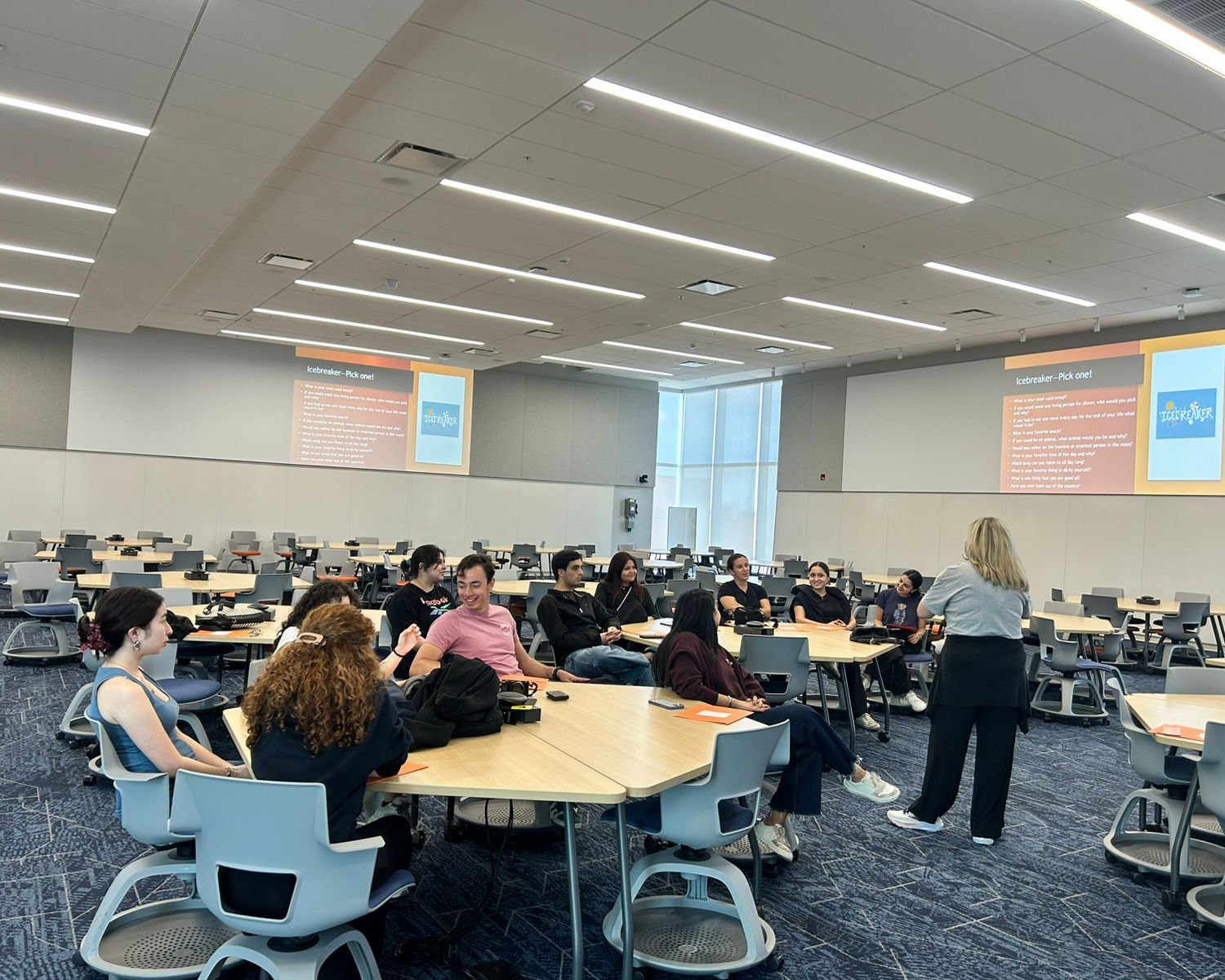
What I took with me.
The biggest takeaway was not the toy.
It was learning to think beyond the obvious user, beyond the object itself, and beyond the limits of the project brief.
A product can have a primary user and a secondary user with completely different needs.
A character can become a system.
And a one-week project can still open a much bigger conversation about what design can do.
This experience also reminded me how much there is to learn when you step into an unfamiliar environment.
Sometimes the fastest way to think differently is simply to go somewhere different.