← Back

Bantrab — 2025

Los 3
Tiempos

Guatemalan artisan textile collection

Product Design / Team Lead

Client
Bantrab
Year
2025
Type
Product Design / Textile
Role
Product Design / Team Lead
Los 3 Tiempos textile collection displayed as breakfast, lunch and dinner
01

Typical doesn't have to mean predictable.

Guatemalan textile products carry an enormous amount of cultural identity, but they are often presented through very similar formats.

The challenge was to create something that still celebrated local textile craft without looking like another version of what was already on the market.

Bantrab gave us an unusually open brief: create a new textile-based product, work directly with artisans, and challenge the perception that traditional textile products have to feel repetitive, predictable or outdated.

The material had to remain part of the story.

The product did not.

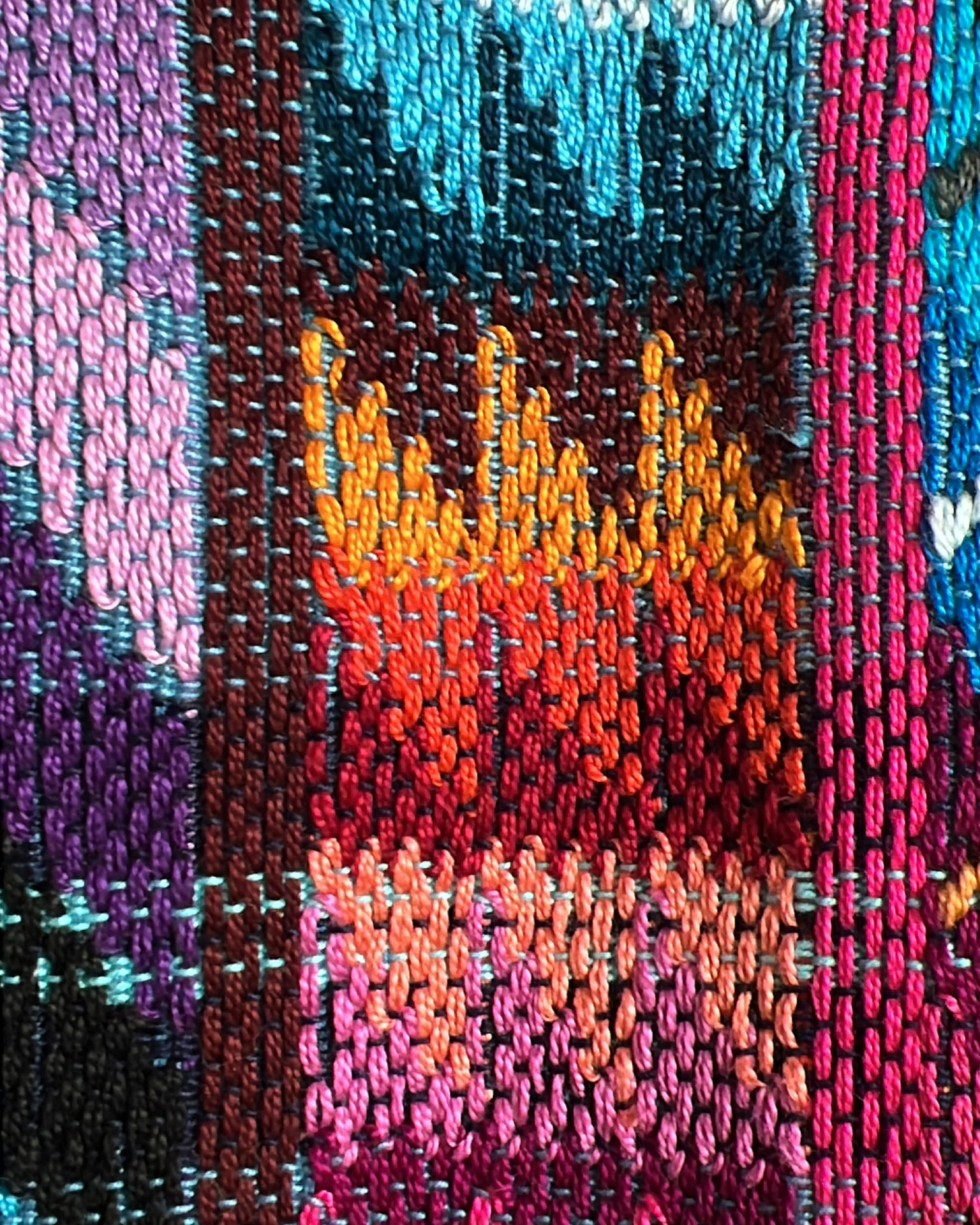
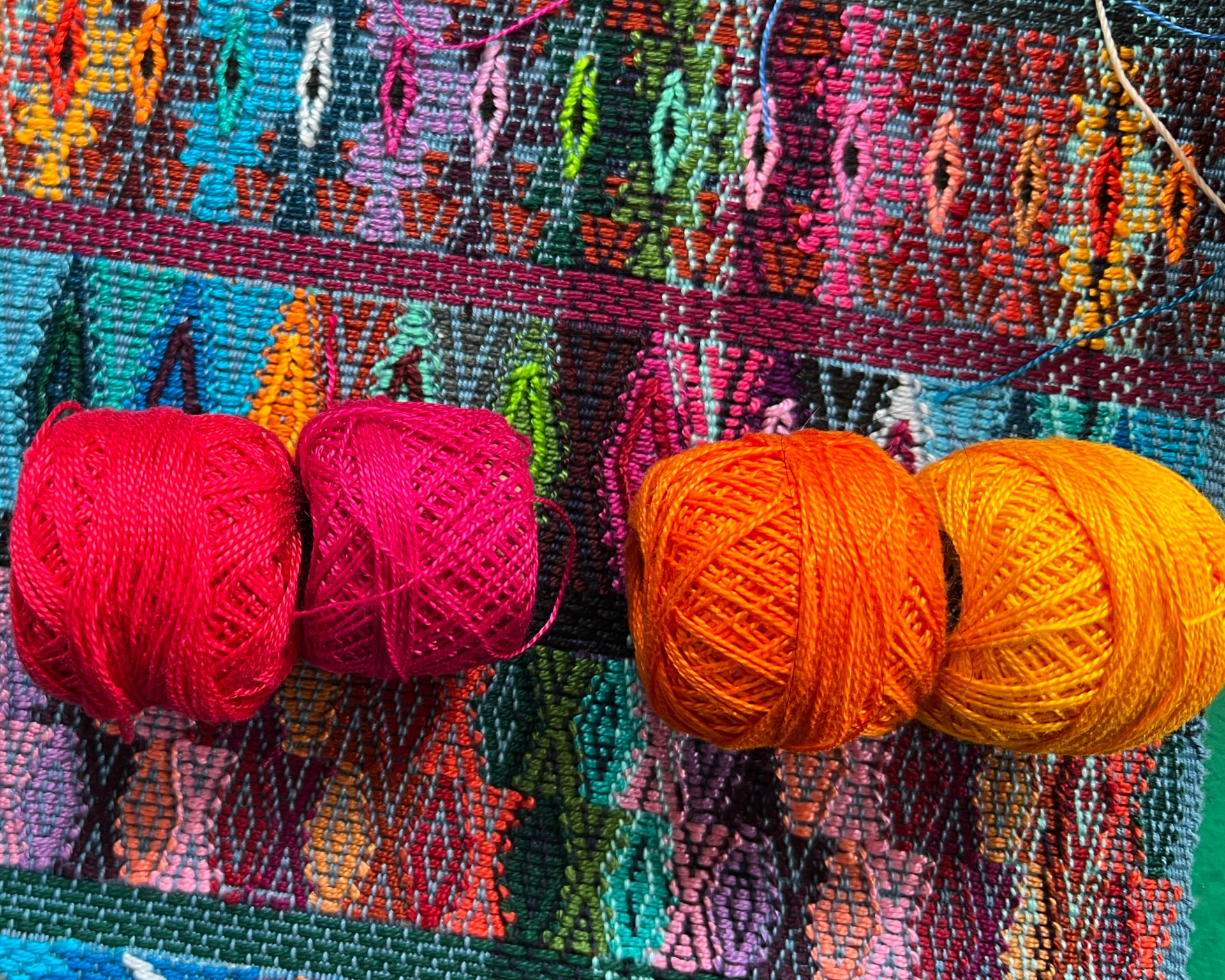
Close detail of colorful woven Guatemalan textile
02

What if food became the product?

During research, we became interested in the way food was entering fashion and product culture.

Some references were deliberately exaggerated, playful and almost absurd.

That was exactly what made them interesting.

It raised a question:

What if we connected two things that clearly represent Guatemala, but normally have nothing to do with each other?

Textiles and food.

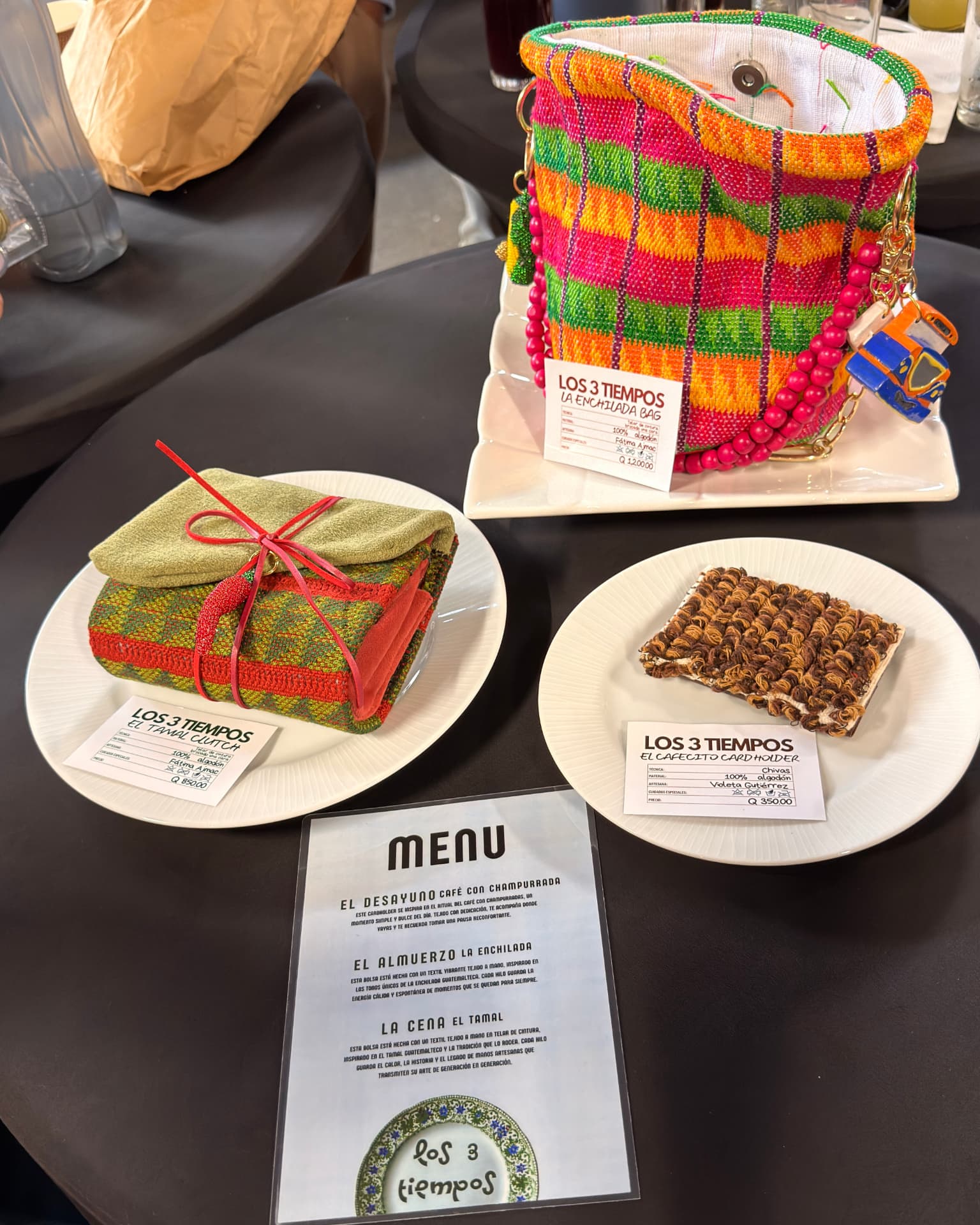
From there came Los 3 Tiempos: a collection built around three moments of the day and three recognizable Guatemalan foods.

Breakfast.
Lunch.
Dinner.

Not as graphics printed onto products, but as cues for their shape, construction, colors and interaction.

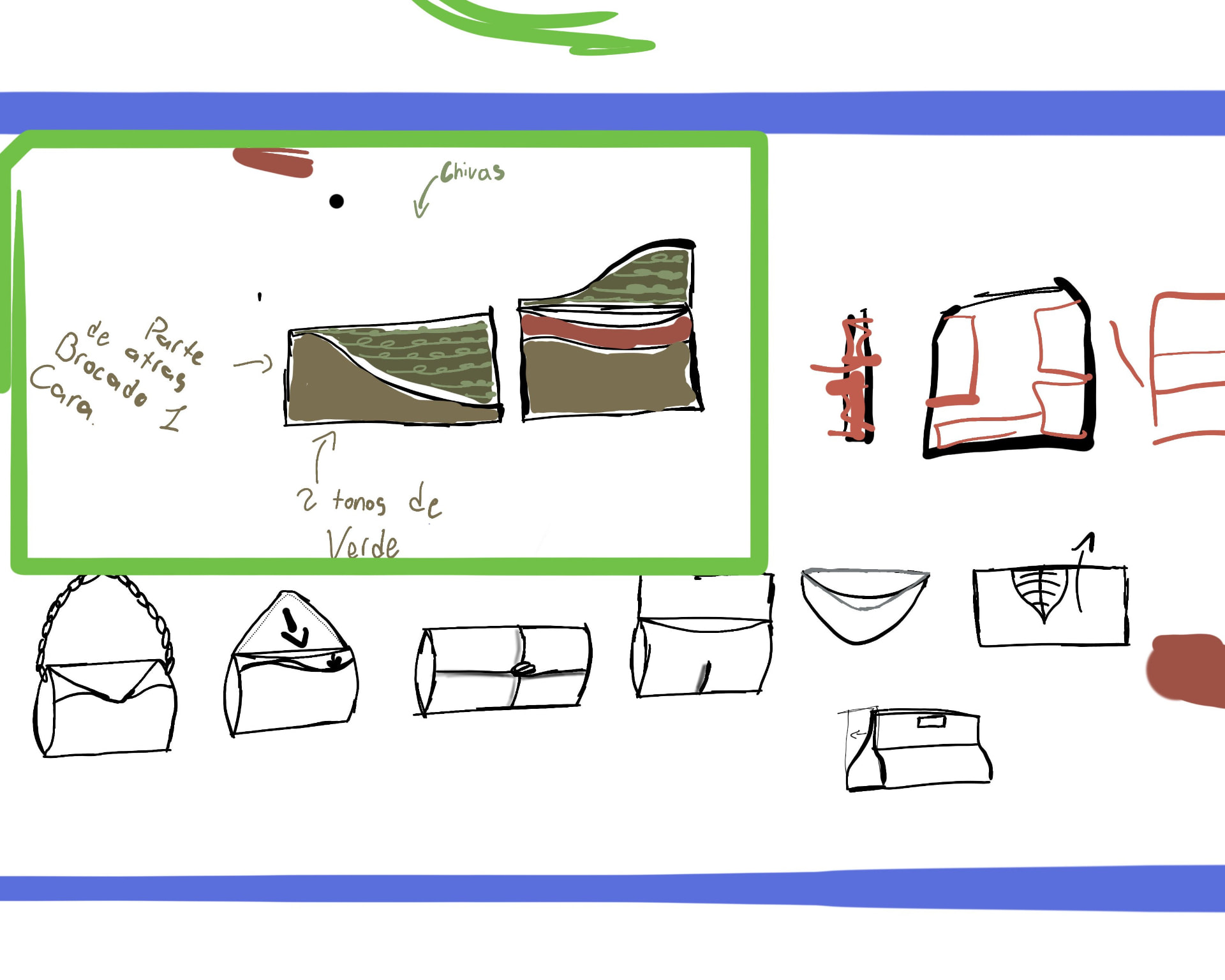
Early Los 3 Tiempos bag sketches and construction notes
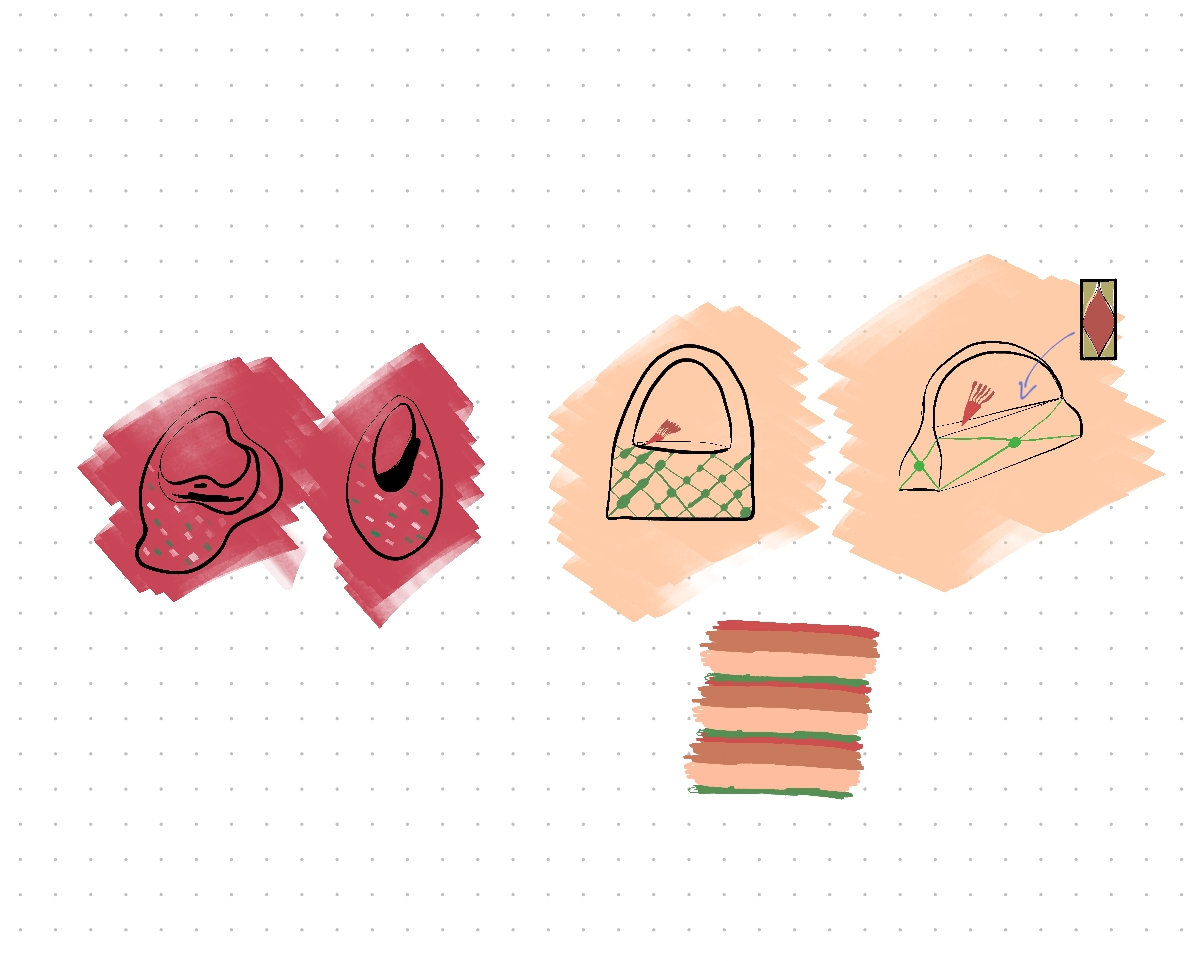
Early studies for the enchilada-inspired bag
03

Breakfast. Lunch. Dinner.

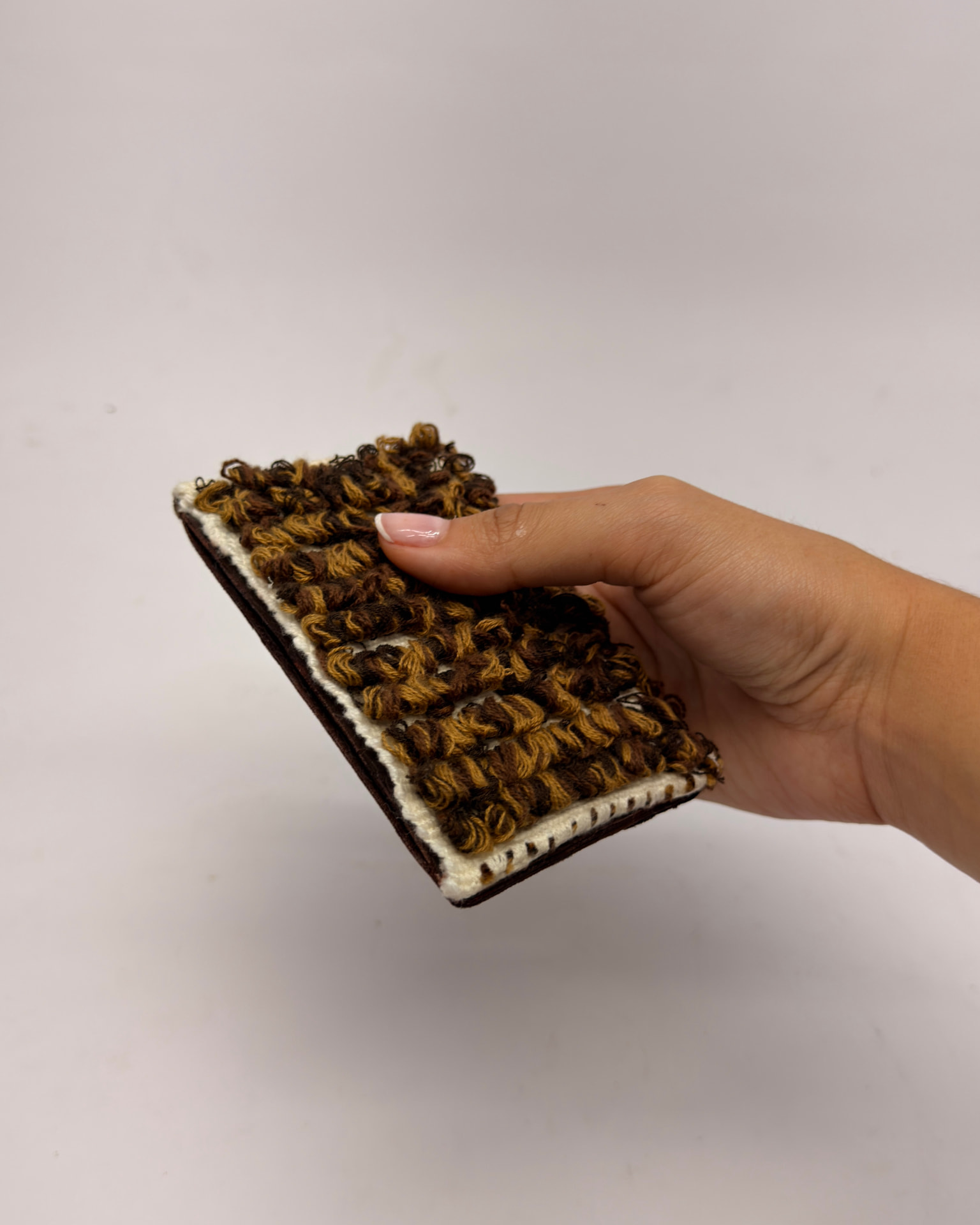
Los 3 Tiempos coffee and champurradas cardholder held in one hand
01

Breakfast

Coffee + champurradas

A cardholder combining leather with Guatemalan textile produced using the Chivas&Chivas technique.

The smallest piece in the collection translated the familiarity and simplicity of breakfast into a compact everyday object.
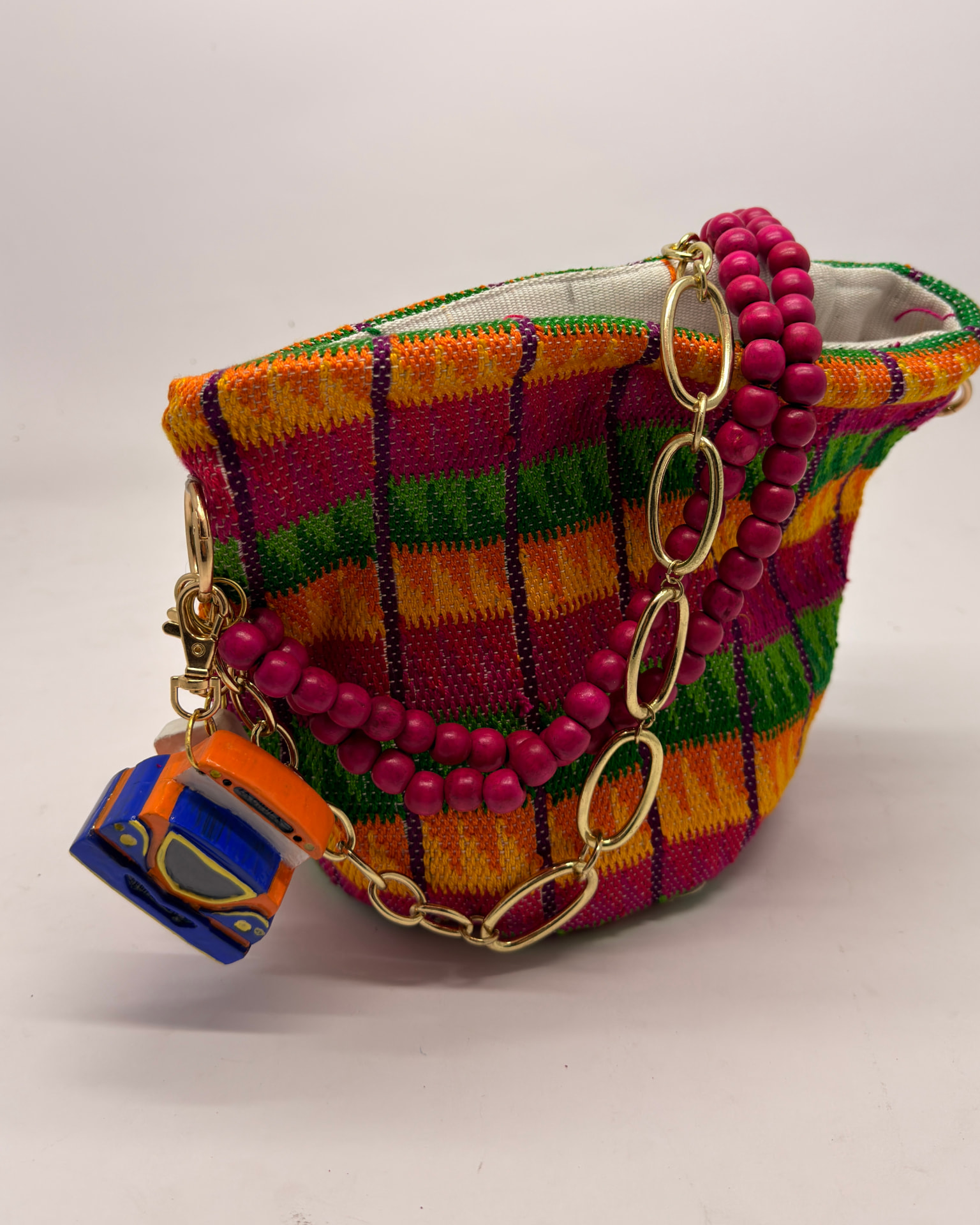
Los 3 Tiempos enchilada bag with colorful textile and beaded straps
02

Lunch

Guatemalan enchilada

The lunch bag was inspired by the tostada that holds a Guatemalan enchilada, its characteristic colors and — just as importantly — how messy the food itself can be.

Instead of forcing the bag into a perfectly rigid and conventional silhouette, its form embraces that irregularity.

The textile was produced using the banderas technique.
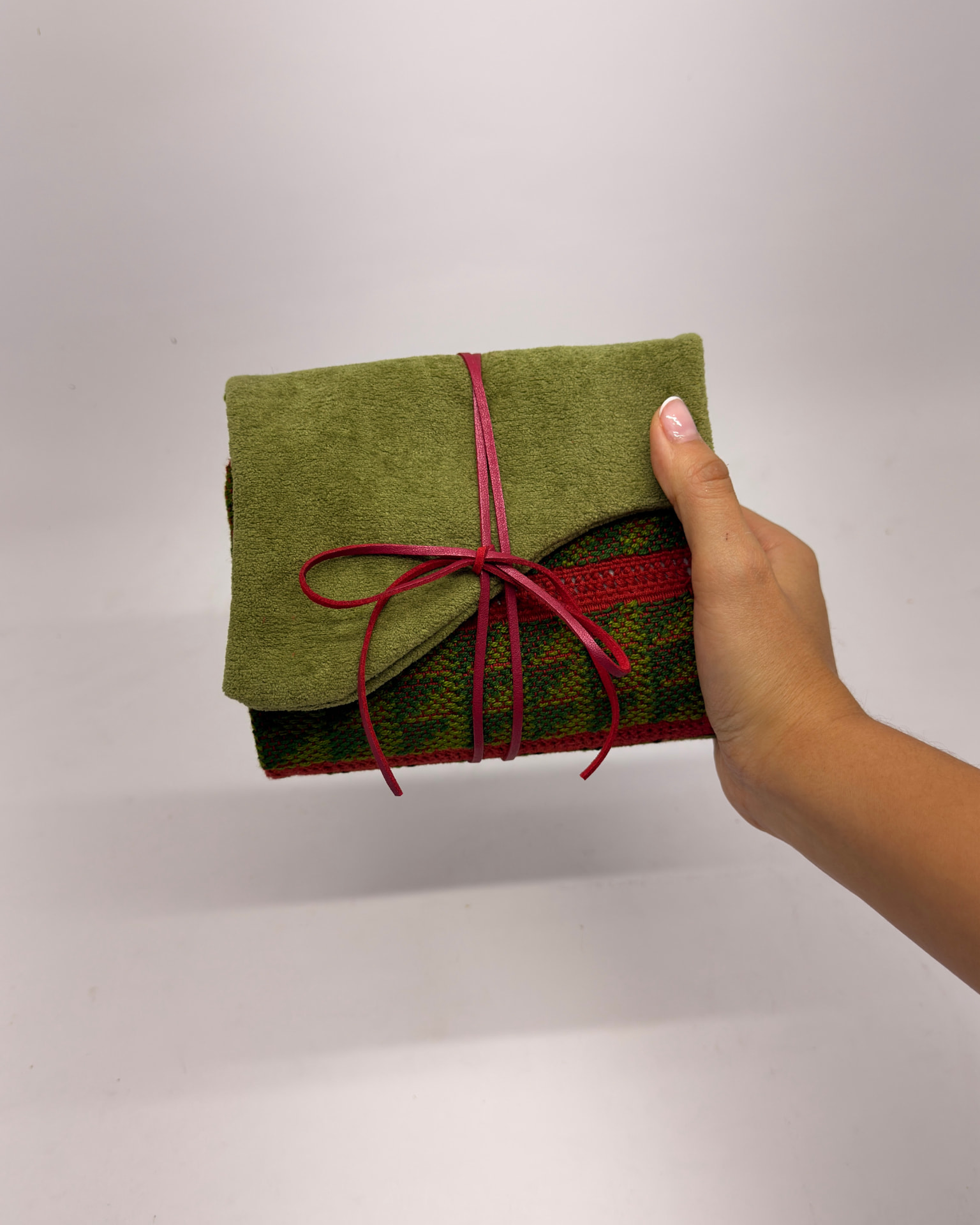
Los 3 Tiempos tamal bag wrapped in green fabric and red cord
03

Dinner

Tamal

The final bag took its interaction directly from the way a tamal is wrapped.

The body folds over itself and is secured with a cord, turning the act of opening and closing the bag into part of the concept.

Its outer green references the wrapping leaf, while the red interior references the recado inside.

Like the enchilada bag, it uses textile made with the banderas technique.
04

Making the idea behave.

Turning a food reference into a bag was the easy part.

Making it function like a real product was where things became interesting.

Paper models helped us understand the folding mechanism of the tamal bag before committing to the final construction.

The textile itself introduced another constraint: the product needed structure without losing the material that gave it its identity.

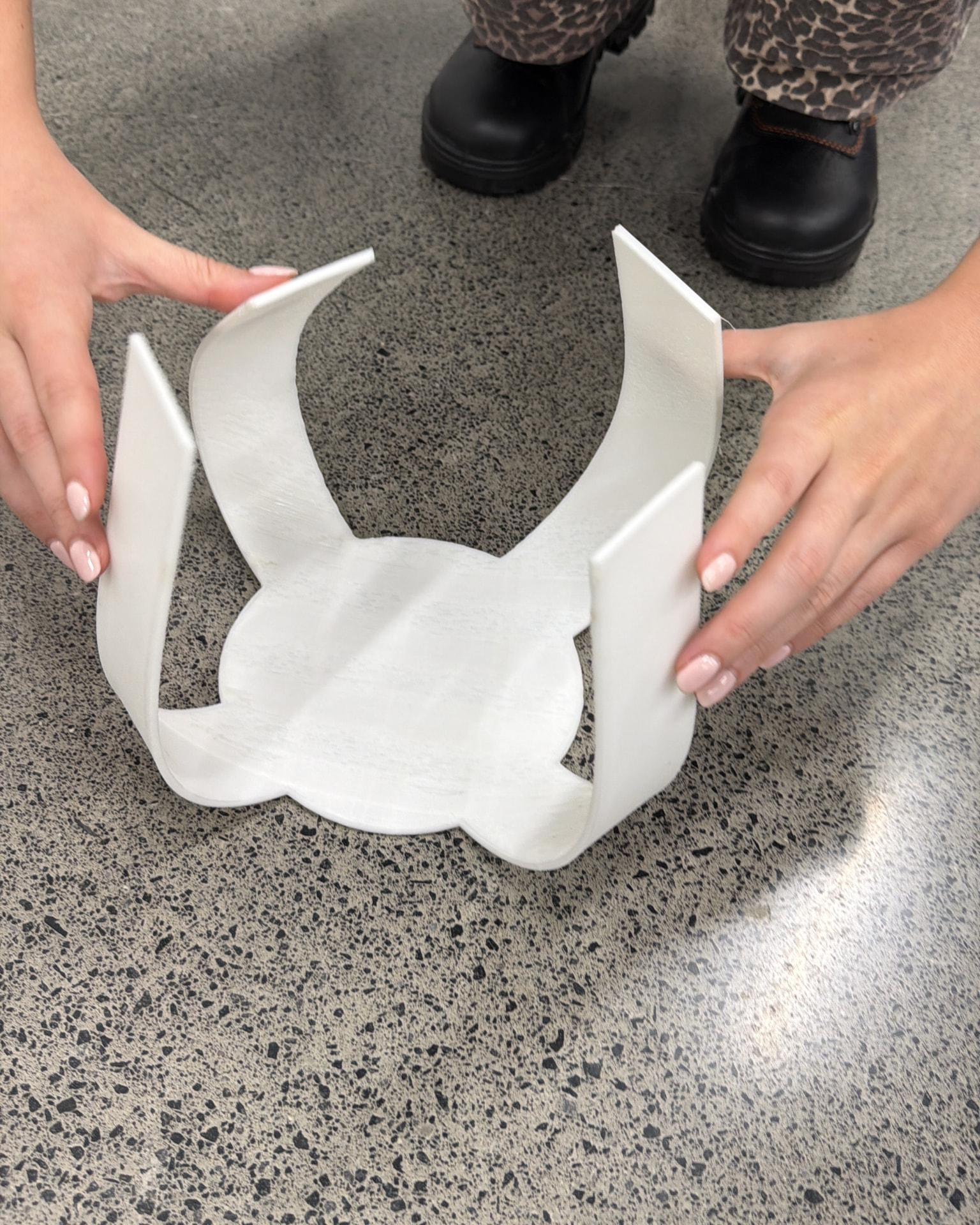
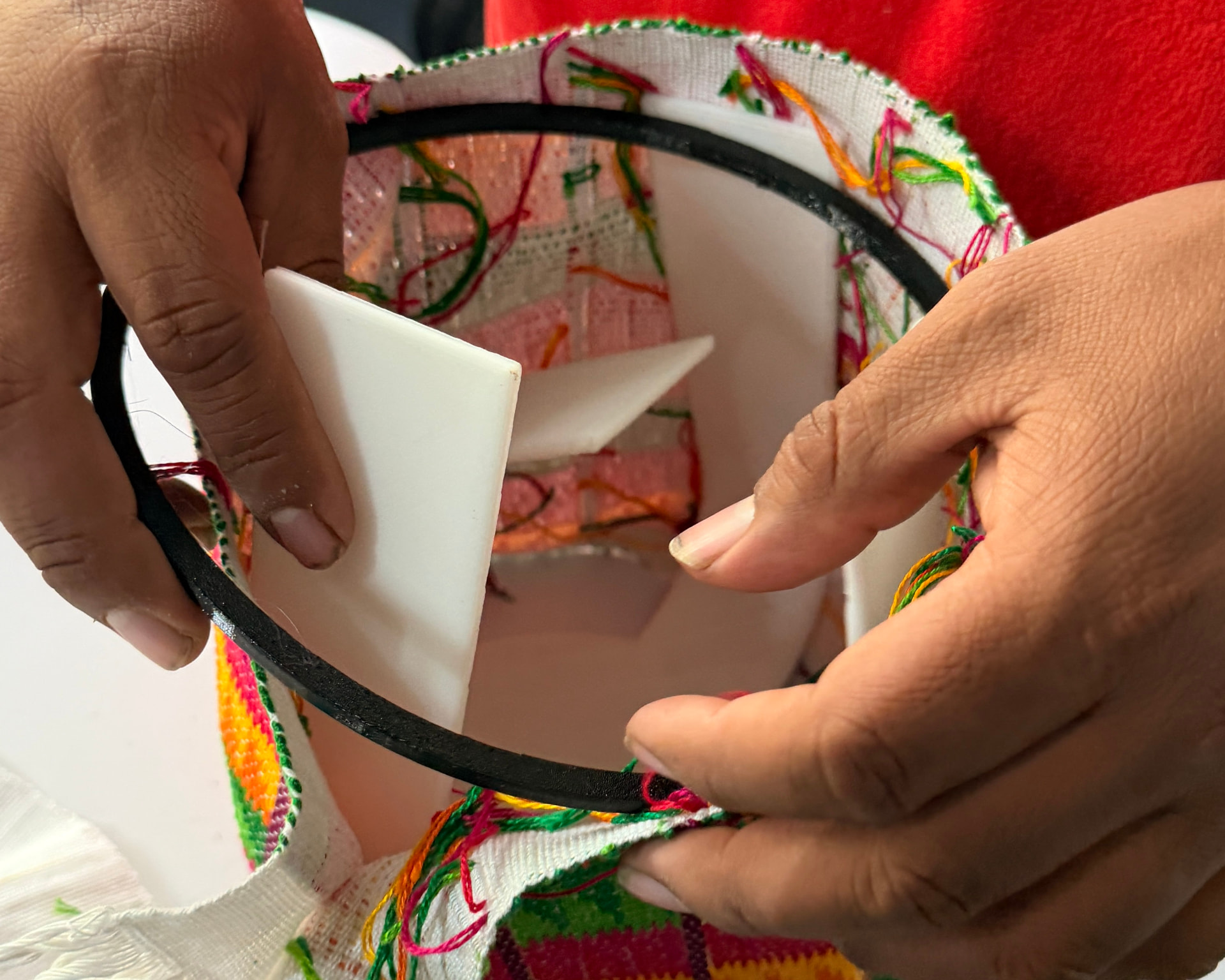
For the two bags, we developed an internal flexible skeleton printed in TPE.

The intention was to give the bags enough structure to hold their form while keeping the internal support flexible and washable.

That meant experimenting with textile samples, thread colors, adhesives, construction methods and multiple TPE printing tests.

TPE is not particularly forgiving in 3D printing.

Neither was attaching it cleanly to textile.
Flexible TPE internal bag skeleton prototype
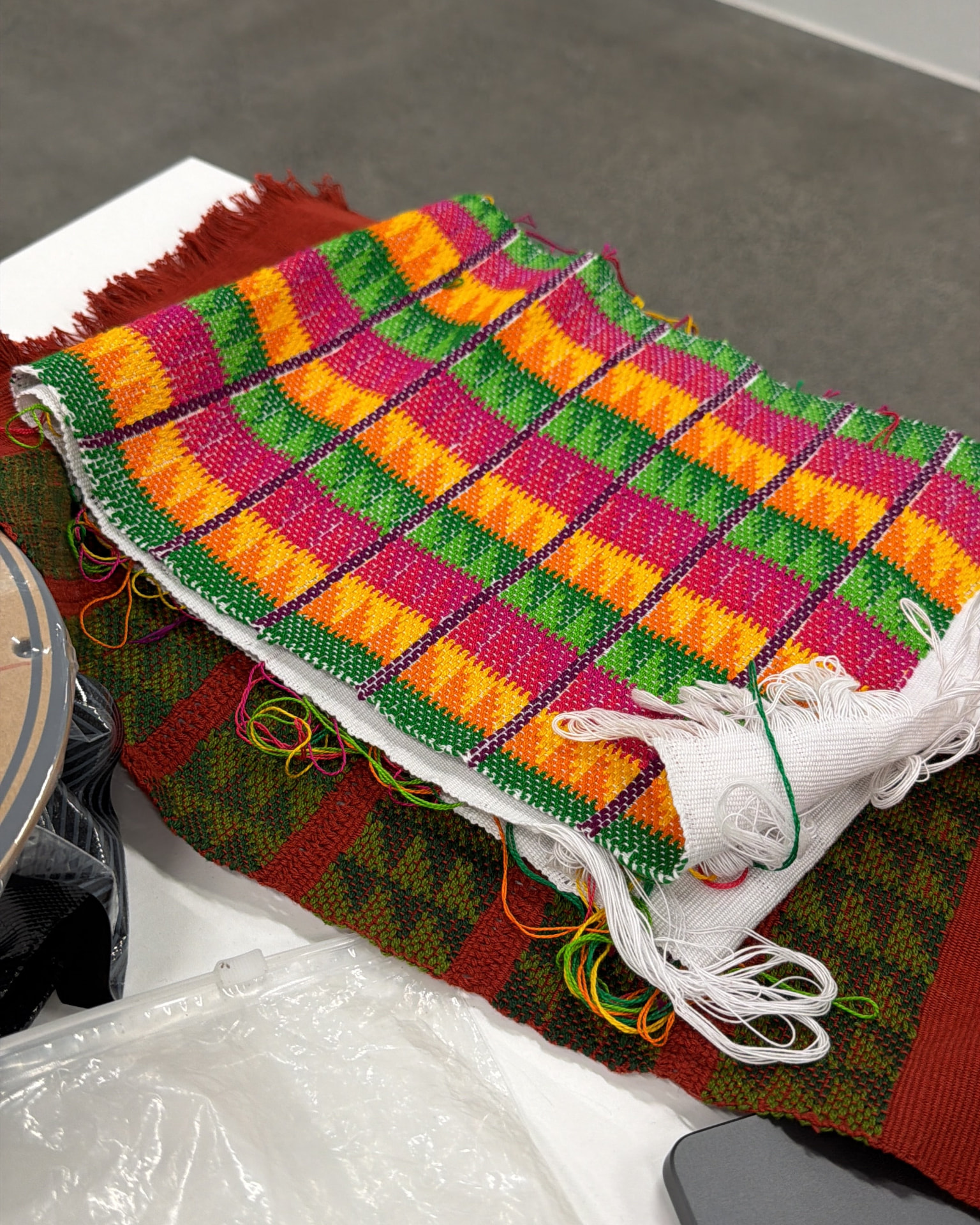
Colorful textile samples during development
Close-up woven textile color study
Thread color selection laid over woven textile
Hands assembling the flexible skeleton inside the textile bag
05

This was not the plan.

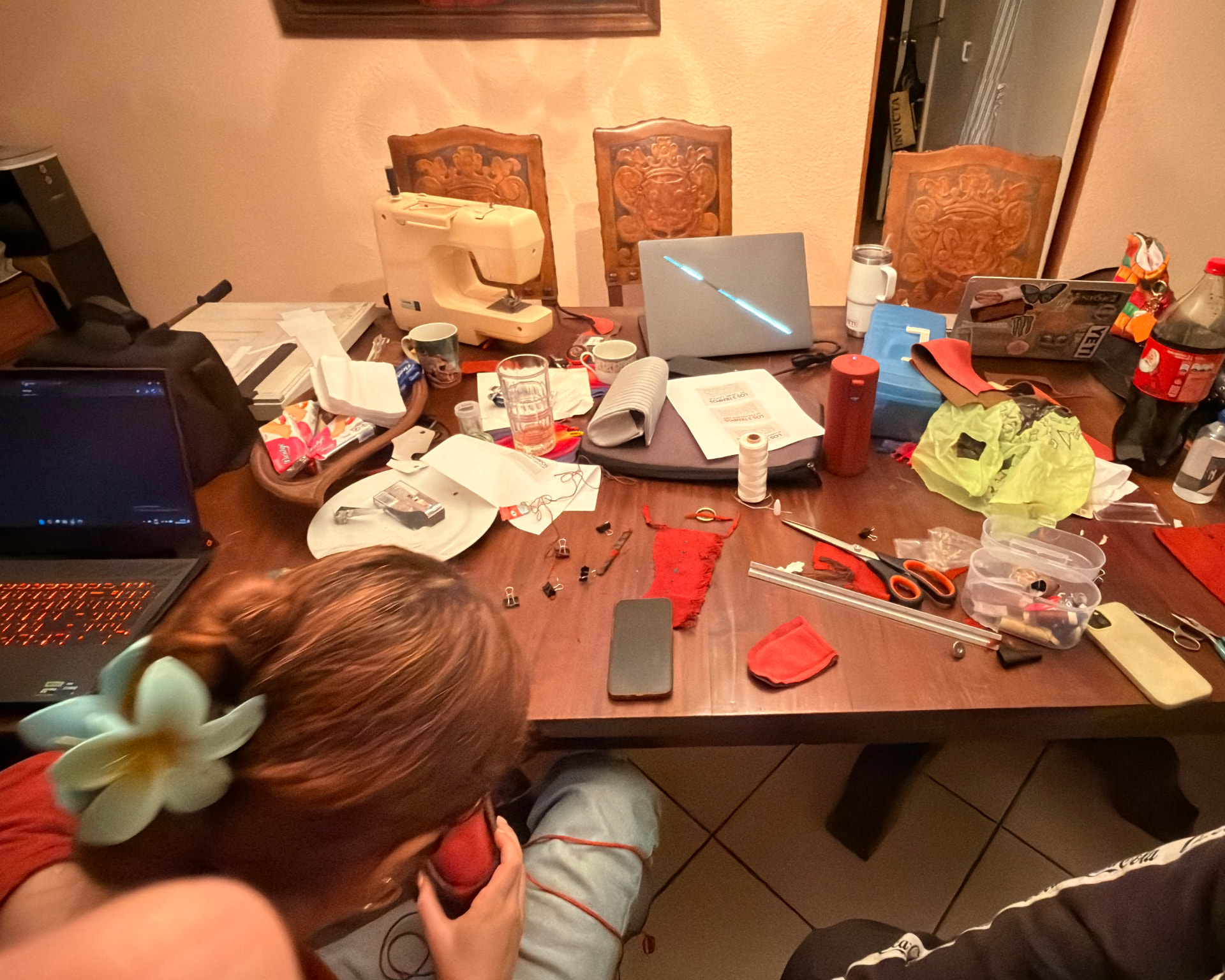
Late-night worktable covered with sewing tools, prototypes and materials

The final tamal bag was supposed to come back from an external maker ready for presentation.

It didn’t.

Delivery kept getting pushed back until there was no longer enough time to wait.

We collected the unfinished work and finished the prototype ourselves the night before the presentation, working until around 3 a.m.

The process changed completely.

What had been planned as a controlled fabrication stage became an exercise in improvisation, sewing, assembly and figuring things out as we went.

The TPE structure created another problem.

Compared with the cardboard traditionally used to give bags structure, flexible TPE was much harder to bond cleanly to the textile.

The idea still worked.

Getting it to behave was another story.

Good ideas get ugly before they get real.

06

Then we had to sell the idea.

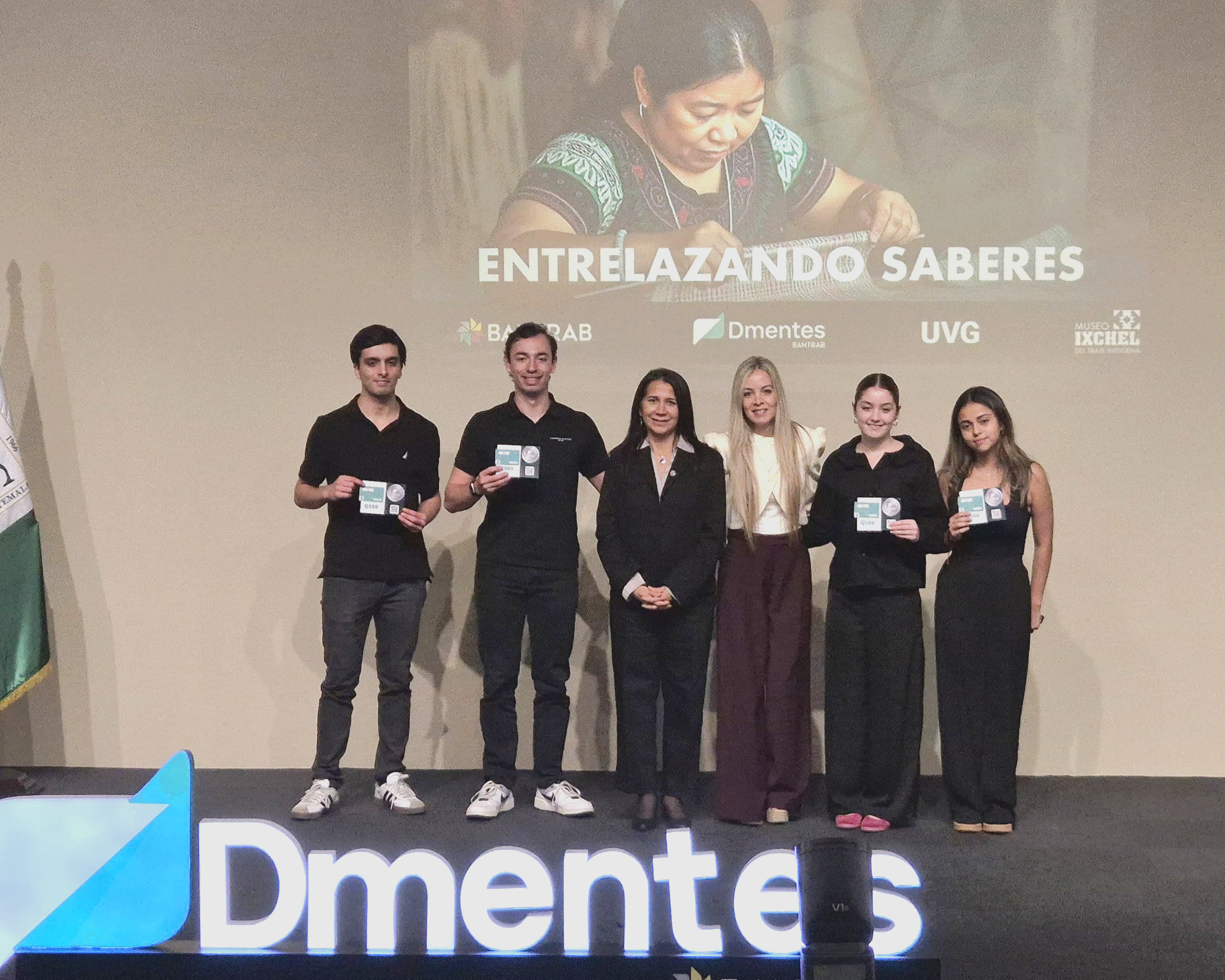
Los 3 Tiempos team at the Bantrab competition presentation

By presentation day, the objects were finished.

But the project was not.

Most teams entered the pitch conventionally.

We decided not to.

The rest of the team stepped out first.

Then I entered alone, calling out:

“Desayunos, almuerzos, cenas — ¡Los Tres Tiempos!”

It immediately broke the formality of the room.

Even the person monitoring backstage looked confused.

That was the point.

The collection was playful and unexpected. Presenting it like a conventional design proposal would have contradicted the project itself.

The pitch became part of the design.

And it worked.

07

First place.

Complete Los 3 Tiempos collection on display
Final enchilada bag
Final tamal bag

Los 3 Tiempos won first place in the competition.

The jury included senior Bantrab executives, and the project generated enough interest that we were later invited to present it again to Bantrab’s board using the same presentation format.

After the competition, Bantrab also connected the team with a museum to explore the possibility of selling the collection.

That opportunity ultimately did not move forward due to external factors, but it was the first moment the project began to move beyond the context in which it had been created.

And during the original presentation, the Tamal bag was purchased by a Bantrab employee.

A university project had unexpectedly become an object someone actually wanted to take home.

08

What stayed with me.

This project taught me that designing the object is only one part of making something real.

Working with artisans and external makers meant learning that people can approach the same product from completely different ways of thinking and making.

Production does not always follow the plan.

Materials rarely behave exactly like the render.

And sometimes your plan B becomes the product you end up presenting.

But one thing stayed with me most:

How you tell an idea can completely change how people see it.

The pitch did not fix the product.

It gave people a reason to pay attention to it.

And sometimes that is just as important.

Finished Los 3 Tiempos cardholder