Kona 10
Donde Nace la Calma
Spatial & Experiential Design
Sensory Installation
- Year
- 2026
- Type
- Spatial / Experiential Installation
- Client / Context
- Kona 10
- Role
- Team project of six. My contribution focused on digital development, modeling, and the 3D tour.
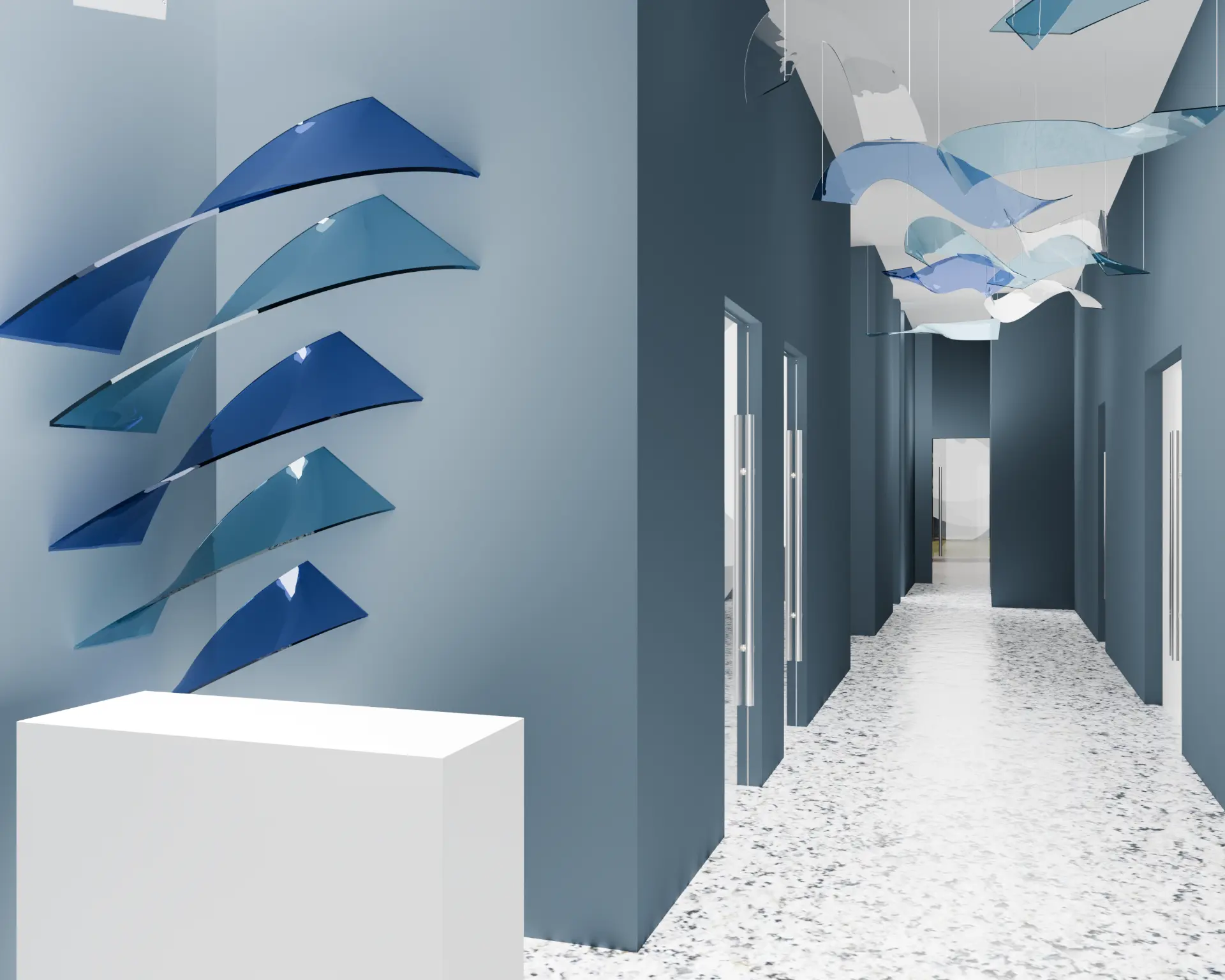
How do you make a place feel quiet?
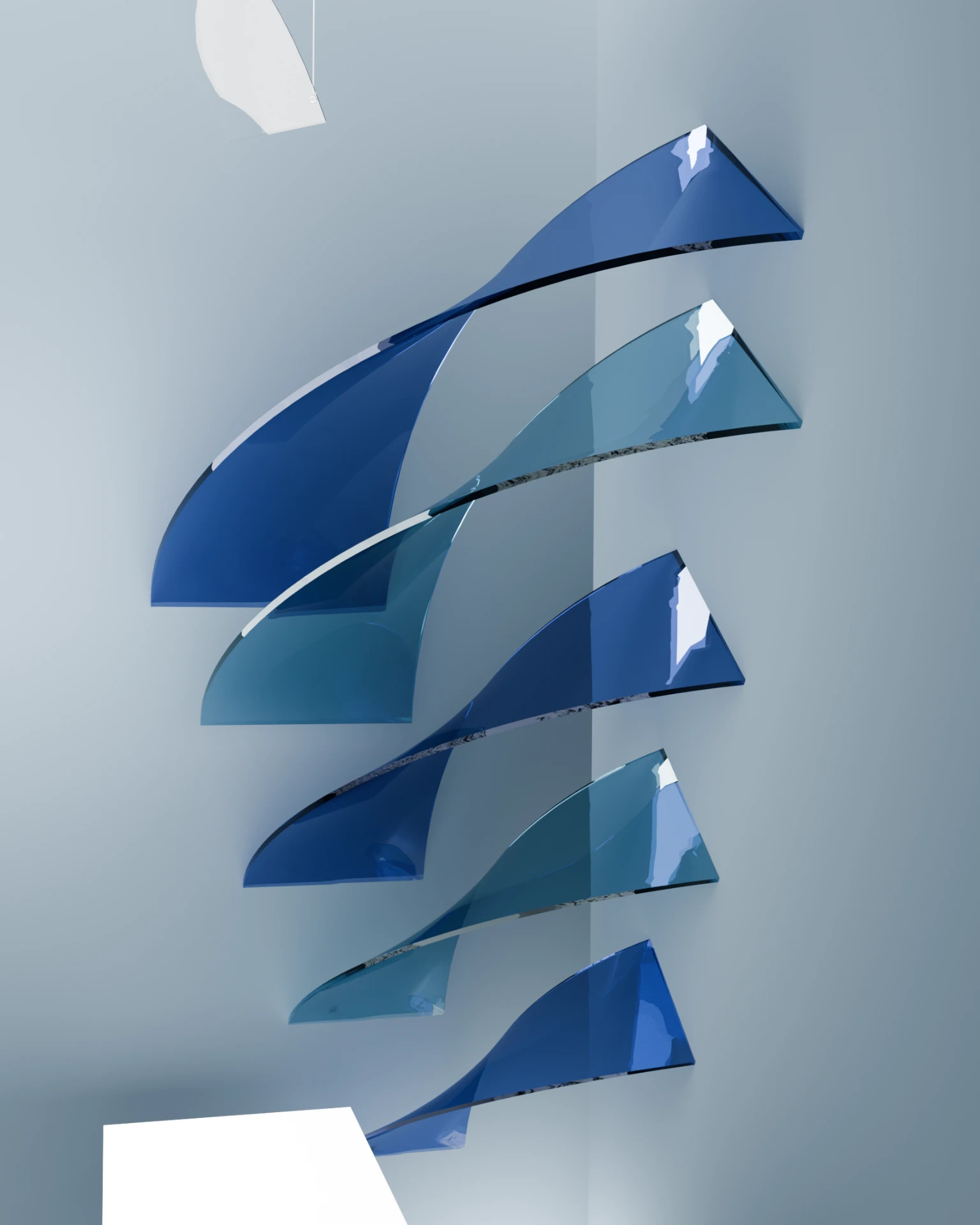
Kona 10 is a residential project in Zona 10, where the idea of home begins before you even reach it.
The goal was to create a sensory installation that could make the transition from the noise of the city to the calm of home feel physical.
This meant thinking beyond what people see.
The installation combines form, movement, light, and a subtle essential-oil scent to create a gradual shift in atmosphere as visitors move through the space.
The eye of the storm.
The starting point was simple: the apartment should feel like the eye of a hurricane.
Instead of bringing the storm inside, the design turns the storm into a metaphor for arriving at calm.
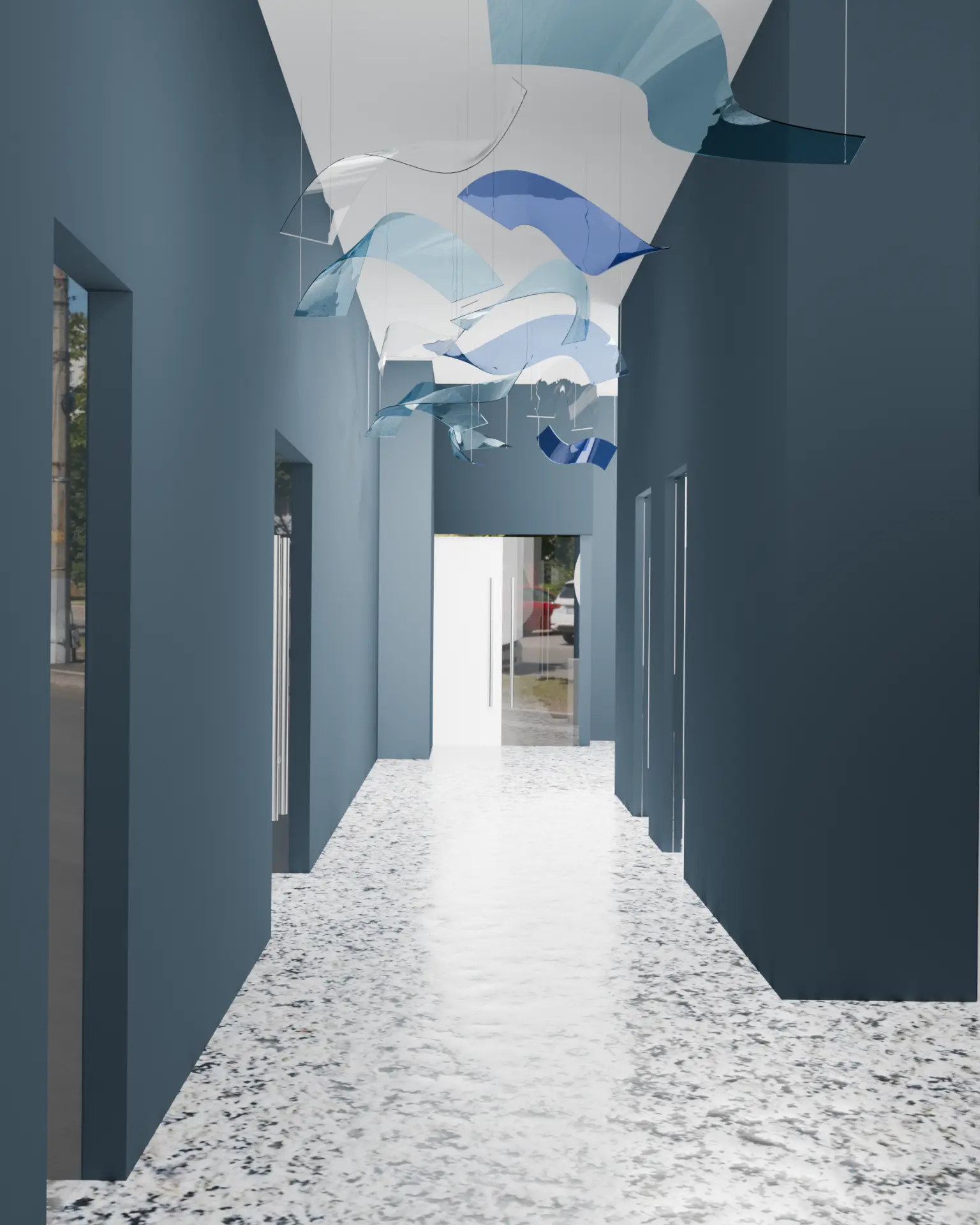
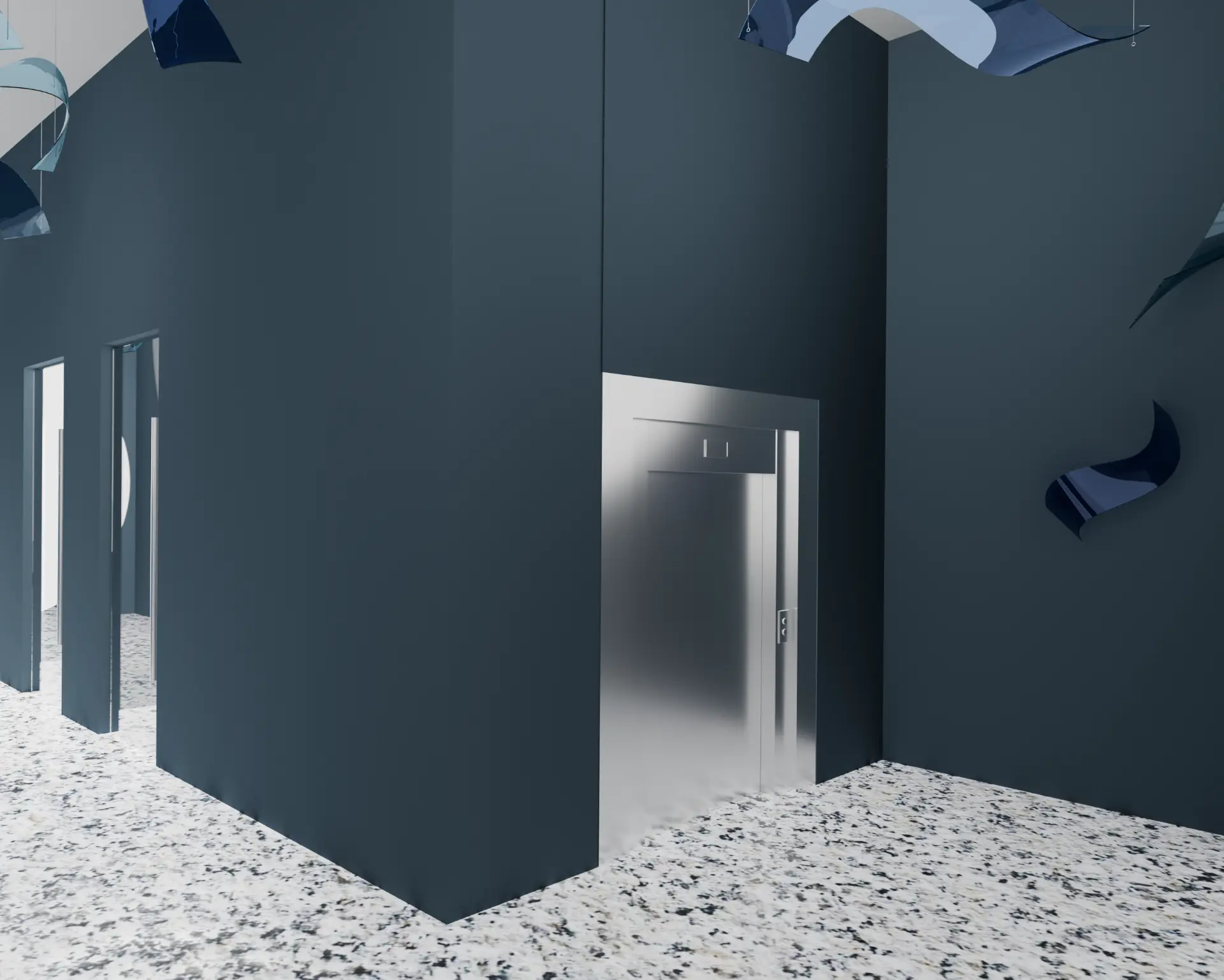
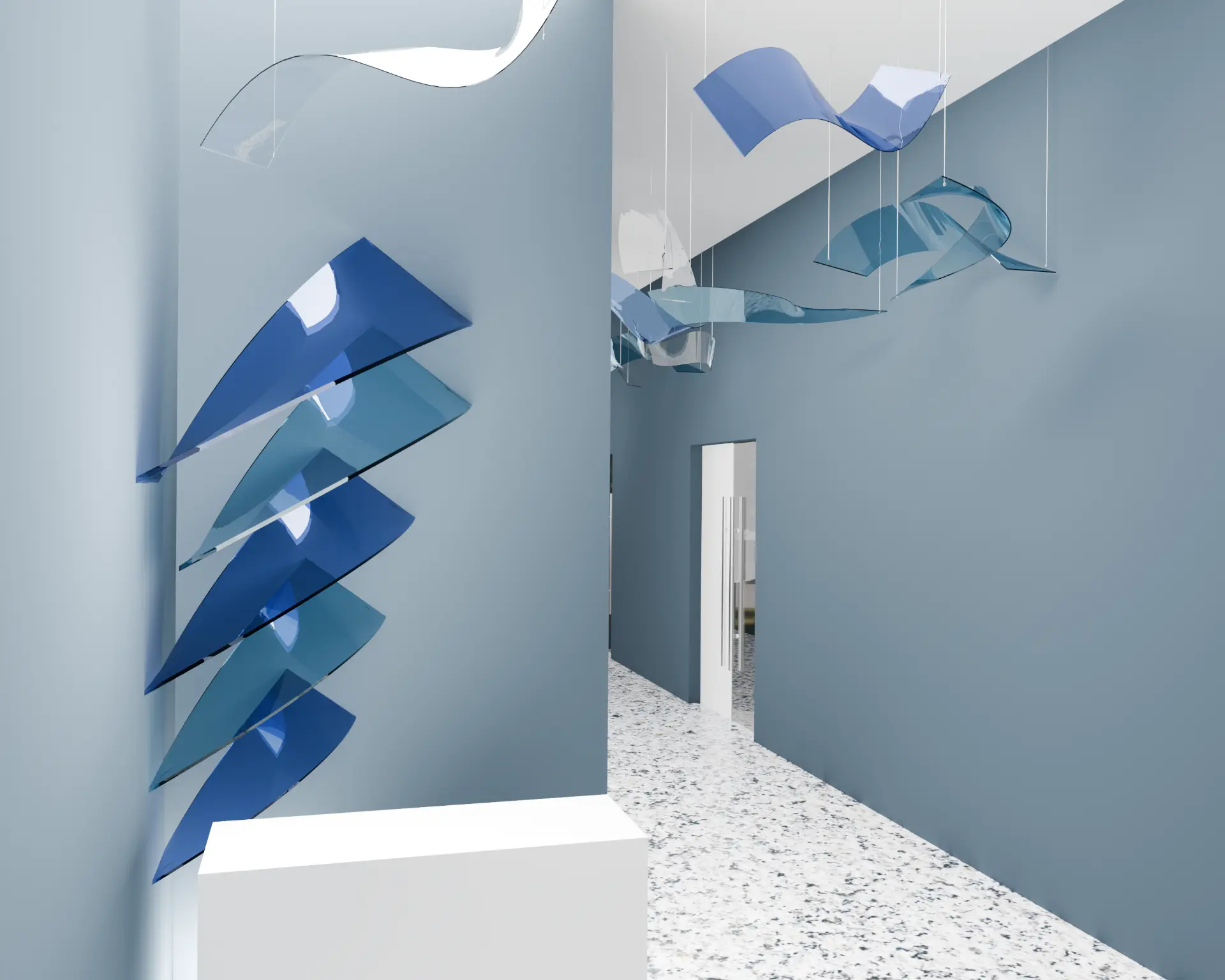
A quarter of a hurricane occupies one corner of the lobby, while a sense of wind continues down the hallway toward the elevators.
Calm is something you feel.
The installation was designed to work through several senses at once.
The proposed elements use 3 mm thermoformed glass sheets shaped into wave-like forms.
Light follows the visitor as they move through the hallway, while a subtle scent adds another layer to the experience.
The result is not meant to announce itself.
It is meant to change the way the space feels.
From storm to wind.
The first challenge was turning the hurricane idea into something that could belong naturally inside an architectural space.
I researched residential lobbies and looked at how other projects use circulation, lighting, material, and scale to shape the arrival experience.
From there, the concept evolved into a visual system:
a concentrated storm in the lobby,
then wind,
then calm.
The final proposal uses the corner of the lobby as the “eye” of the hurricane, with the visual movement gradually extending toward the elevators.
Making something this big.
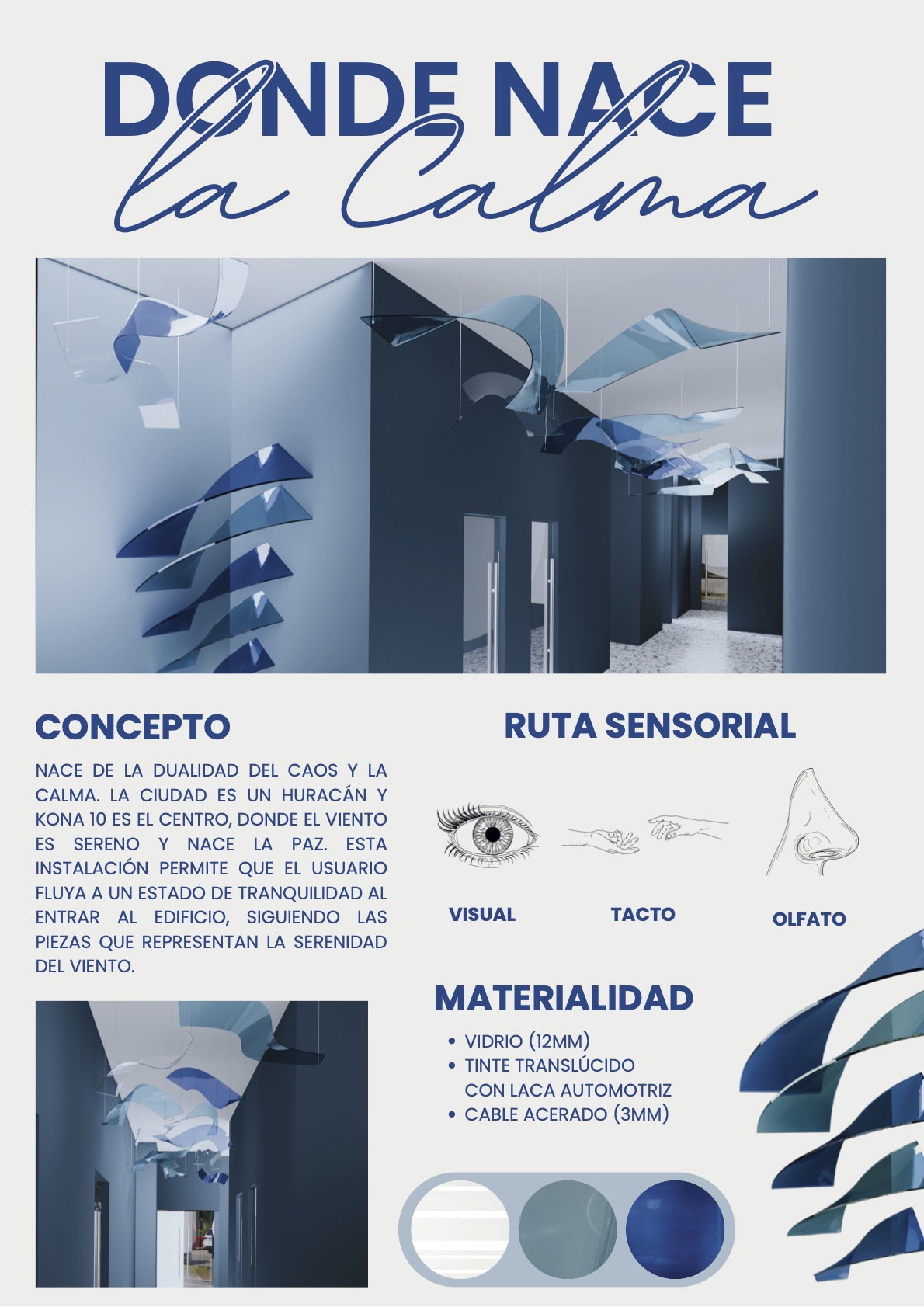
The project was designed at architectural scale, which introduced a different set of problems.
I had to think about the weight of the glass, how the pieces could be anchored to the ceiling, and what would happen during an earthquake.
The installation had to feel light and fluid while still being physically safe.
It was also a shift in scale: moving from industrial/product design thinking into an installation approximately 25 meters long.
The challenge was not only designing the form.
It was understanding how that form could exist in a real building.
You can’t build the whole lobby.
A full-scale prototype was not practical.
Instead, we built a 1:10 scale model of the lobby using thermoformed plastic pieces to explore the installation and its relationship with the architecture.
The model became a way to test scale, composition, circulation, and how the different elements interacted.
It also made the concept easier to communicate.
A prototype can change scale.
The project was also translated into a VR 3D tour.
That made it possible to experience the proposed installation spatially without fabricating the entire space at full scale.
What stayed with me.
This project reminded me not to close myself off to projects that fall outside my usual scope.
Sometimes the interesting part is having to learn a different way of thinking.
A request like VR, for example, can completely change how a project needs to be communicated.
The important part is staying curious enough to figure it out.