ILUME
INÉDITO UNIVERSITARIO · DWM 2026
2026 · CASE STUDY · LIGHTING / WALL INSTALLATION
Explore the Hércules collection→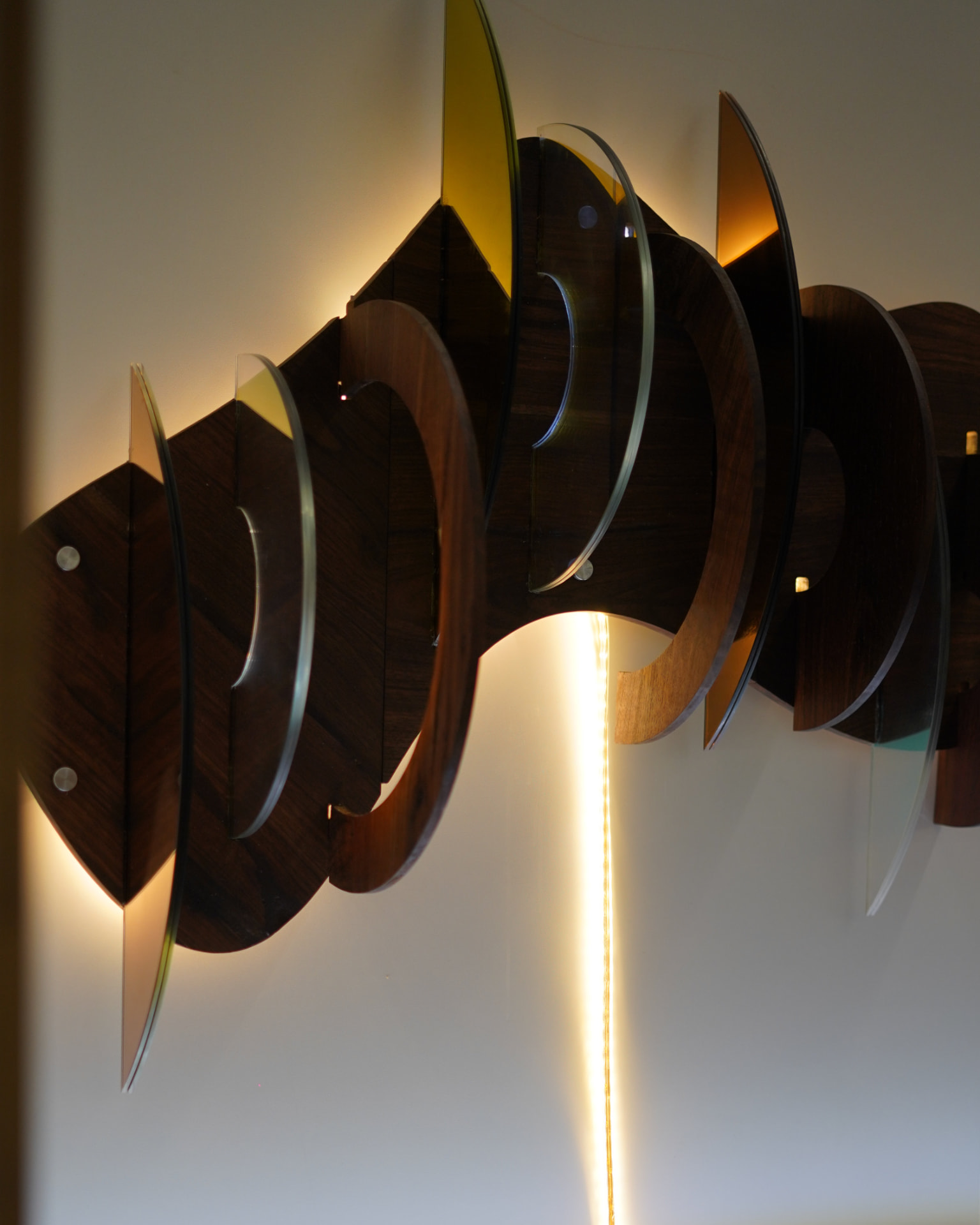
HOW DO YOU MAKE SOMETHING UGLY BEAUTIFUL?
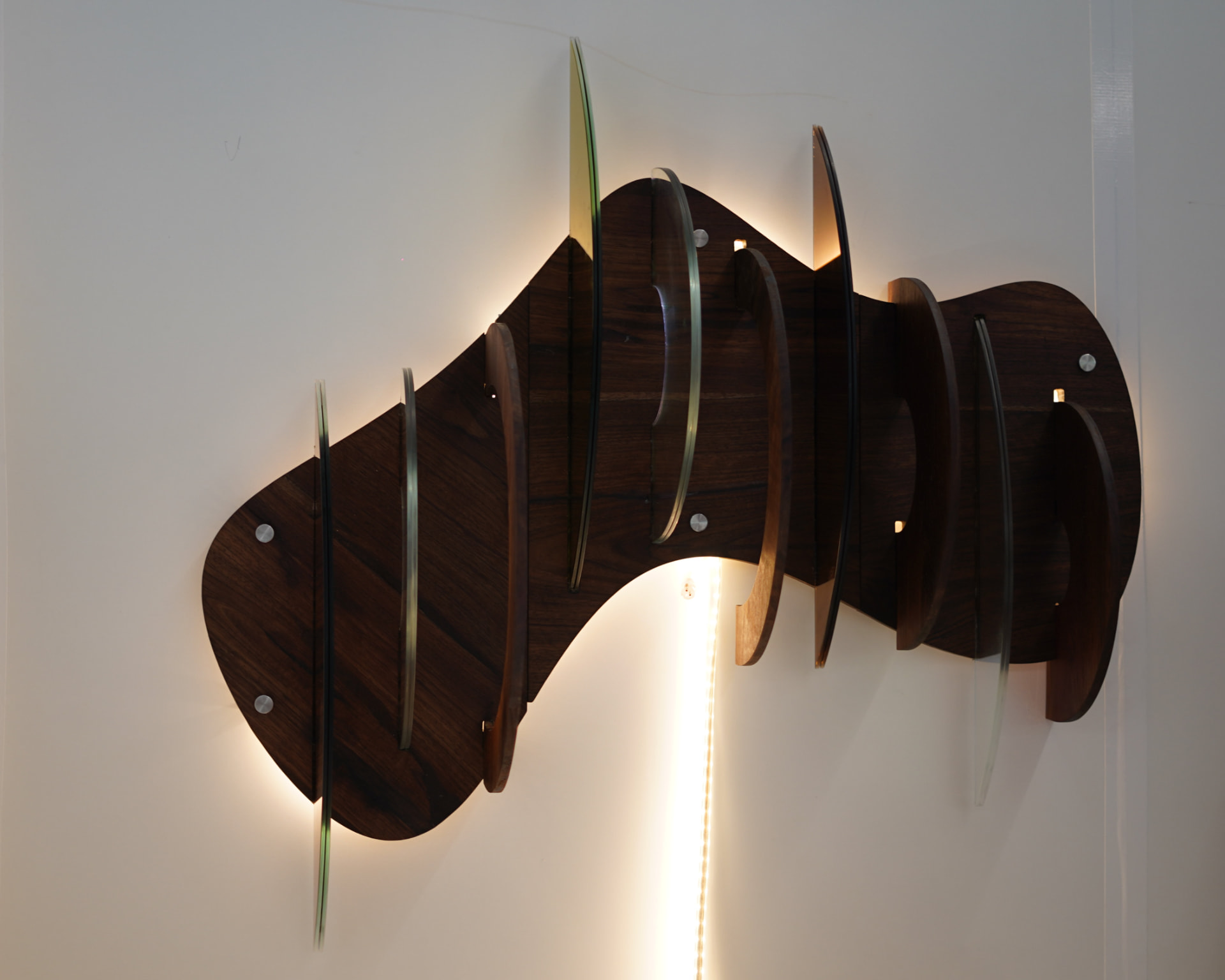
The brief started with a larva.
Not exactly the easiest thing to turn into a beautiful object.
The Hercules beetle was the starting point for a six-month design project around three stages of its life. Each stage became the basis for a different product.
For the larval stage, we developed ILUME — a wall lighting installation inspired by the organic segmentation, translucency, reflections, and environment of the larva.
THE LARVA NEVER SEES THE LIGHT.
The larva spends most of its life inside wood, away from light.
That became more than a visual reference.
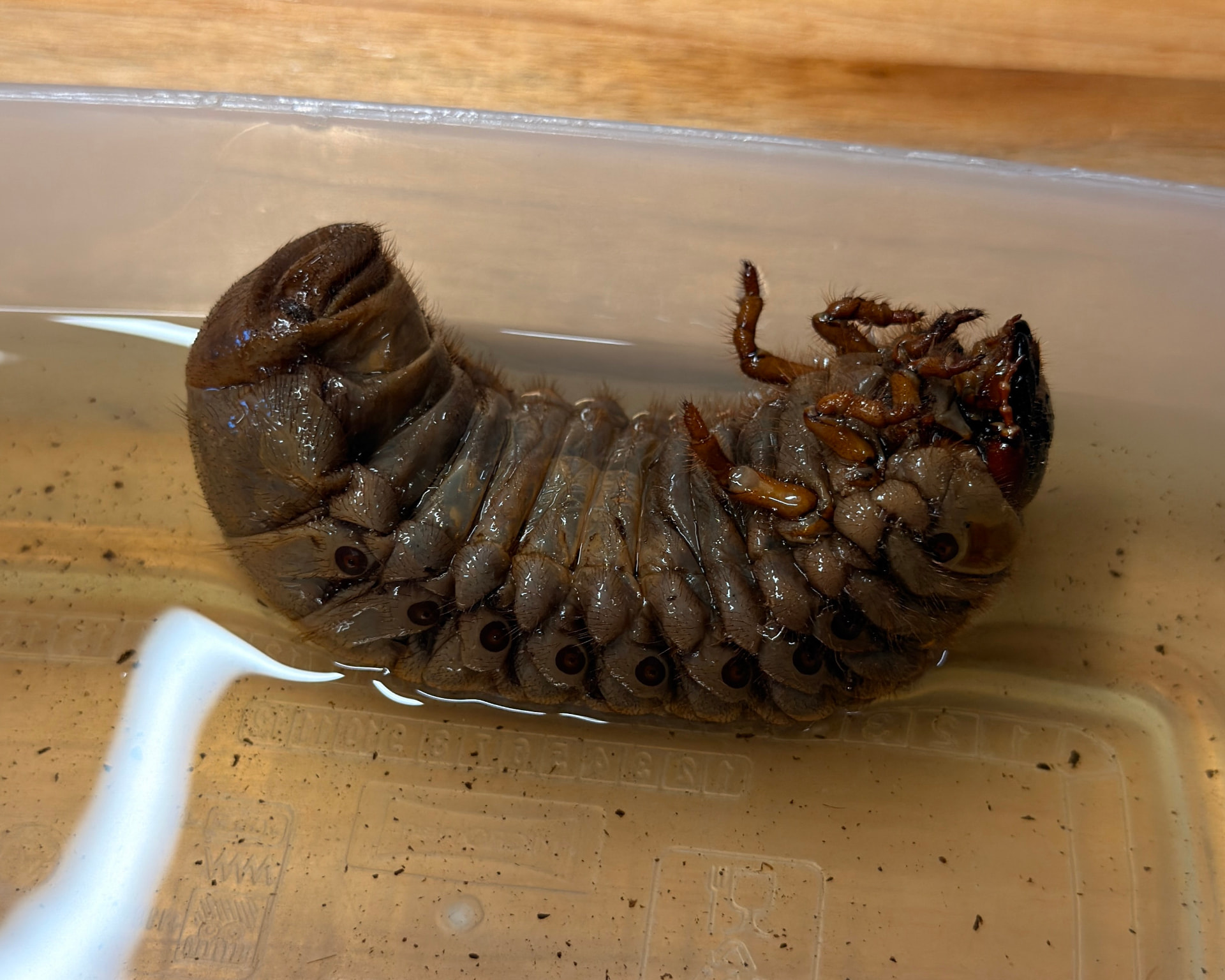
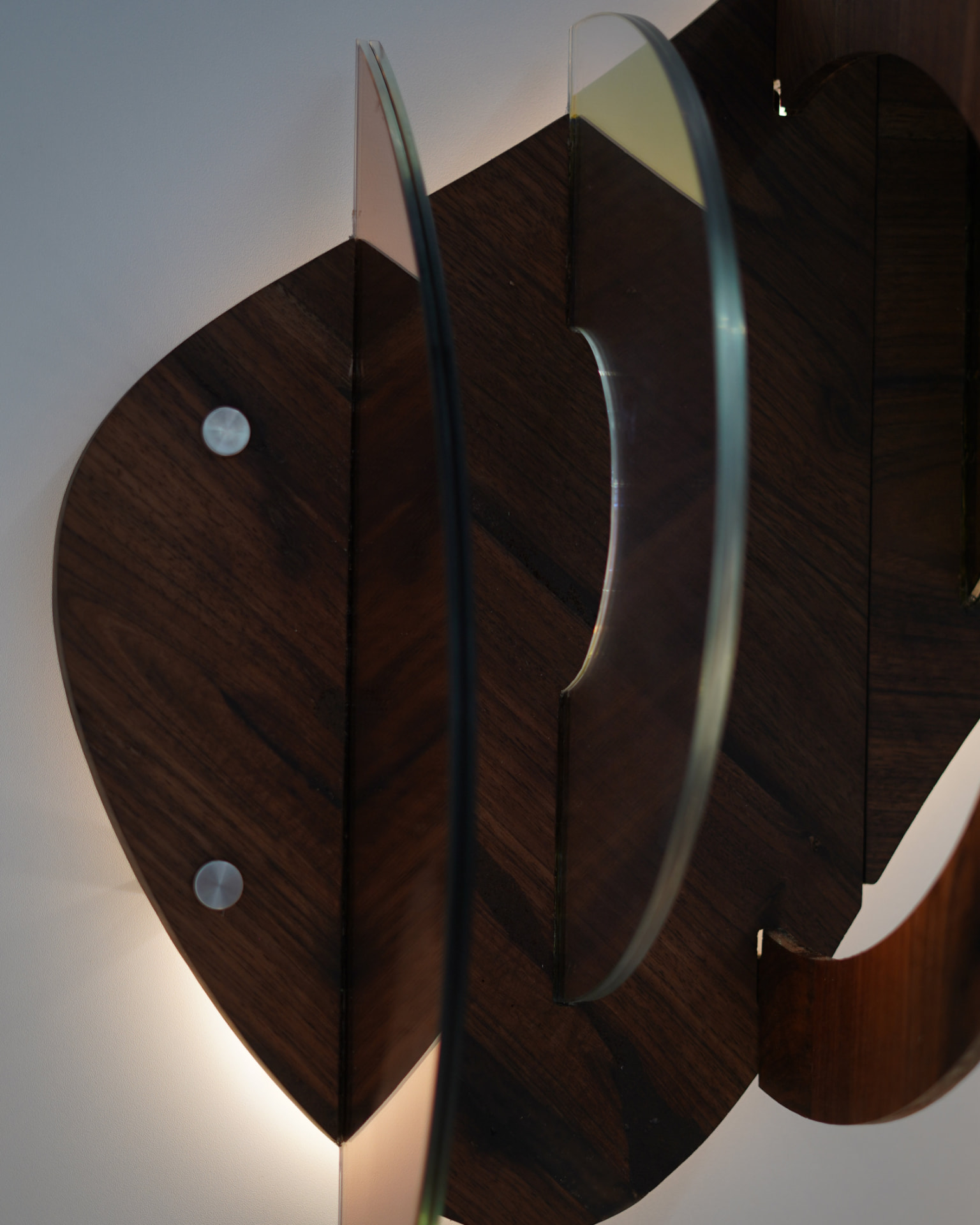
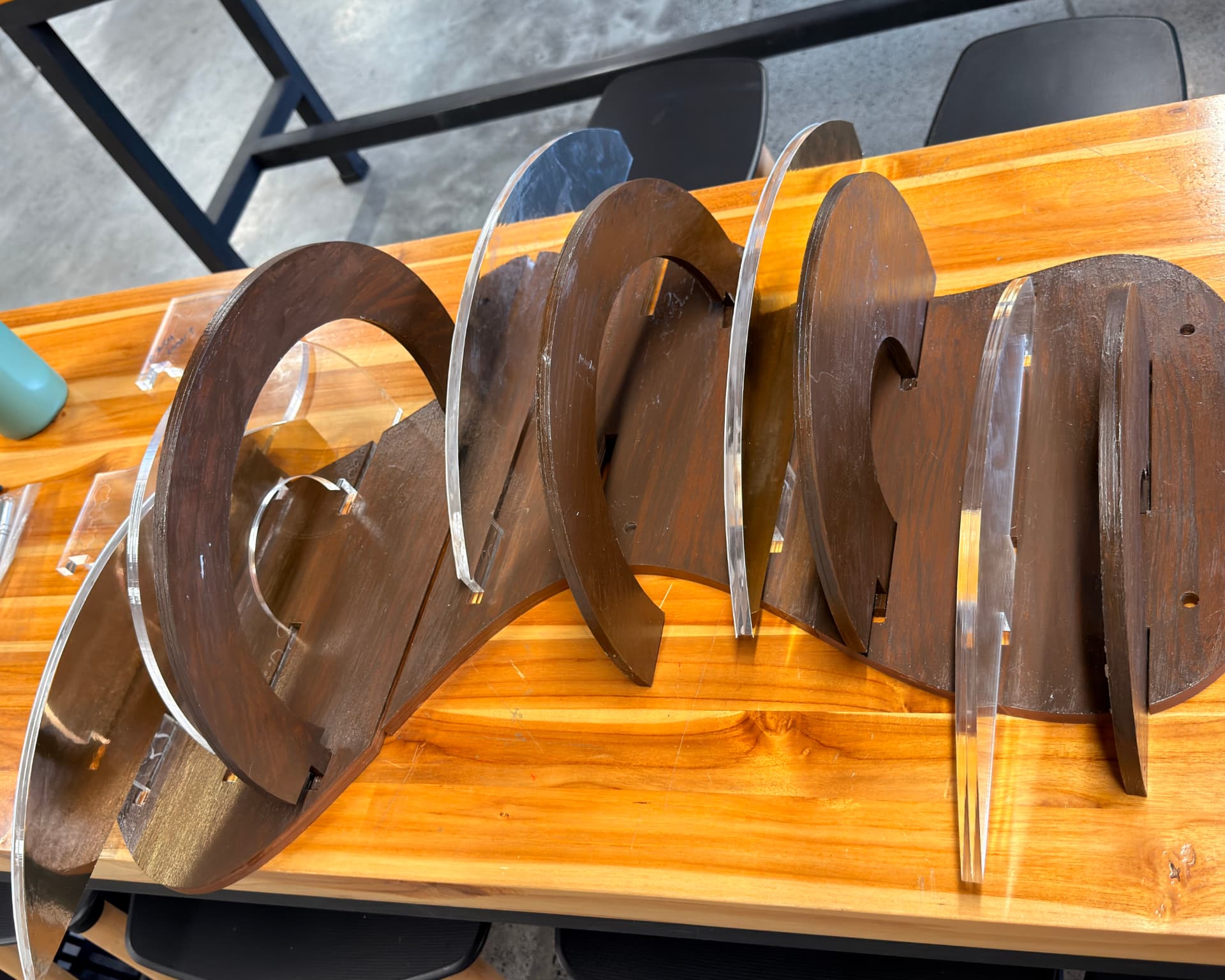
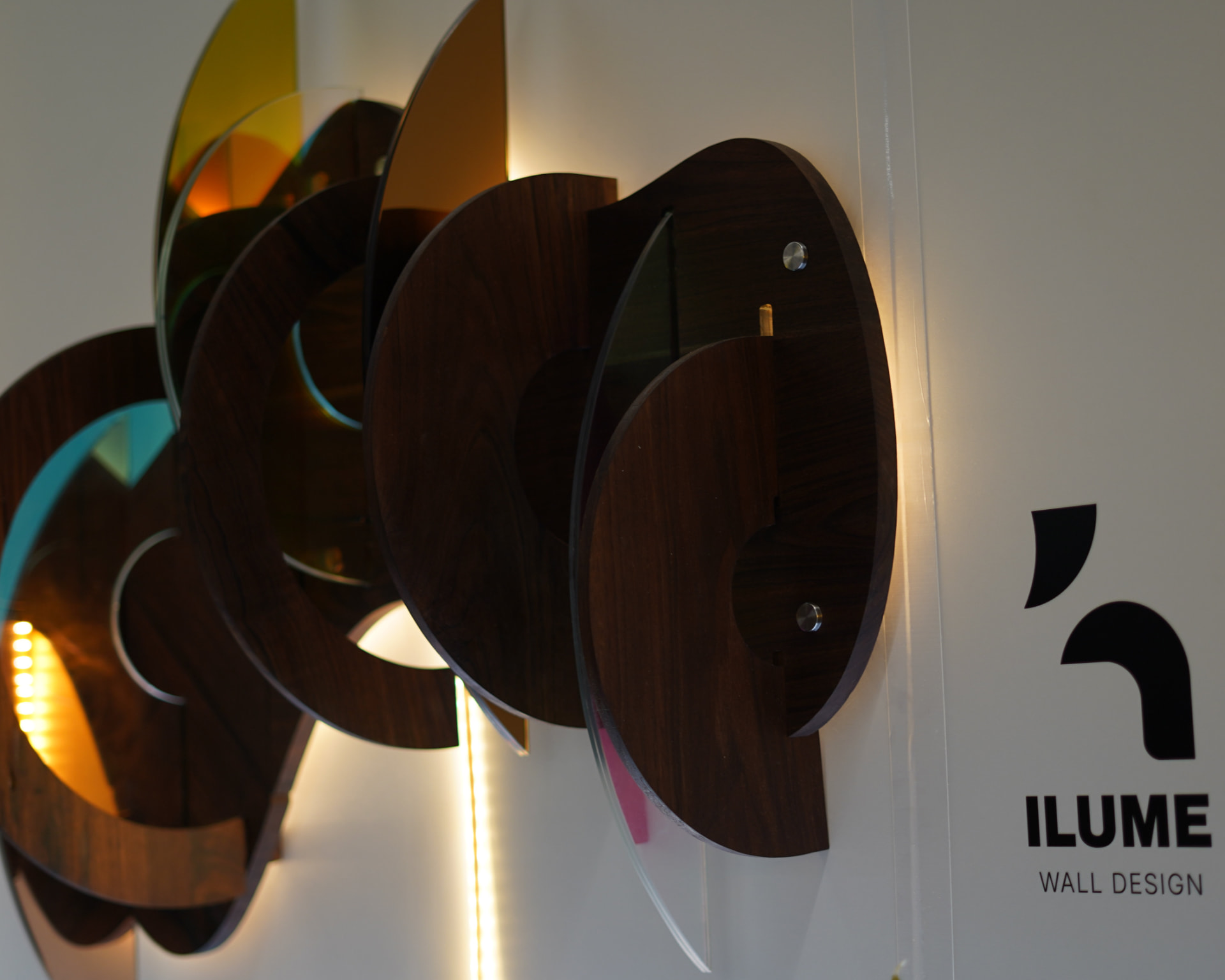
We translated its segmented body into a series of irregular wooden arches, each with a different diameter, height, material, and reflection.
Walnut represents the environment it inhabits.
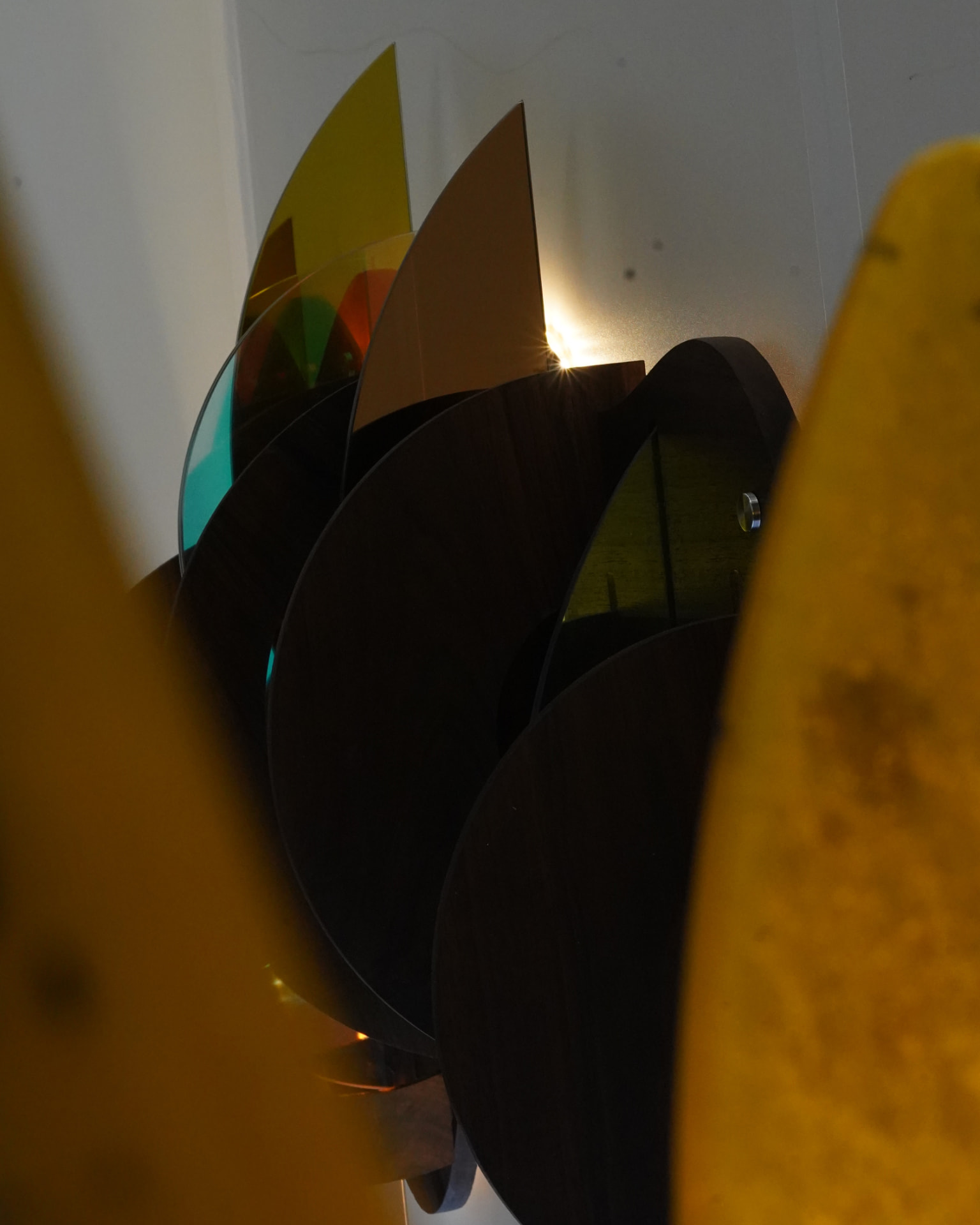
Prismatic green and orange glass, along with gold, rose-gold, and copper mirrors, reinterpret the translucency and shifting reflections of the larva.
FROM SEGMENTS TO SPACE.
The form started by studying the larva's body as a system of individual segments.
Instead of reproducing the insect literally, we abstracted its rhythm.
Different arcs rise from the base at different heights, creating a form that changes depending on where you stand.
From the side, the installation becomes a subtle abstraction of the larva itself.
THE IDEA WAS SUPPOSED TO TURN OFF.
ORIGINAL CONCEPT
The original concept was built around a contradiction.
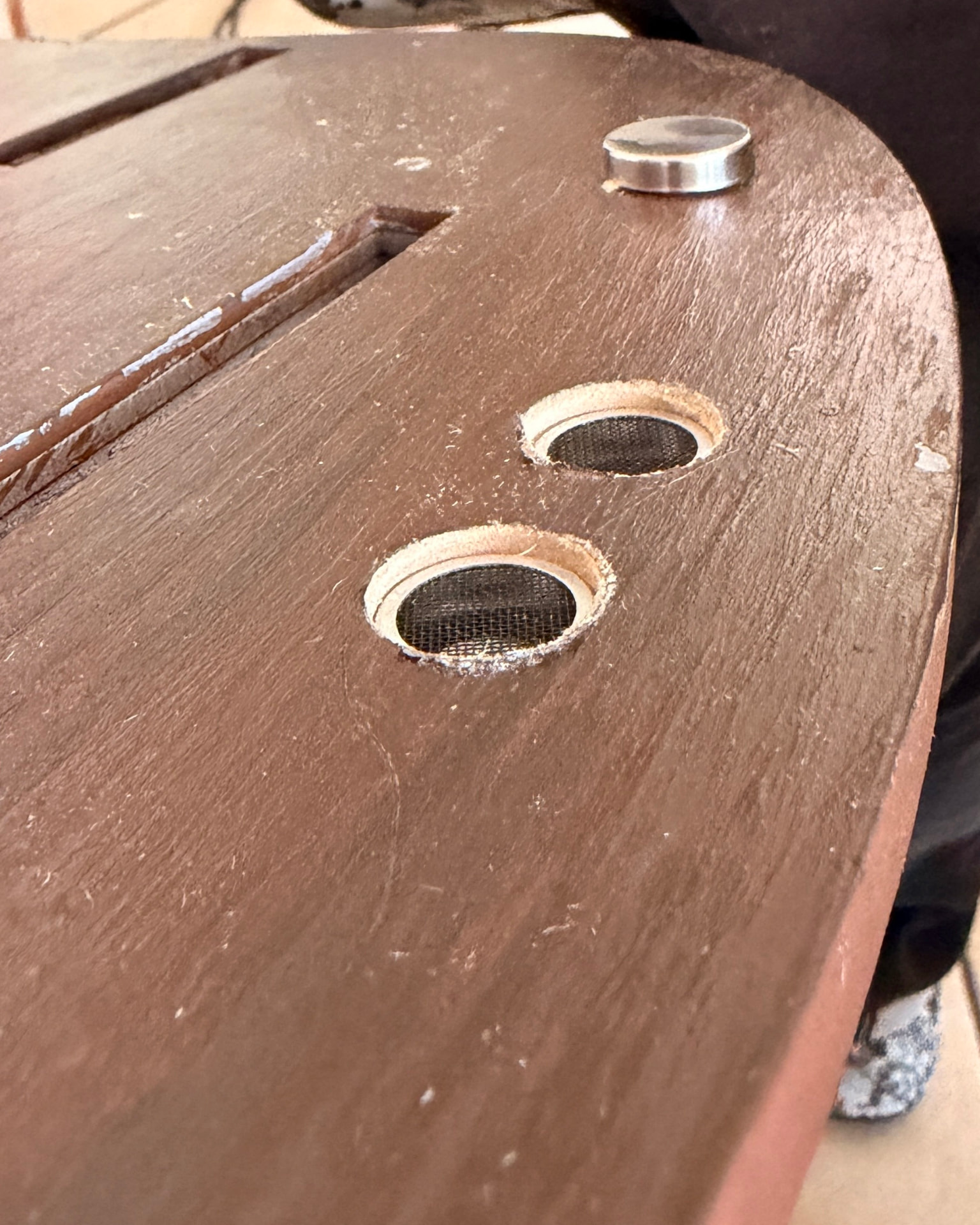
ILUME would use ultrasonic sensors to detect how close the viewer was. Light would sit inside the wooden arches and progressively disappear as the person approached.
The closer you got, the darker it became.
The idea connected the behavior of the larva with another thought: sometimes distance gives us a clearer view of a problem than being completely immersed in it.
At this stage, the interaction was a fundamental part of the concept.
“NOBODY BUYS A LAMP FOR IT TO TURN OFF WHEN THEY GET CLOSE.”
And that was exactly what made the idea interesting.
ILUME was designed to challenge the expected behavior of a lighting object.
Instead of asking only what a lamp should do, we asked what could happen if it deliberately did the opposite.
The interaction created a moment of curiosity:
You walk toward the light.
It disappears.
But this was still the concept.
The final object would tell a different story.
THEN THE PROJECT CHANGED.
When we moved from the prototype into the final fabrication, the project entered a different context.
The professionals helping us develop the final piece suggested changes to the lighting system, and the original ultrasonic interaction was removed.
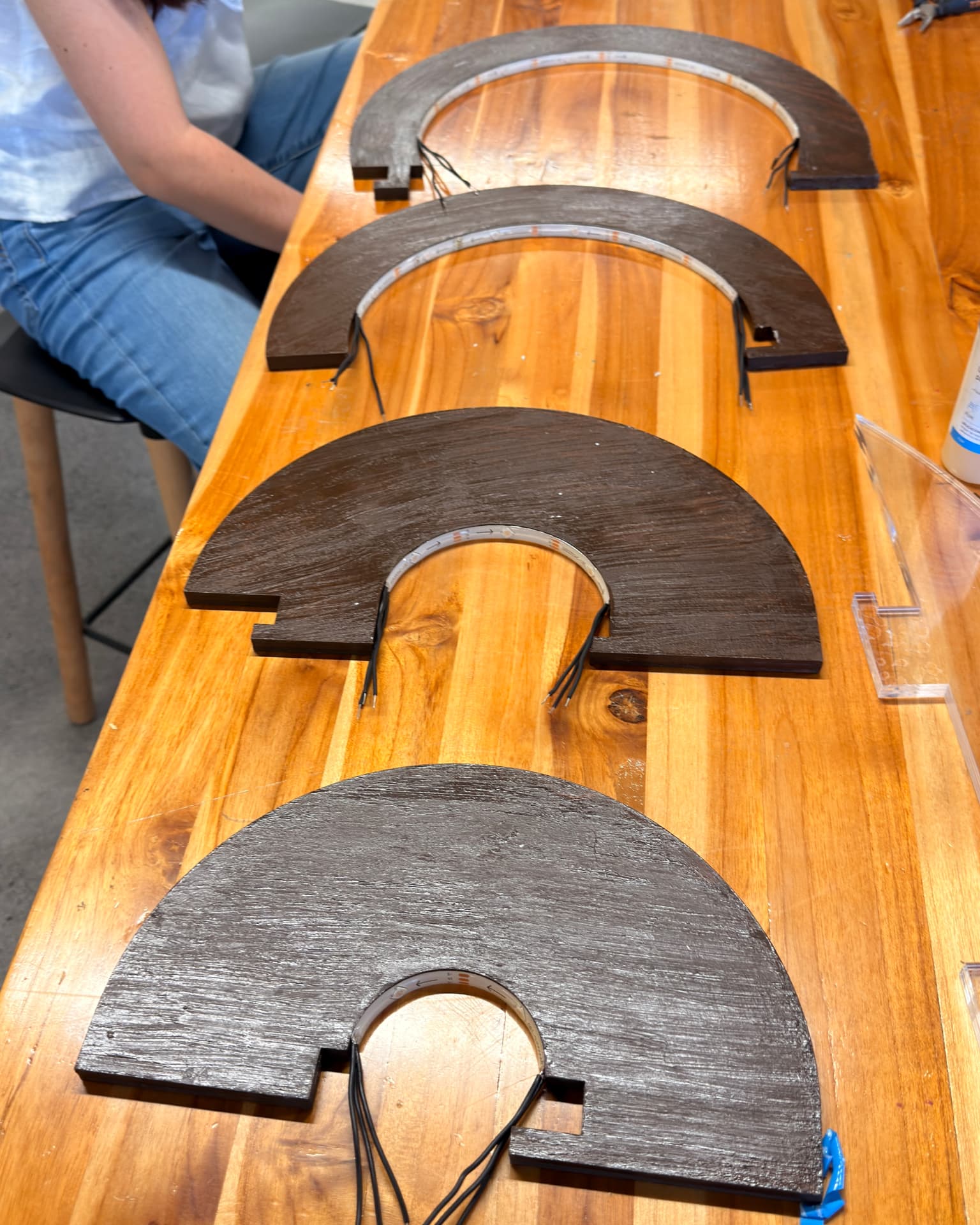
The final ILUME became a fixed lighting installation, using an LED strip placed behind the structure to create an aura of light around the piece.
The concept changed.
But the material language, the abstraction, and the relationship between light and the larva remained.
- ORIGINAL CONCEPT
- Ultrasonic sensors + light inside the wooden arches + light decreases when viewer approaches.
- FINAL PIECE
- Fixed LED strip behind the structure + static aura of light.
THE FIRST ONE WASN'T MADE TO BE BEAUTIFUL.
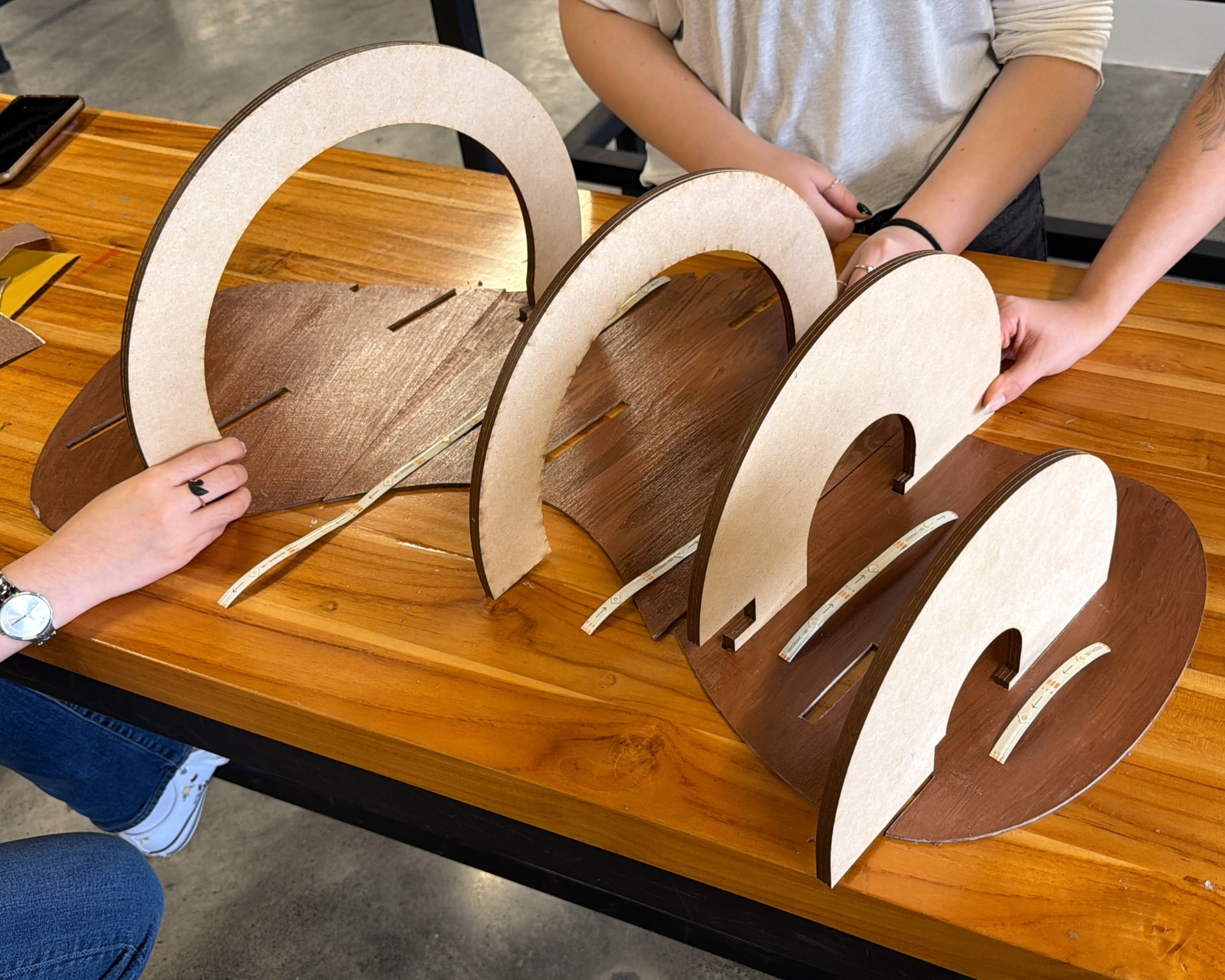
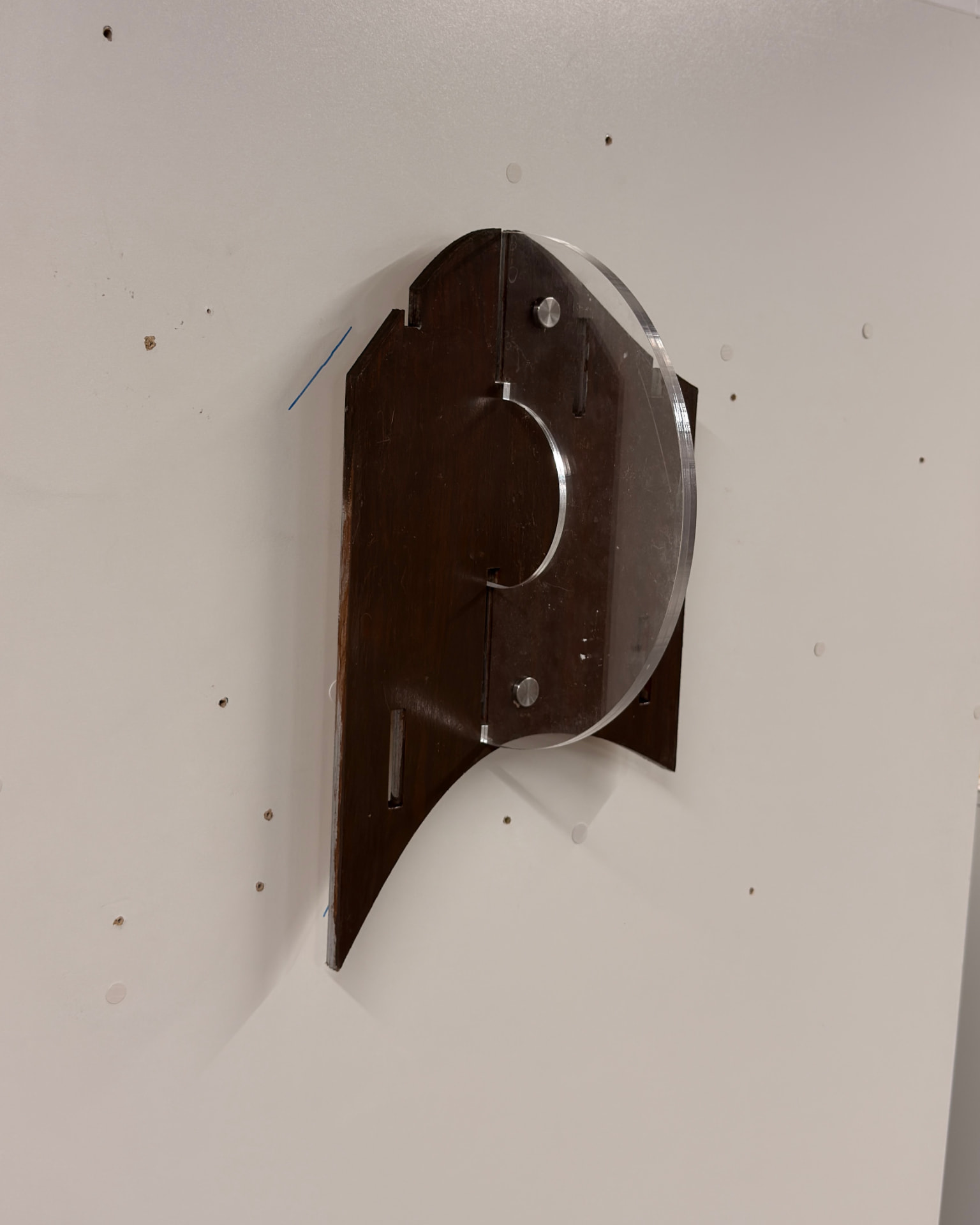
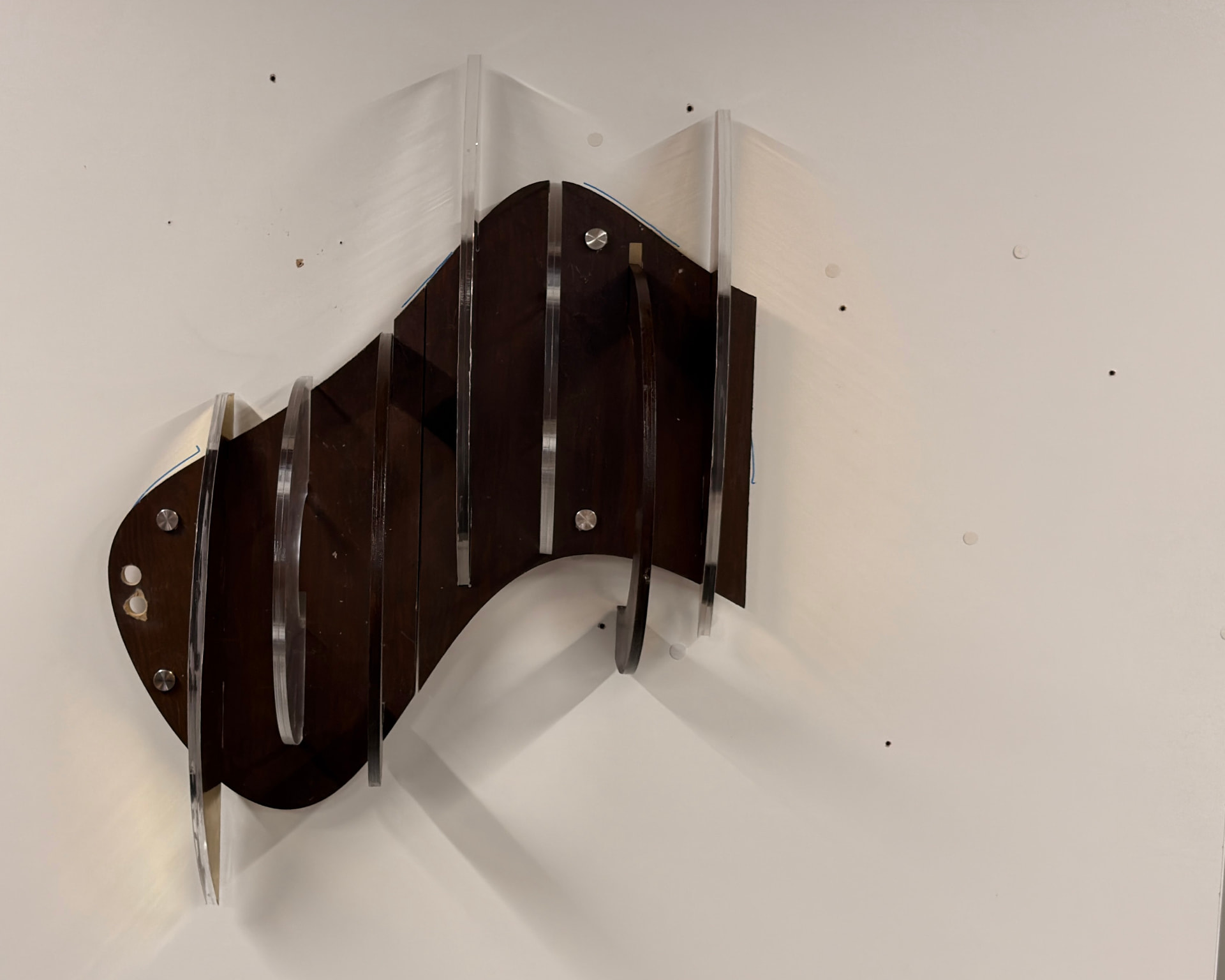
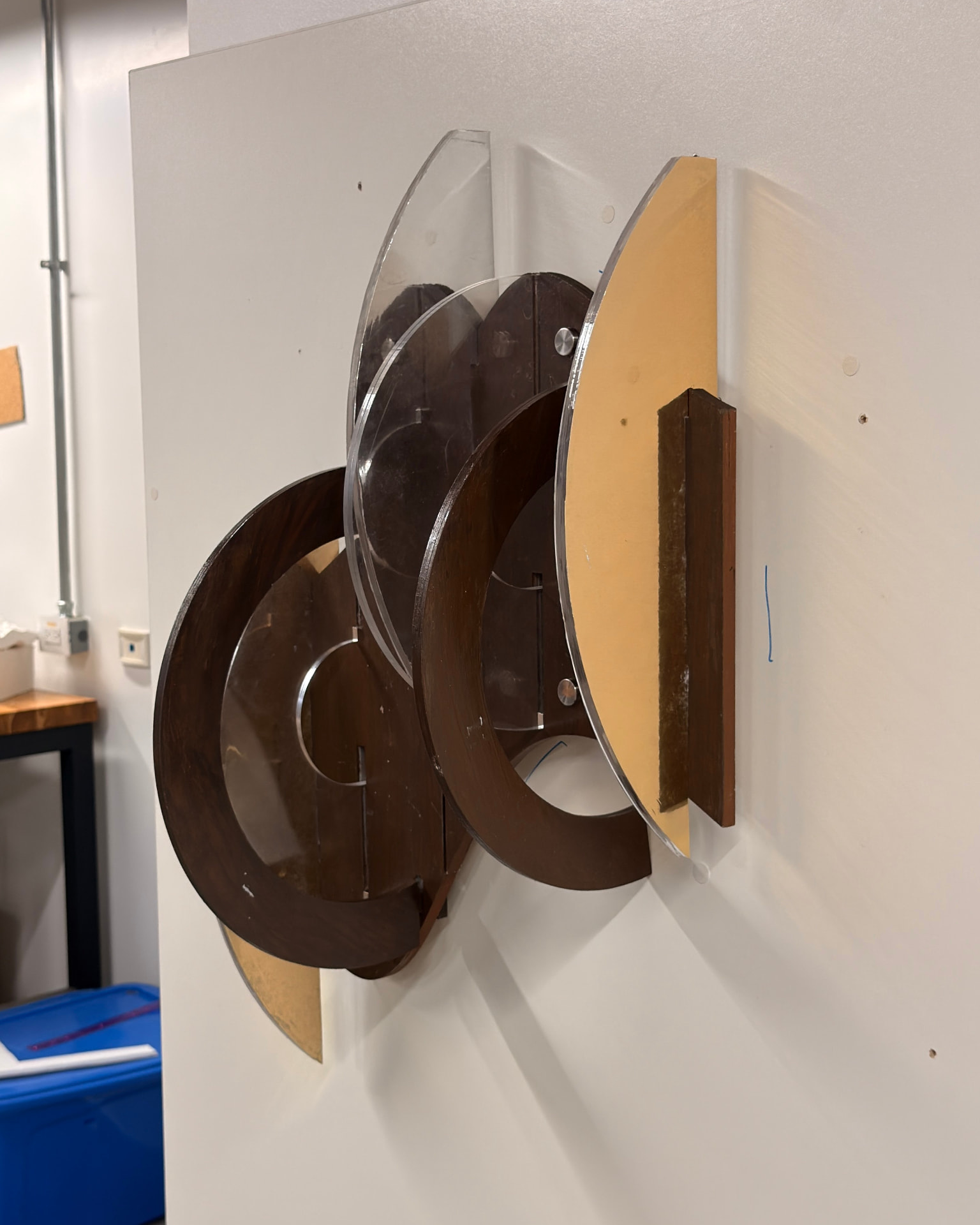
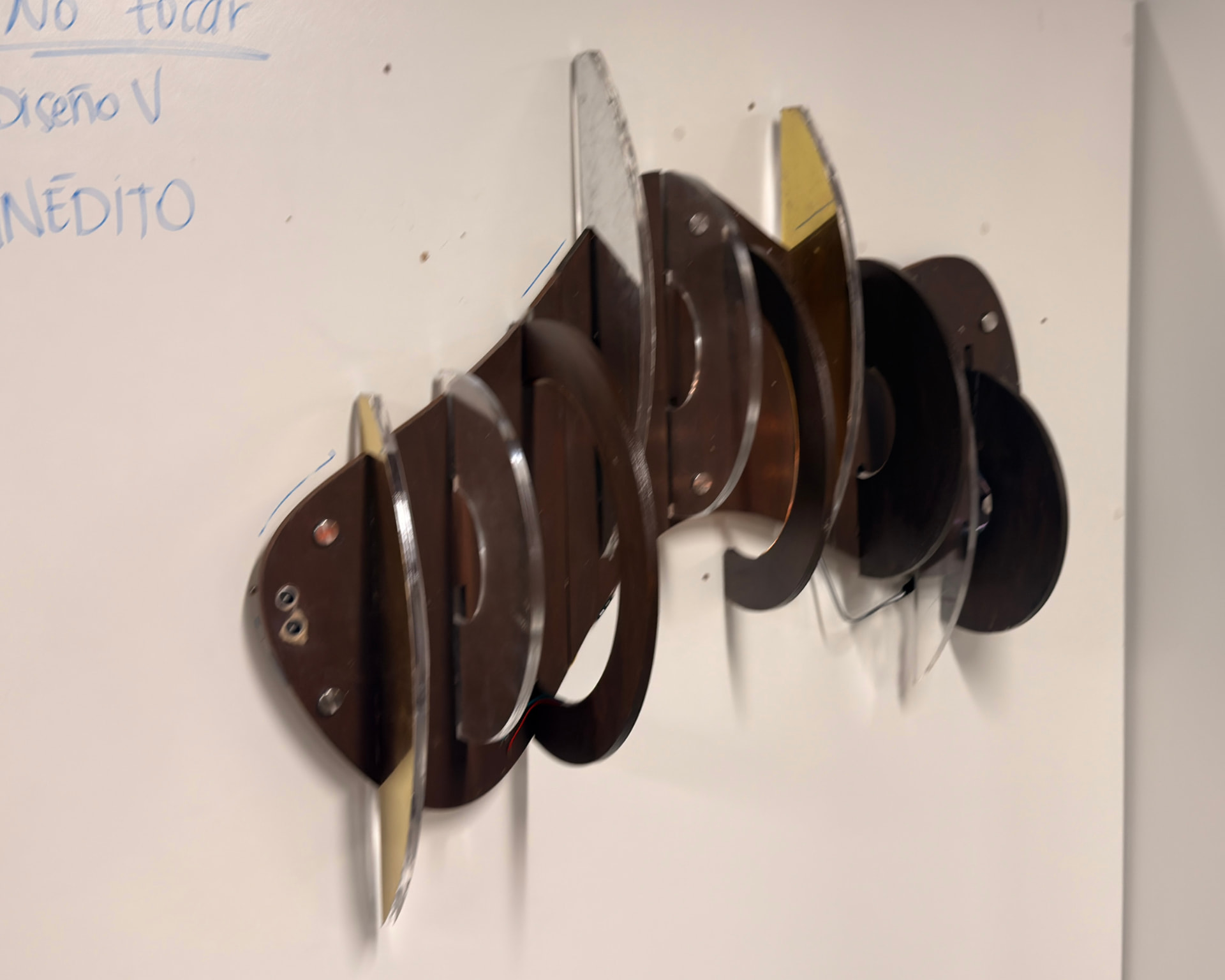
Before working with the final materials, we needed a full-scale prototype.
The first version used MDF and clear acrylic to simulate the walnut and glass, while metallic cardboard was used to approximate the different mirror finishes.
The goal was not to fake the final piece perfectly.
It was to understand its scale, proportions, assembly, and the proposed interaction before moving into final fabrication.
THEN MATERIALS GOT REAL.
The final piece changed significantly once we started working with actual suppliers and materials.
Walnut replaced the MDF.
Colored mirrors replaced the metallic simulations.
Prismatic green and orange glass replaced the acrylic.
This was also the first time we had to deal directly with materials we had never fabricated with before.
The design had to adapt to what the material could actually do.
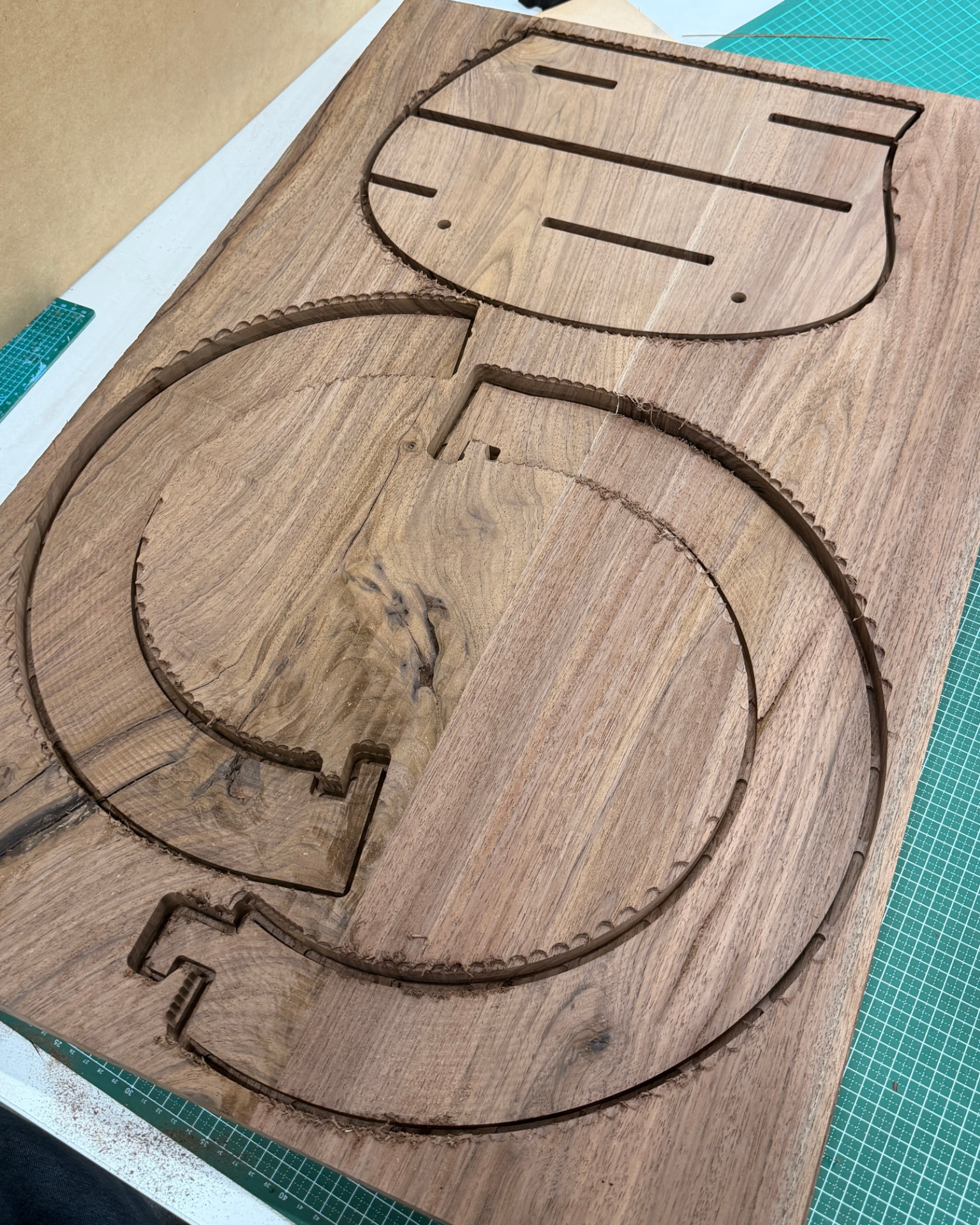
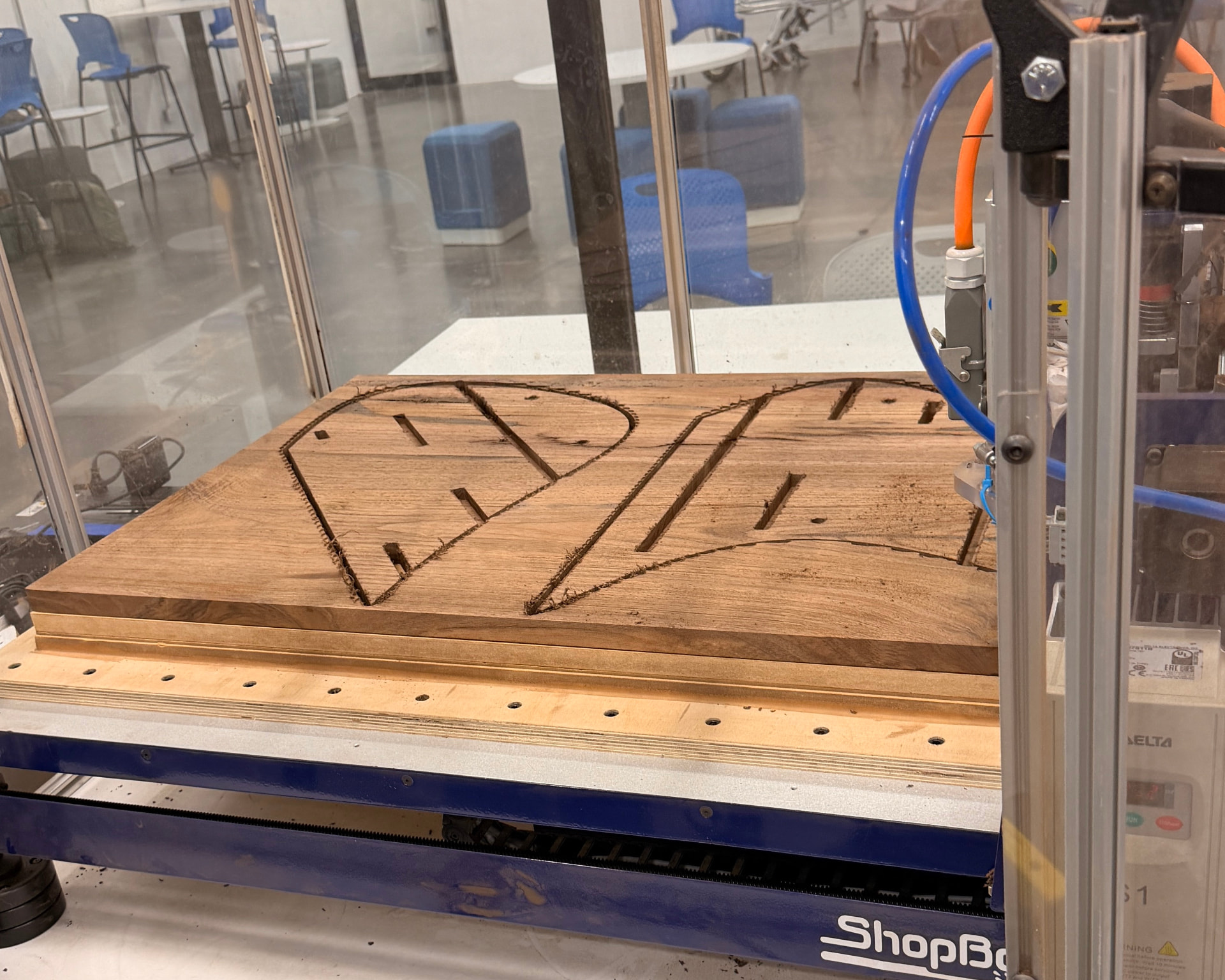
THE DETAILS WERE NOT OPTIONAL.
The first prototype used simple 90-degree cuts and hook-like connections that were easy to laser cut and assemble.
The real materials were less forgiving.
The manufacturer explained that 90-degree cuts were not possible in the same way, and some of the smaller irregular arcs required templates instead of simple circular guides.
The final pieces therefore had to be redesigned around the limitations of the fabrication process and secured using a flexible industrial adhesive.
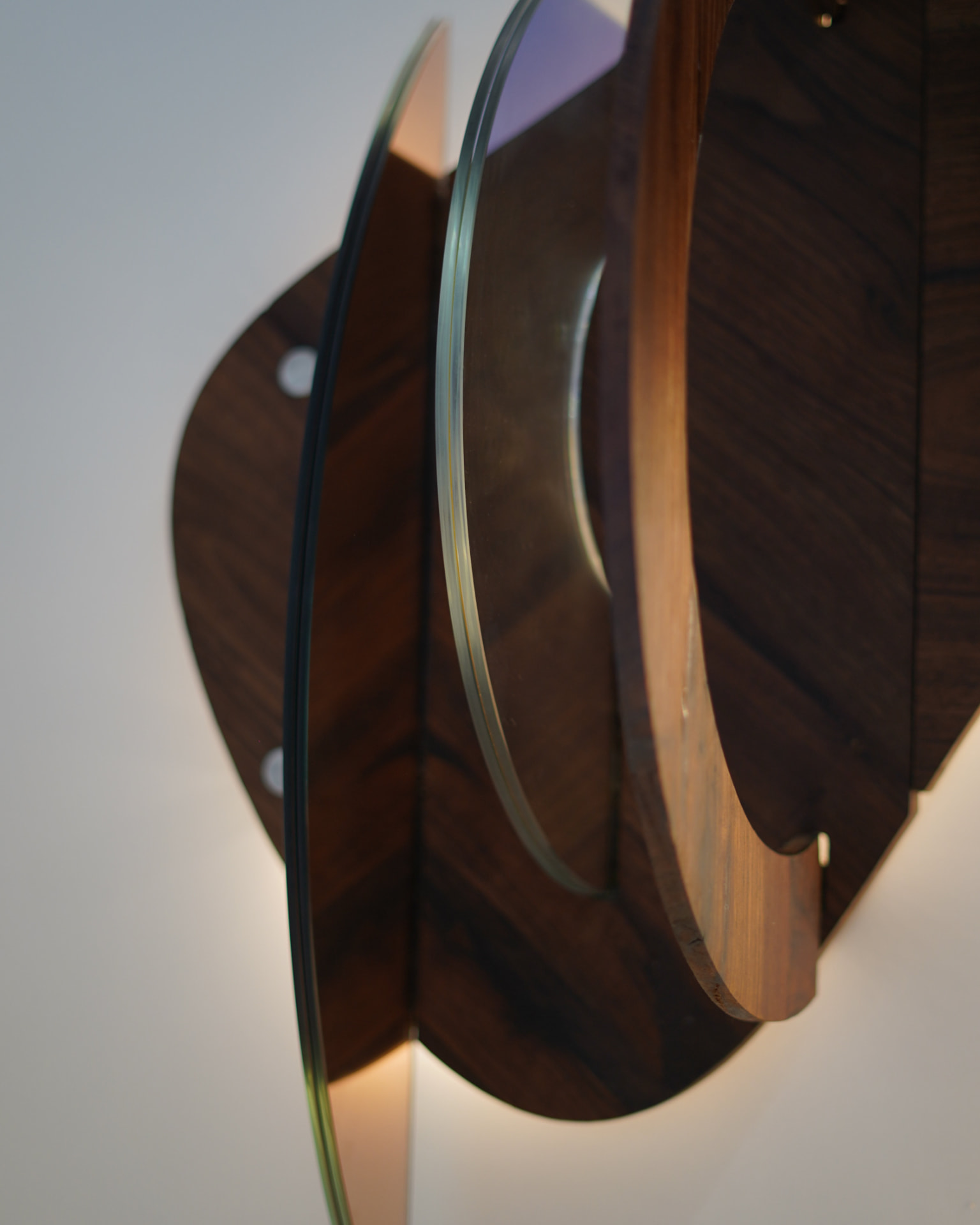
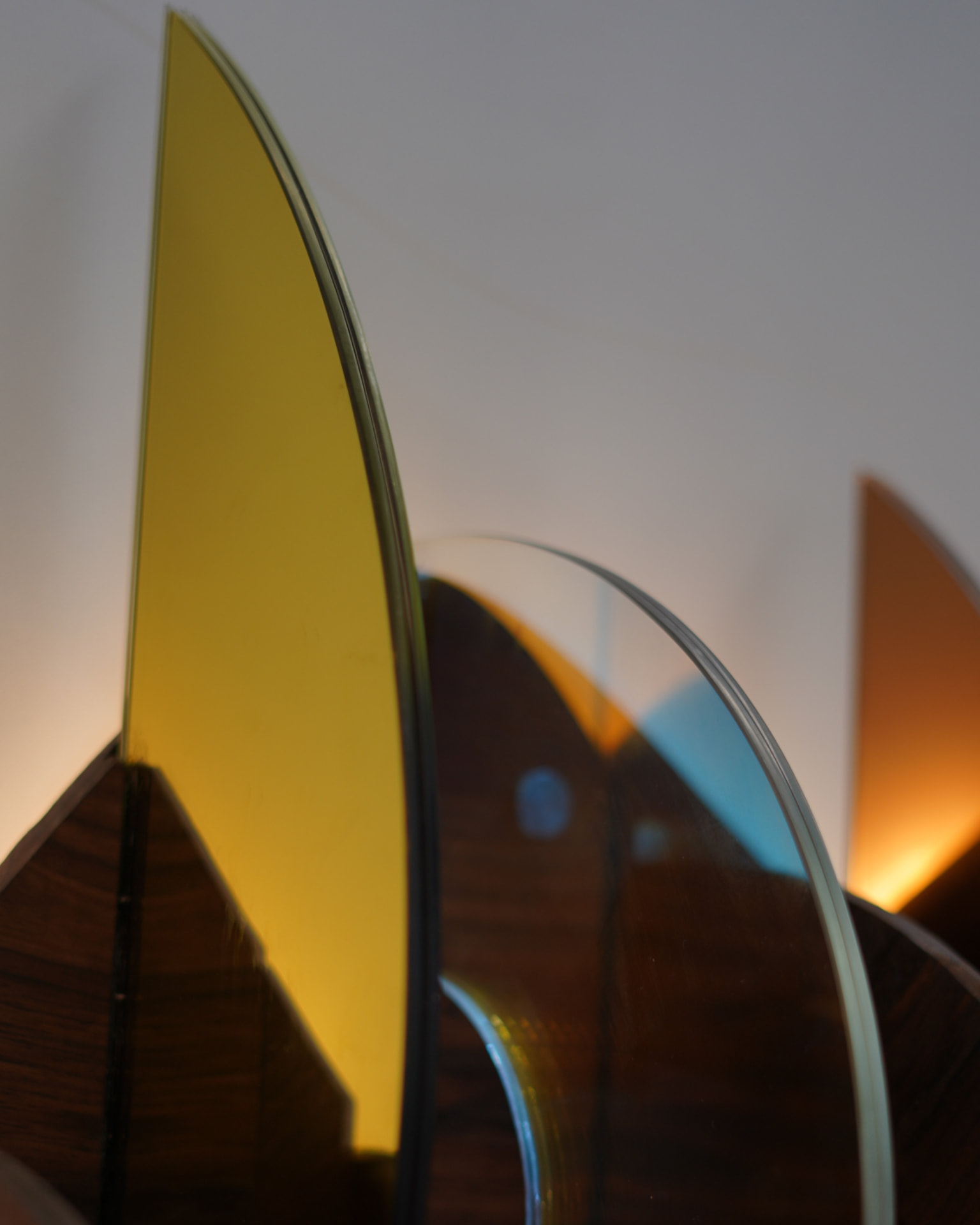
FROM WOOD AND GLASS TO LIGHT.
The final ILUME uses walnut, prismatic glass, colored mirrors, CNC fabrication, and integrated lighting.
The materials were not simply chosen because they looked good.
Each one carries part of the original concept.
Wood comes from where the larva lives.
The reflections and translucent surfaces reinterpret how its body catches and changes light.
The final lighting is no longer interactive. Instead, a fixed LED strip placed behind the structure creates an aura around the piece.
SOMETHING THAT MAKES YOU LOOK TWICE.
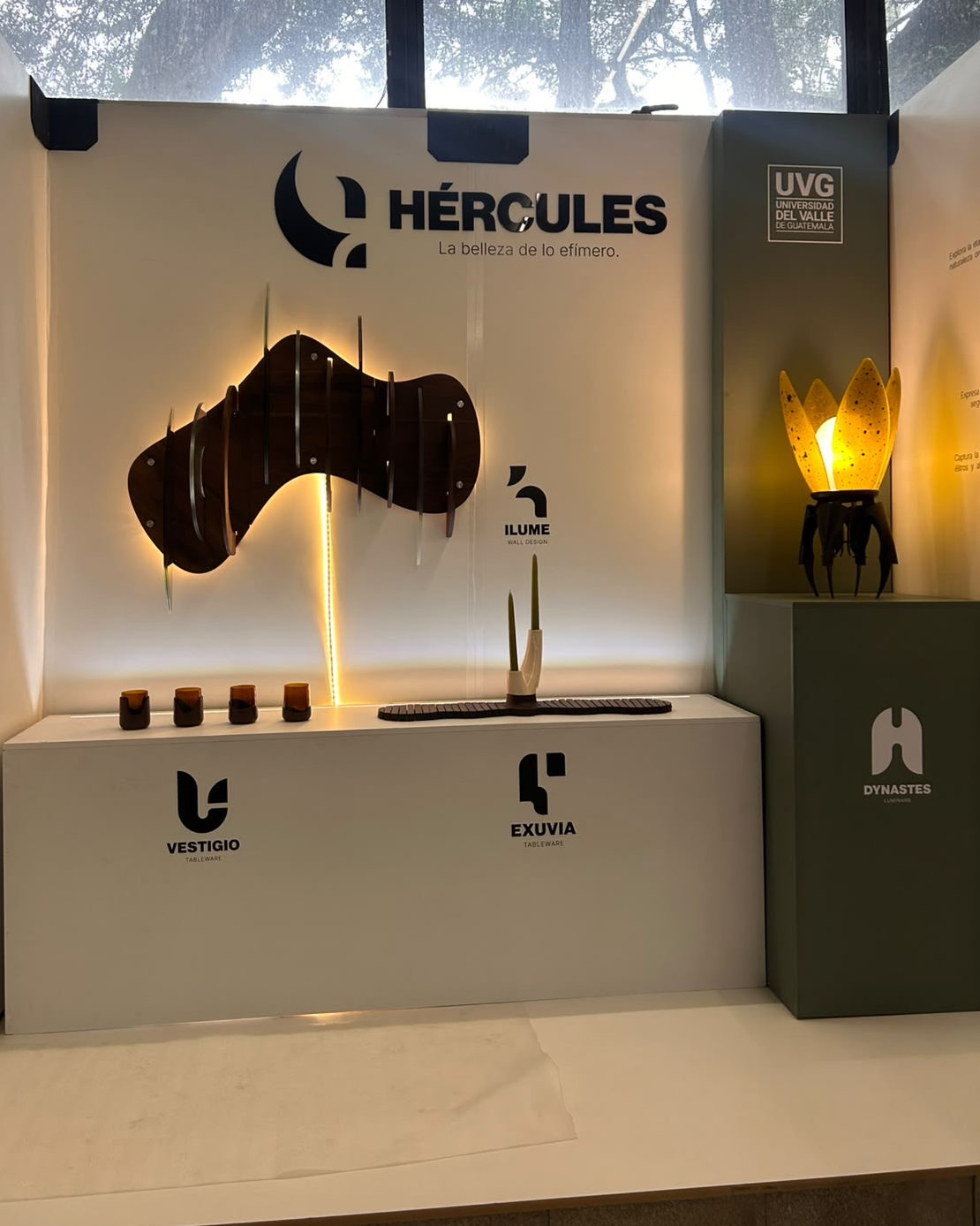
ILUME was presented as part of Inédito Universitario within Design Week México 2026.
The project is designed to create a small moment of curiosity:
Is it a sculpture?
A lamp?
An installation?
The original interaction asked one more question.
The final piece asks it visually.
SOMETIMES THE CONCEPT DOESN'T MAKE IT TO THE END.
One of the biggest things this project taught me is that a strong concept does not always survive unchanged until the final object.
A concept can connect with people, create curiosity, and have a clear intention — and still change when the context changes.
Who is looking at it.
What the project needs to achieve.
How it will be fabricated.
What professionals see that you did not.
All of these things can reshape the final result.
For ILUME, the original interaction did not make it to the final piece.
But the question behind it did.
And maybe that is part of designing too: knowing which parts of an idea are essential enough to keep, and which ones have to change.
Project information
- Year
- 2026
- Type
- Lighting / Wall Installation
- Context
- Inédito Universitario · Design Week México 2026
- Duration
- 6 months
- Role
- Team Lead / Concept Development / 3D Modeling / Prototyping