World Vision × ACNUR — 2024
Stand Plegable
Product Design / Modular Systems
- Client
- World Vision / ACNUR
- Year
- 2024
- Type
- Product Design / Modular Systems
- Role
- Product Design
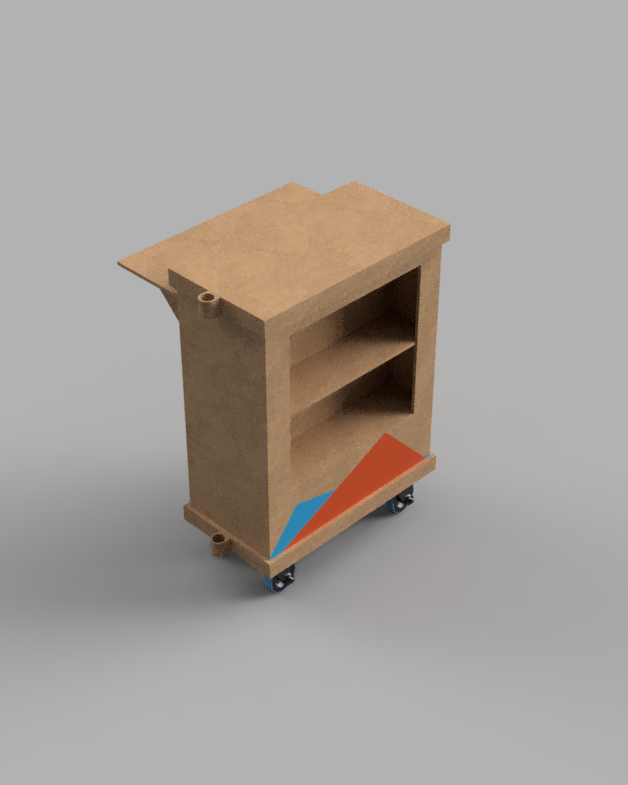
A stand that had to travel.
The challenge was to create a sales stand that could be assembled by one person and transported using the vehicles entrepreneurs already had access to.
The existing solutions usually fell into two extremes: large, expensive-to-transport stands, or smaller portable ones that sacrificed strength and functionality.
The new stand had to solve both problems without becoming specific to just one type of entrepreneur.
It had to be portable.
It had to work.
And it had to work for everyone.
What if the whole stand could fit in a car?
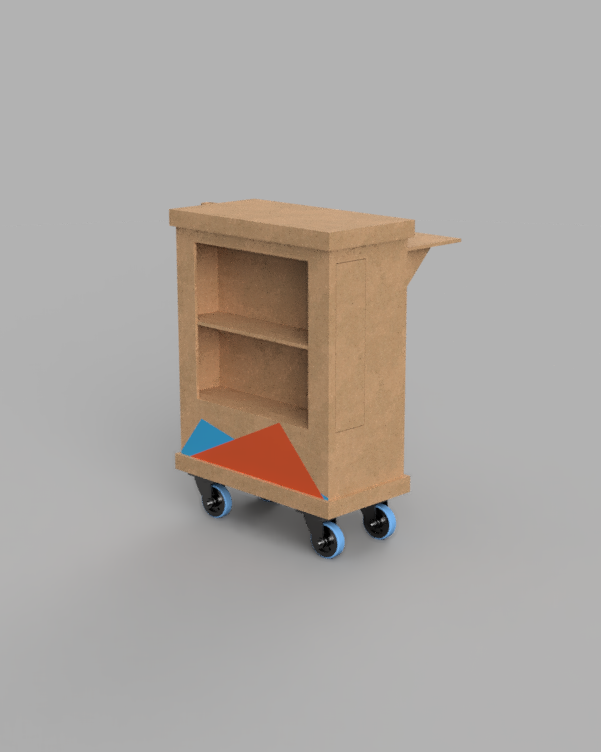
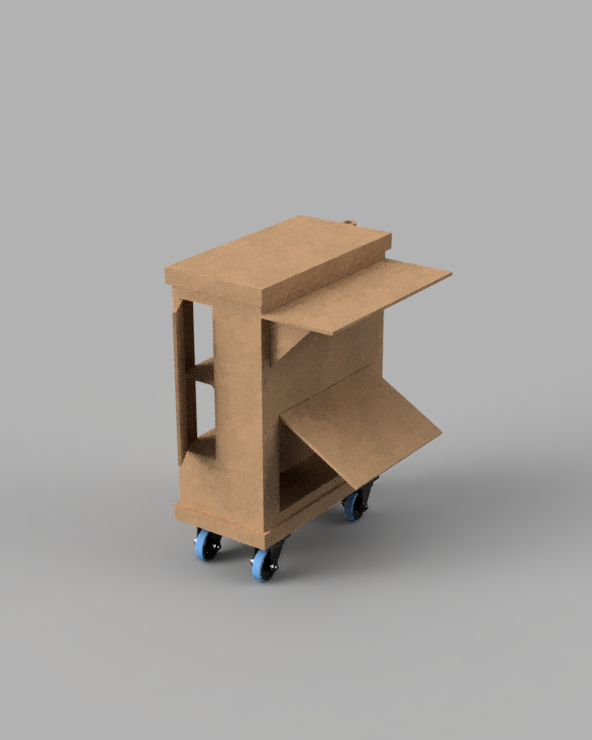
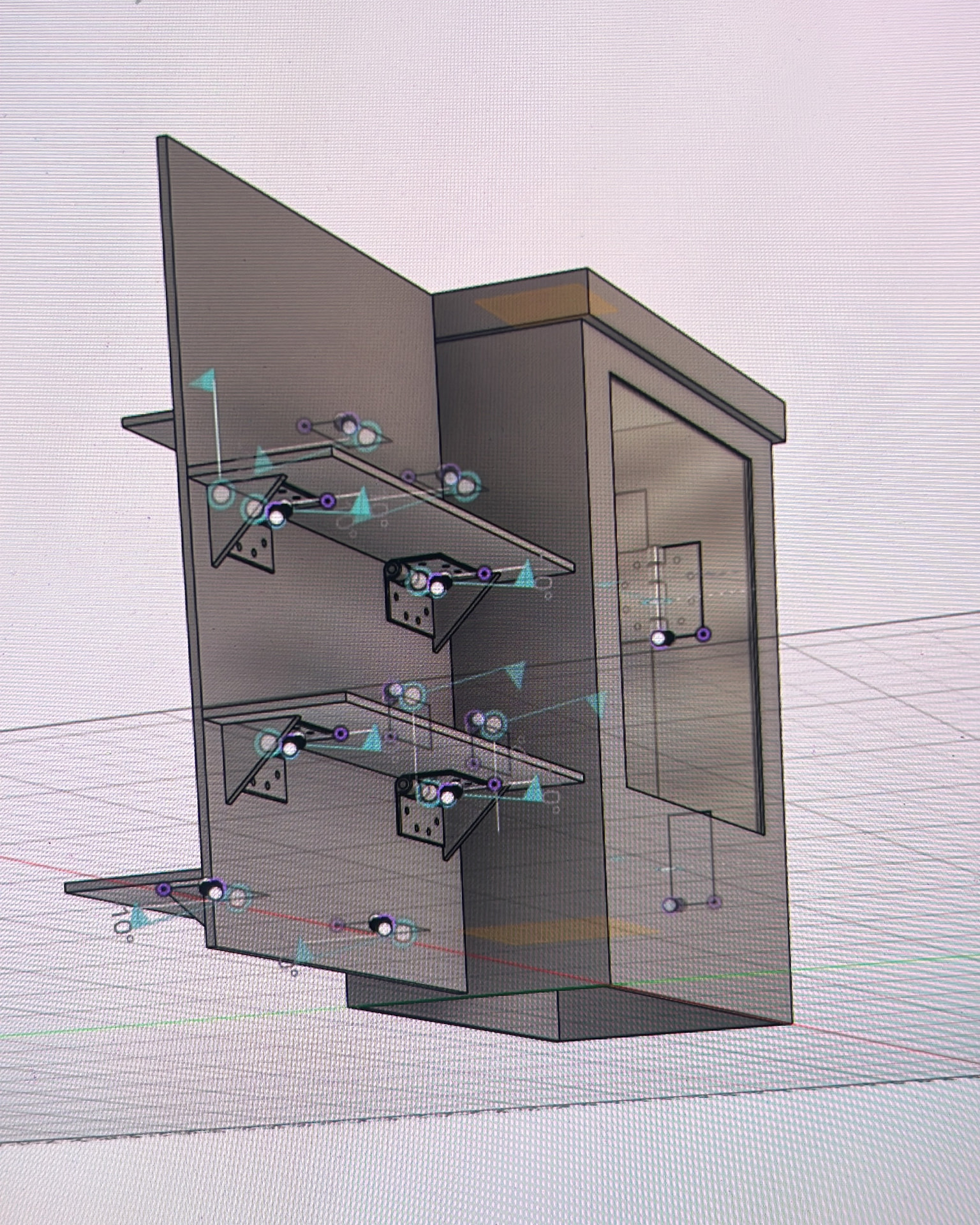
The answer was a modular system made of four main parts:
Top
Base
Outer walls
Inner shelves
Each component could be removed and folded until the entire stand became flat enough to transport in a small car or pickup.
The goal was not simply to make a smaller stand.
It was to rethink the relationship between assembly, transportation and use.
Designed around how people actually move.
Before designing the final form, we looked at the existing stands used by the entrepreneurs and the problems they created.
We needed to understand:
how much weight the structure had to support,
what products needed to be displayed,
what needed to remain protected,
how one person could assemble it,
and how everything could travel without requiring a separate freight service.
Another problem emerged along the way.
Because every entrepreneur had a different stand, fairs often lacked a visual coherence between them.
The challenge was not only to make one stand work.
It was to create a system that could work across different businesses.
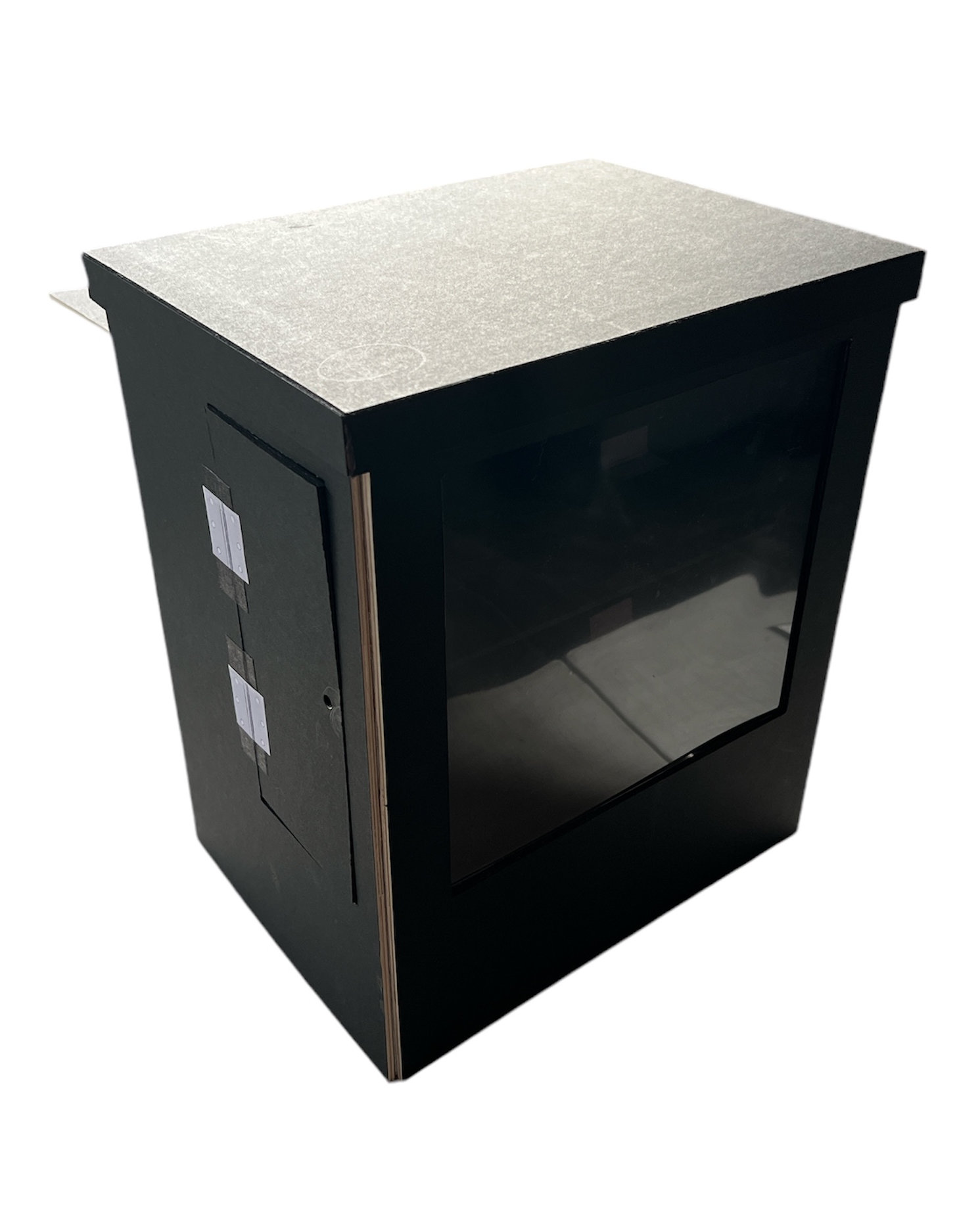
The folding had to work first.
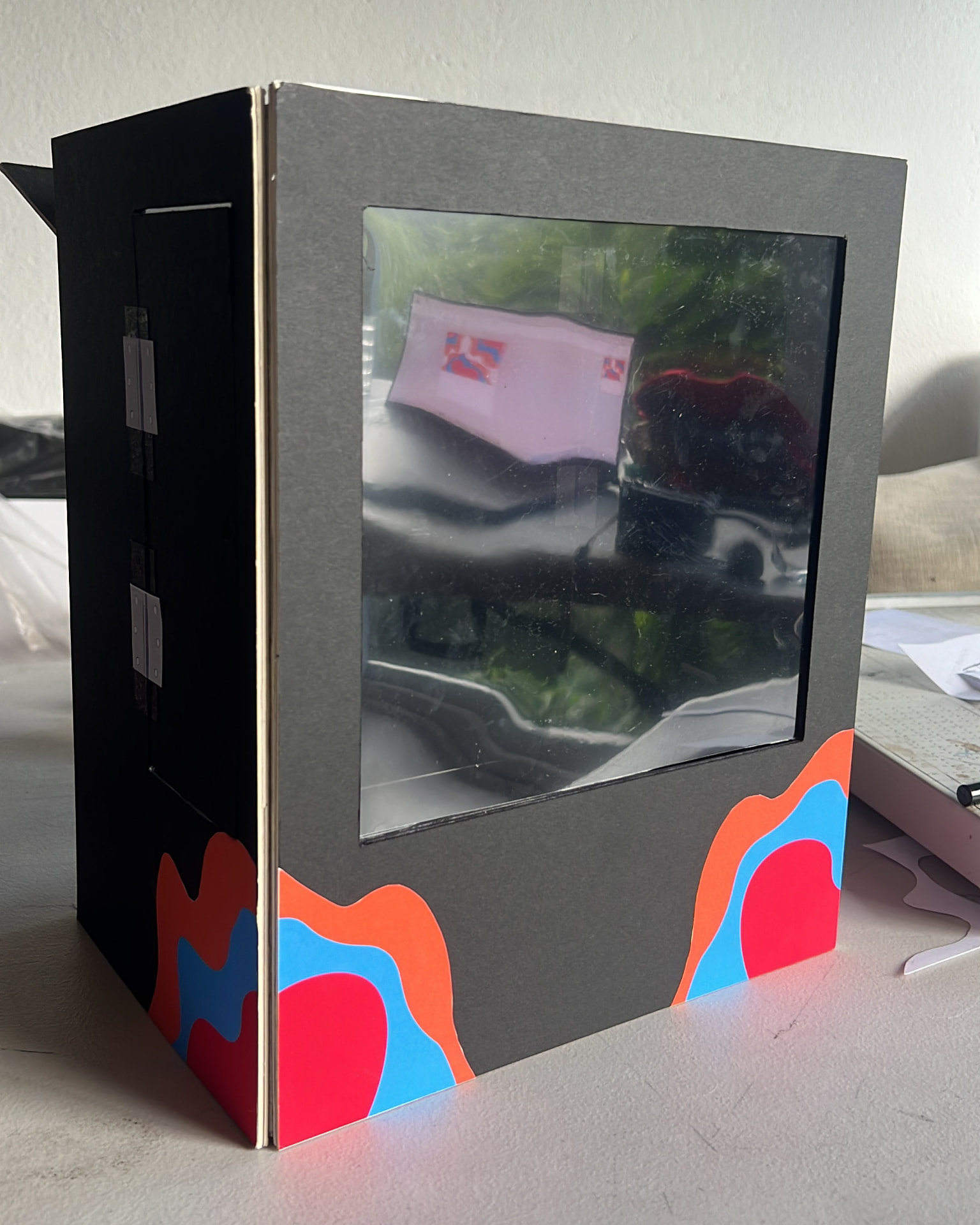
We started with cardboard prototypes to test the folding mechanism and figure out how the different parts could come together.
At this stage, the goal was not aesthetics.
It was behavior.
Could it fold?
Could it unfold?
Could one person assemble it?
Could it carry the products?
Could it become compact enough to transport?
Once the mechanism worked the way we intended, we moved into an MDF prototype to bring the proposal closer to a final product.
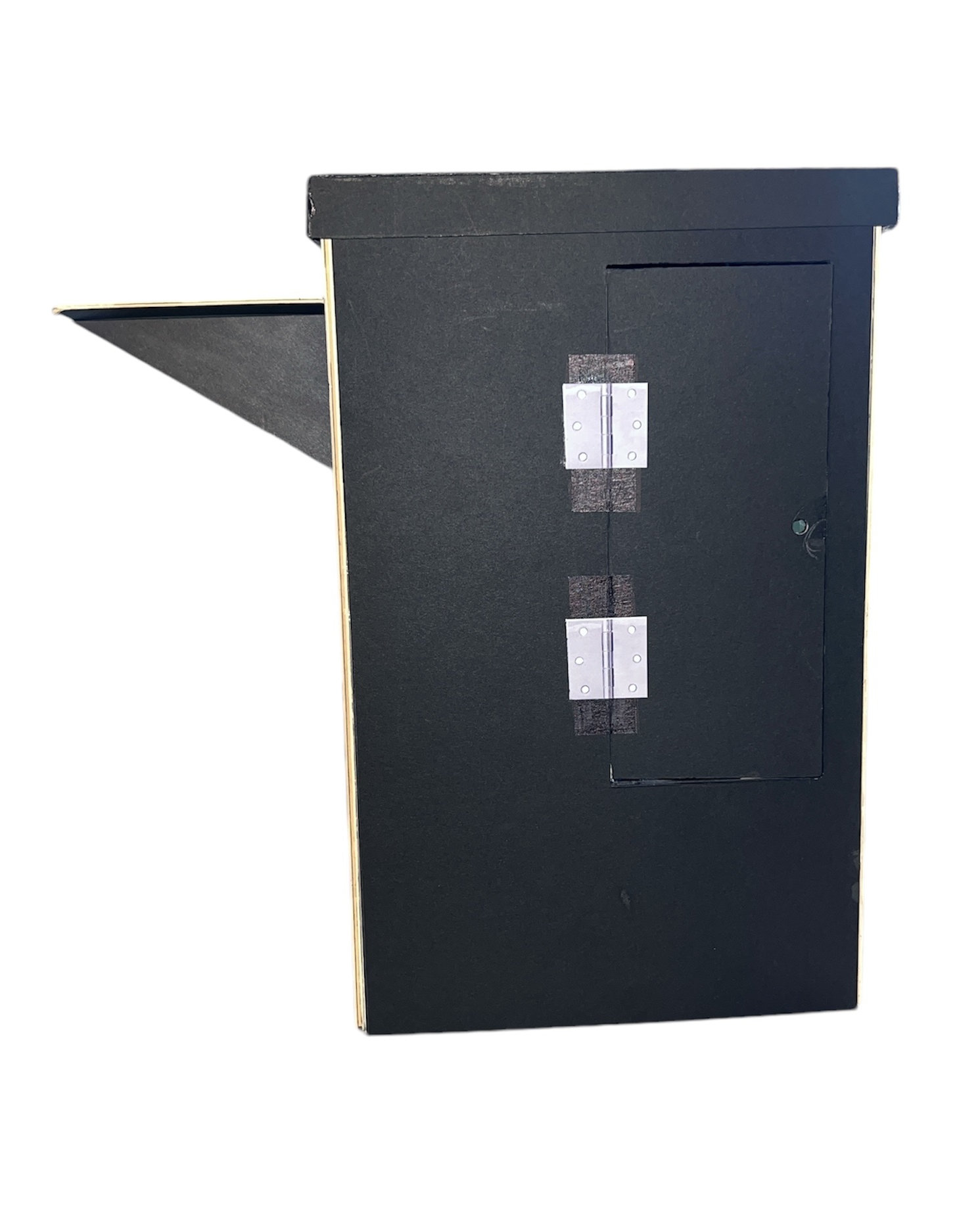
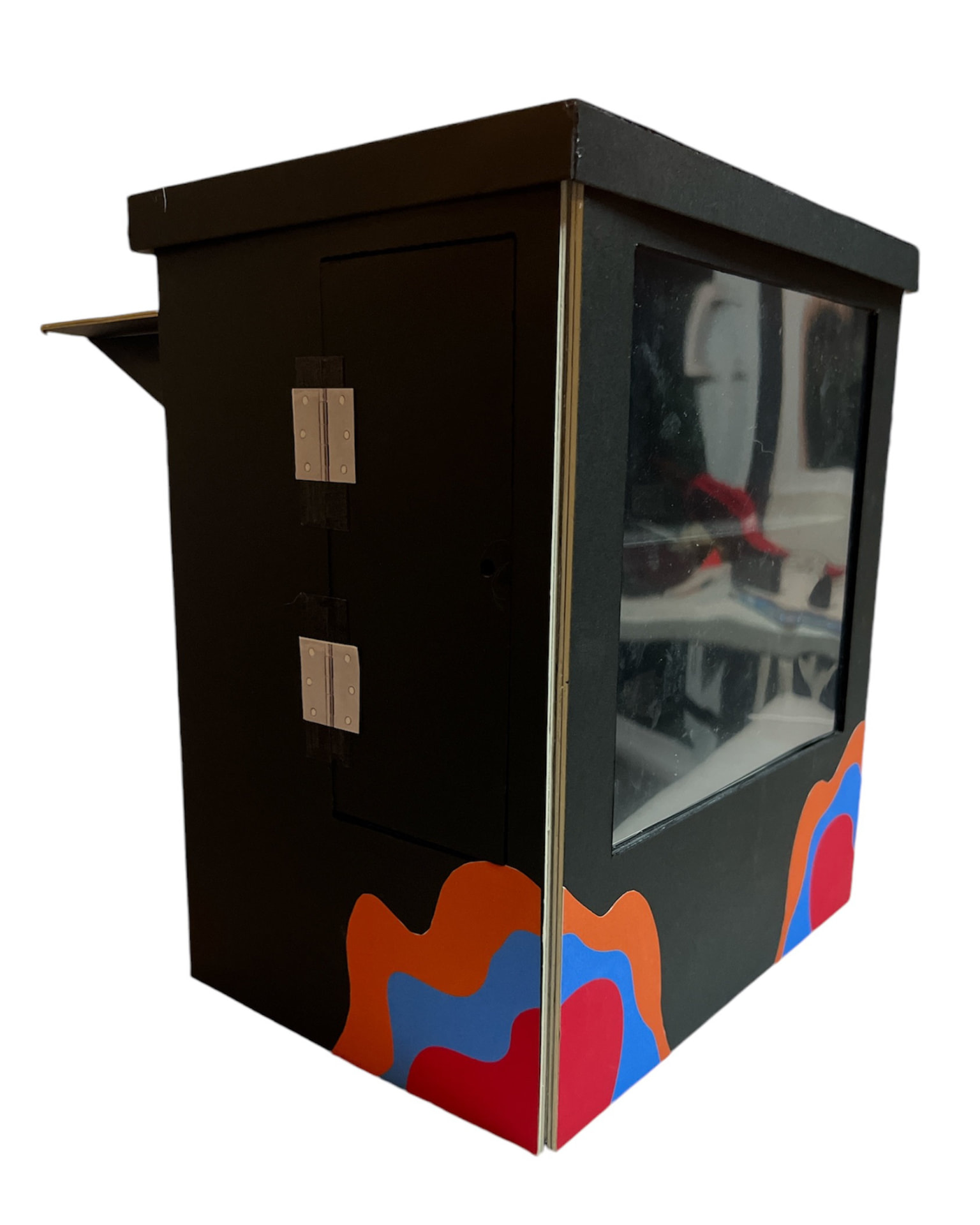
The details changed too.
As the project developed, the organizations requested that their colors be incorporated into the stand.
That meant finding a way to integrate the visual identity without compromising the modular system.
The solution changed between the cardboard prototype and the MDF prototype.
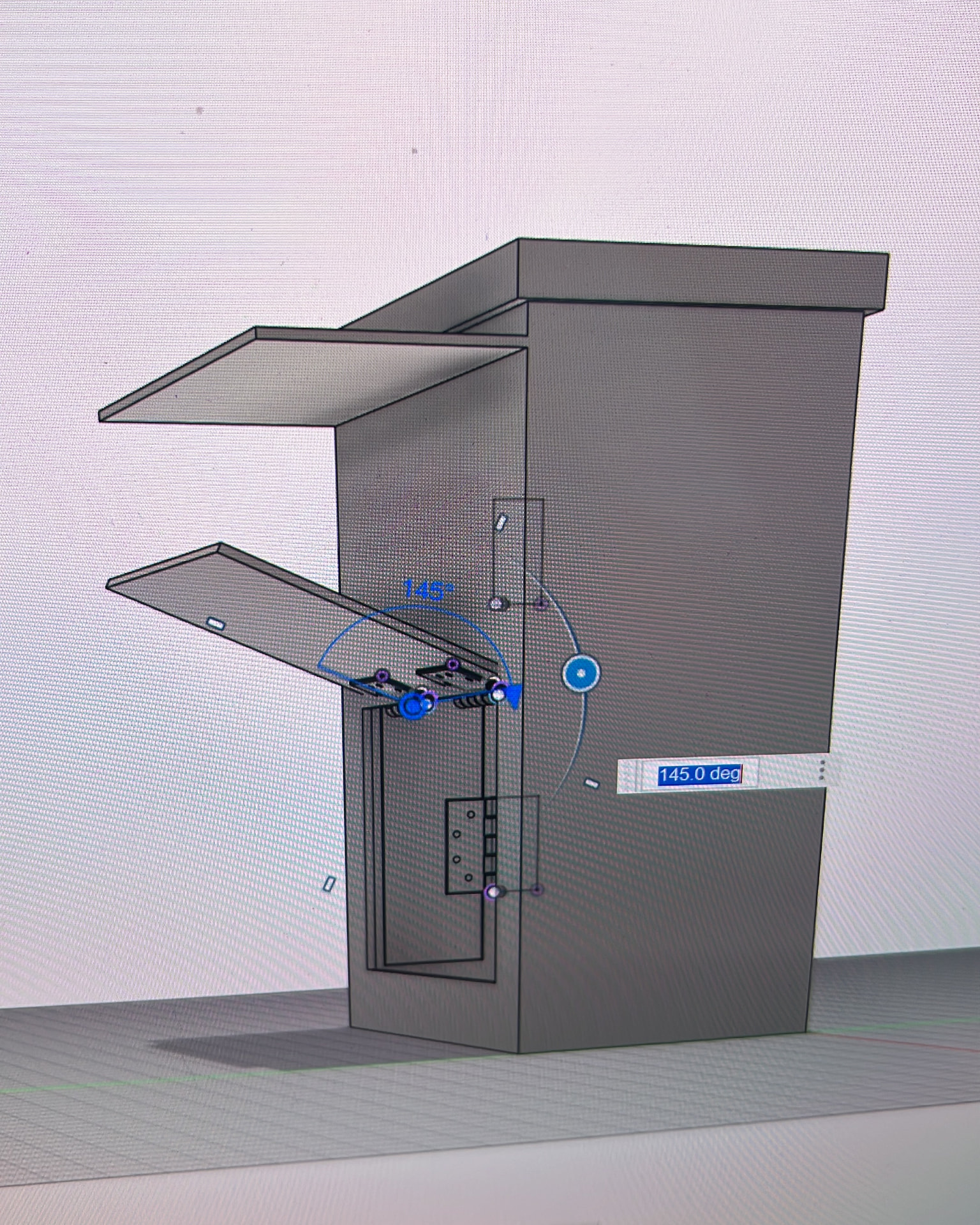
The hinge problem.
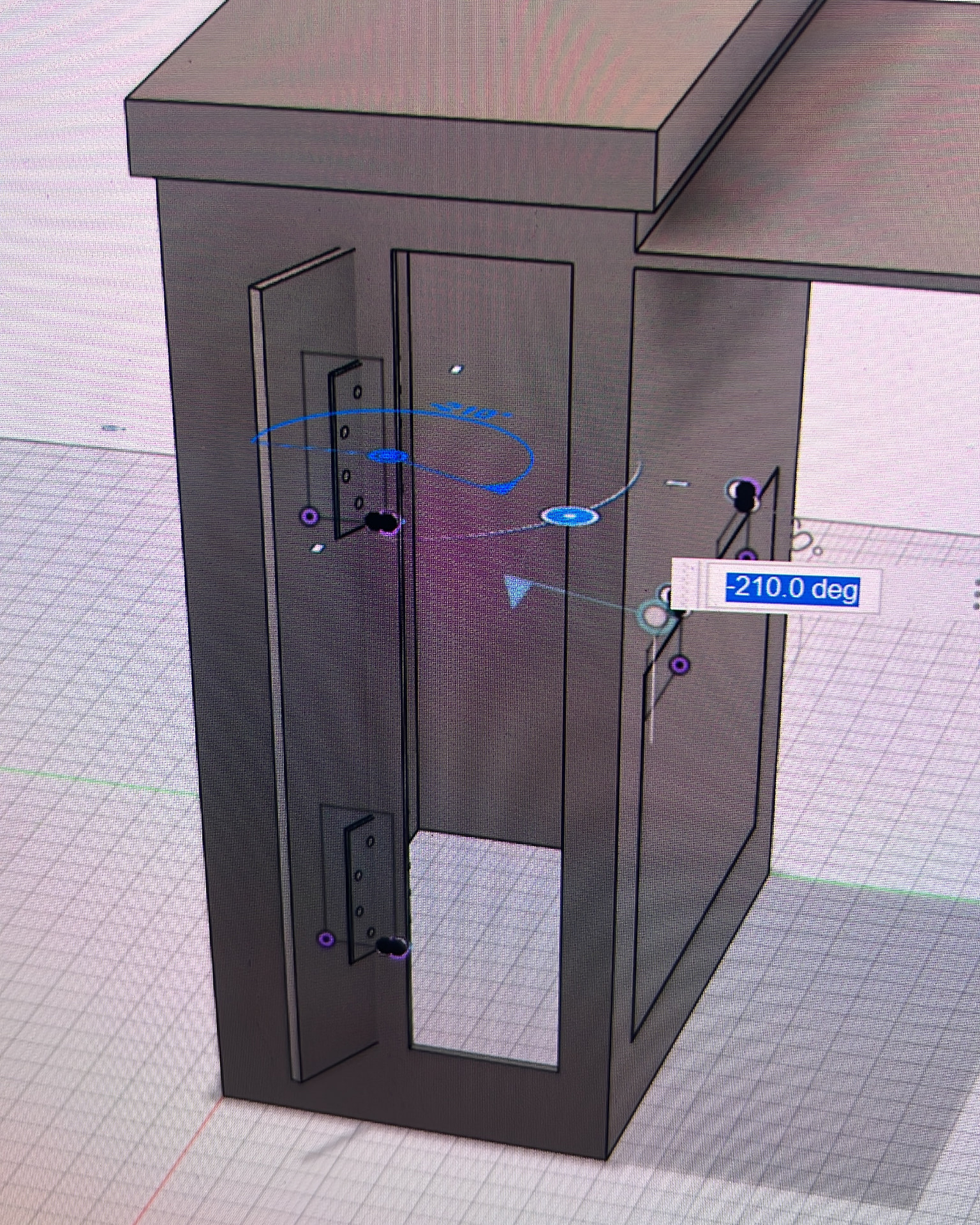
The folding mechanism worked.
But then came a more important question:
What happens after 100 folds?
The hinges made the prototype easy to assemble and collapse, but repeated movement could eventually wear down the MDF around the hinge points.
The prototype worked for the moment.
That did not necessarily mean it was ready for years of use.
That realization changed the way we looked at the product.
A prototype can work and still not be ready.
Distinguished student
Honorable Mention
“For a proposal that met the design requirements of the entrepreneurship stands, demonstrating creativity and innovation.”
The project was recognized for its creativity and innovation in addressing the requirements of the entrepreneurship stands.
Designing for what happens next.
A product does not stop being your responsibility when it leaves your hands.
The stand had to be designed not only for presentation day, but for repeated assembly, folding, transport and use.
The hinge problem made that clear.
A mechanism can work perfectly in a prototype and still tell a different story after months or years of repetition.
Designing for the future is part of designing the product.